
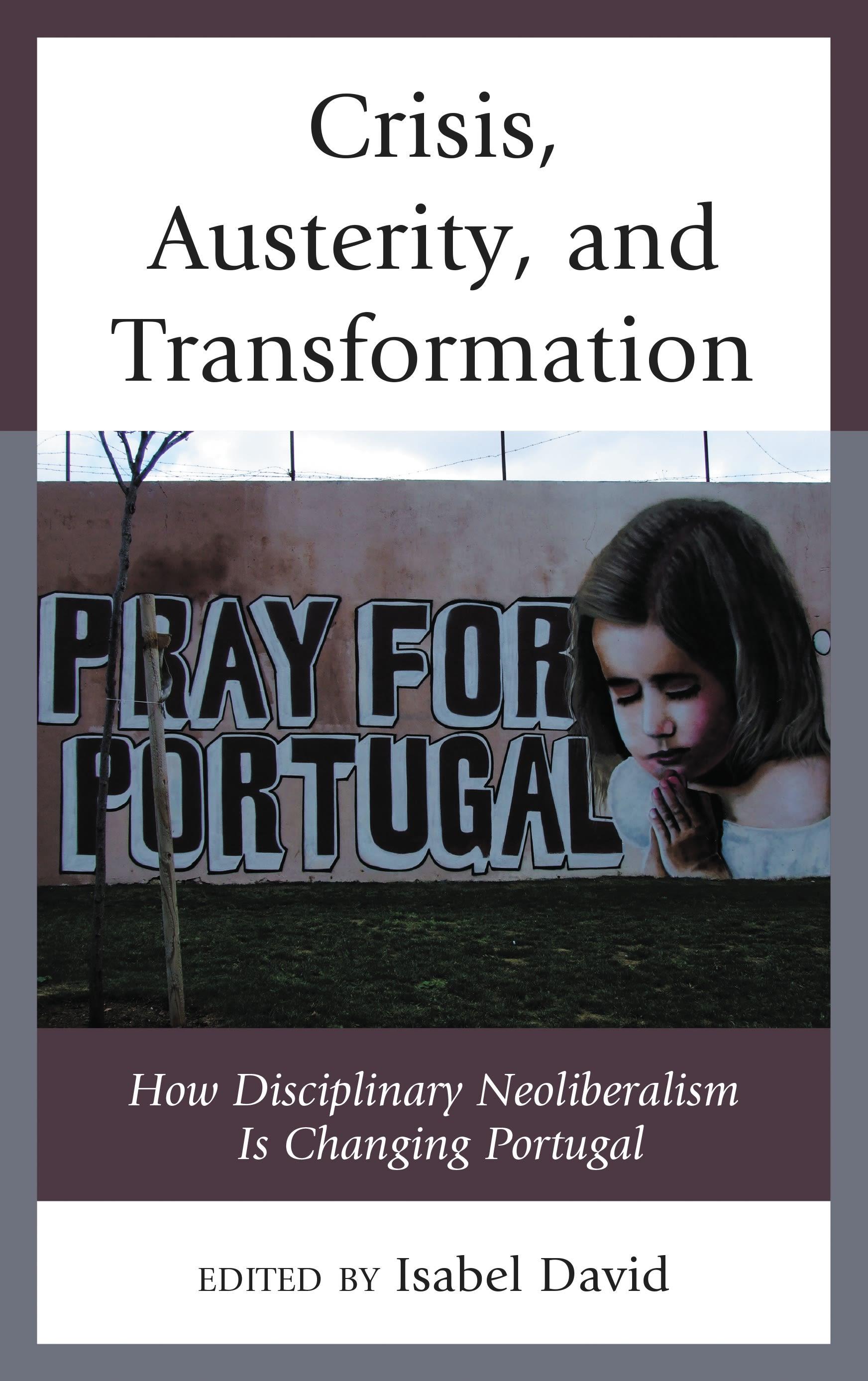
Crisis, Austerity, and Transformation
Author: Isabel David, Giovanni Allegretti, Ricardo Campos, Carla Guapo Costa, Mafalda Esteves, Marcos Farias Ferreira, Maria João Ferreira, Dora Fonseca, Pedro Fonseca, Luís Filipe Gonçalves Mendes, Jordi Nofre, Inês Pereira, José Alberto Simões, João Terrenas
Publisher: Bloomsbury Publishing
Edition: 1
Published date: 2018
ISBN: 9781498543873
Discussions of the recent austerity measures in Southern Europe as a response to the sovereign debt crisis have been usually framed in terms of their economic impact. However, the general impoverishment of these countries has induced other massive social and political changes, a fact which is ignored in the literature. This volume seeks to fill this gap and break ground by analyzing these trends in the Portuguese context.
Portugal has been portrayed as the Troika’s good pupil by obediently adopting all prescribed austerity measures. In the process, the nation’s fragile social fabric has been destroyed. Massive emigration, particularly by young people, massive increases in poverty and a foundering economy have triggered a collective framing of the crisis and austerity as unjust and punitive of a collectivity that, at the beginning, naively believed in the neoliberal narrative of the benign effects of the cuts. This reframing unleashed an unprecedented wave of social and political mobilization in an otherwise traditionally apathetic society. This resistance needs to be addressed as a direct effect of austerity policies and properly analyzed for what it really represents: a process of repoliticization and re-democratization sweeping Europe. These mobilizations include direct democracy experiments, the growing influence of social movements (the massive March 2011 demonstrations were a direct inspiration for the creation of the Indignado movement in Spain, attesting the contagion effect), solidarity economy and the major political change in the country’s 42 years of democratic rule: an alliance of the left parties, unthinkable before the crisis, and which is reframing relations with the European Union.
This volume offers a first approach to the massive political, social and cultural transformations taking place in the country that make Portugal, in certain aspects, a lab for innovative practices (e.g. participatory budgets and the alliance of the left parties) that may be used elsewhere as alternatives to current understandings of economic and political orthodoxy
Portugal has been portrayed as the Troika’s good pupil by obediently adopting all prescribed austerity measures. In the process, the nation’s fragile social fabric has been destroyed. Massive emigration, particularly by young people, massive increases in poverty and a foundering economy have triggered a collective framing of the crisis and austerity as unjust and punitive of a collectivity that, at the beginning, naively believed in the neoliberal narrative of the benign effects of the cuts. This reframing unleashed an unprecedented wave of social and political mobilization in an otherwise traditionally apathetic society. This resistance needs to be addressed as a direct effect of austerity policies and properly analyzed for what it really represents: a process of repoliticization and re-democratization sweeping Europe. These mobilizations include direct democracy experiments, the growing influence of social movements (the massive March 2011 demonstrations were a direct inspiration for the creation of the Indignado movement in Spain, attesting the contagion effect), solidarity economy and the major political change in the country’s 42 years of democratic rule: an alliance of the left parties, unthinkable before the crisis, and which is reframing relations with the European Union.
This volume offers a first approach to the massive political, social and cultural transformations taking place in the country that make Portugal, in certain aspects, a lab for innovative practices (e.g. participatory budgets and the alliance of the left parties) that may be used elsewhere as alternatives to current understandings of economic and political orthodoxy
Pay easily by card, Klarna, Apple Pay or Google Pay. Not happy? You always have a 14-day money-back guarantee. Read more in our terms. If you have any questions, email us at hello@memmo.org.
Memmo makes studying easier – wherever you are in the world. We bring your course books and smart study tools together in one place: summaries, quizzes, podcasts and flashcards. Plus Ted, your study buddy who answers anything you wonder. Over 50,000 students already study here – built to help you learn faster and stress less.