
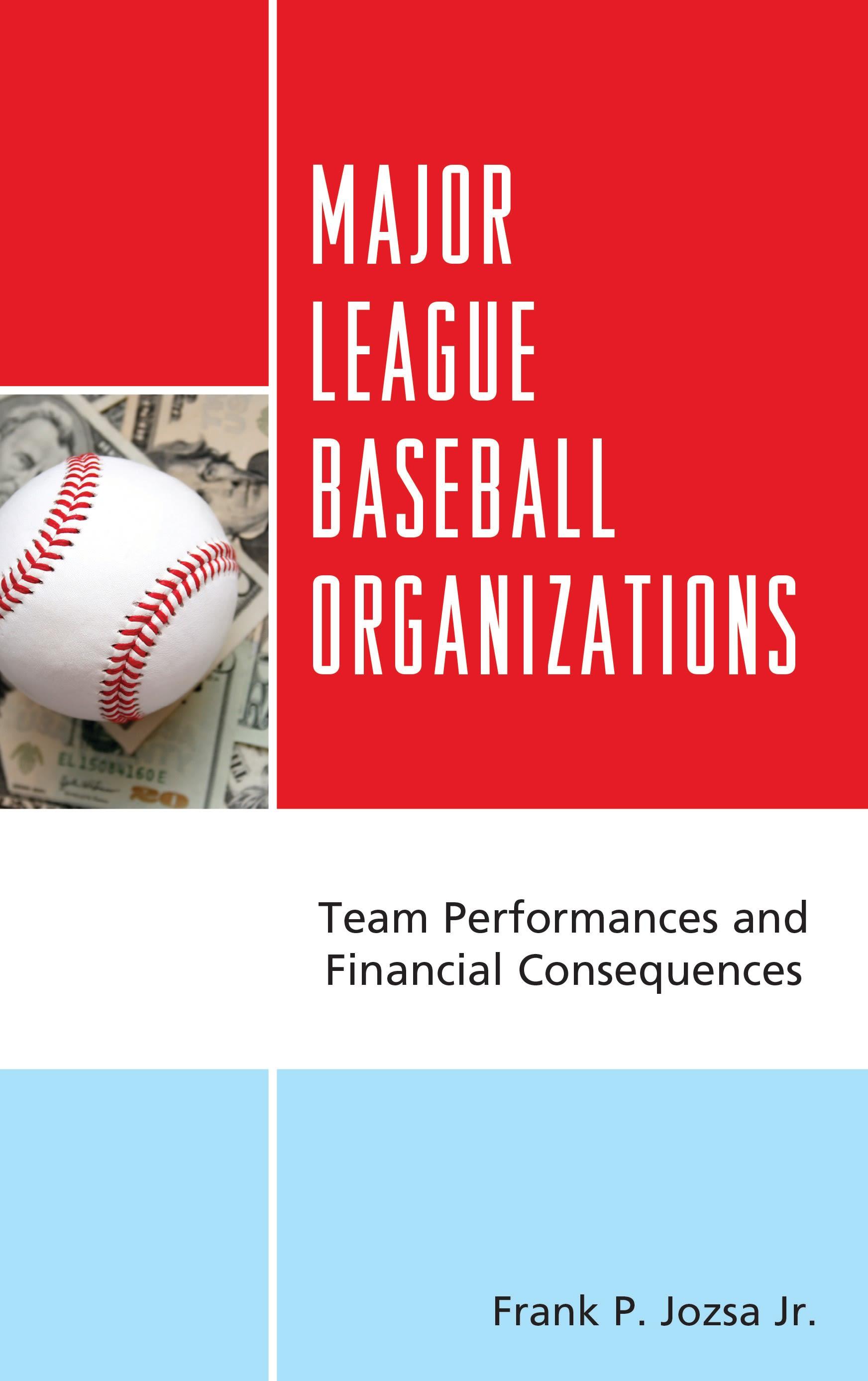
This book analyzes and highlights the development and success of major league baseball teams in the National League and the American League, focusing on each team’s performance in seasons and postseasons and to what extent each succeeded as a business enterprise despite competition for market share from other types of entertainment.
The book discusses historical and financial information about the 30 major league franchises. Each chapter contains two core themes—Team Performances and Franchise Business. The former highlights which and how teams won division and league championships and World Series while the latter lists and compares financial data including their revenue, gate receipts, and operating income and describes interesting business topics. Each chapter also provides an overview of when each franchise organized and why it joined MLB, a brief profile of its current majority owner or ownership group, records of teams’ special coaches and players, attendances at home games, and how their ballparks rank as a venue for fans.
Baseball Business explains why particular teams located in large, midsized, or small markets win more games and titles than others and when and how frequently that occurs. Furthermore, it provides ways to compare franchises’ financial success individually, by division, and by league. By linking and comparing the historical performances of MLB teams to financial information about them as business organizations, this book offers a unique contribution to the literature on the sports industry.
The book discusses historical and financial information about the 30 major league franchises. Each chapter contains two core themes—Team Performances and Franchise Business. The former highlights which and how teams won division and league championships and World Series while the latter lists and compares financial data including their revenue, gate receipts, and operating income and describes interesting business topics. Each chapter also provides an overview of when each franchise organized and why it joined MLB, a brief profile of its current majority owner or ownership group, records of teams’ special coaches and players, attendances at home games, and how their ballparks rank as a venue for fans.
Baseball Business explains why particular teams located in large, midsized, or small markets win more games and titles than others and when and how frequently that occurs. Furthermore, it provides ways to compare franchises’ financial success individually, by division, and by league. By linking and comparing the historical performances of MLB teams to financial information about them as business organizations, this book offers a unique contribution to the literature on the sports industry.
Pay easily by card, Klarna, Apple Pay or Google Pay. Not happy? You always have a 14-day money-back guarantee. Read more in our terms. If you have any questions, email us at hello@memmo.org.
Memmo makes studying easier – wherever you are in the world. We bring your course books and smart study tools together in one place: summaries, quizzes, podcasts and flashcards. Plus Ted, your study buddy who answers anything you wonder. Over 75,000 students already study here – built to help you learn faster and stress less.