
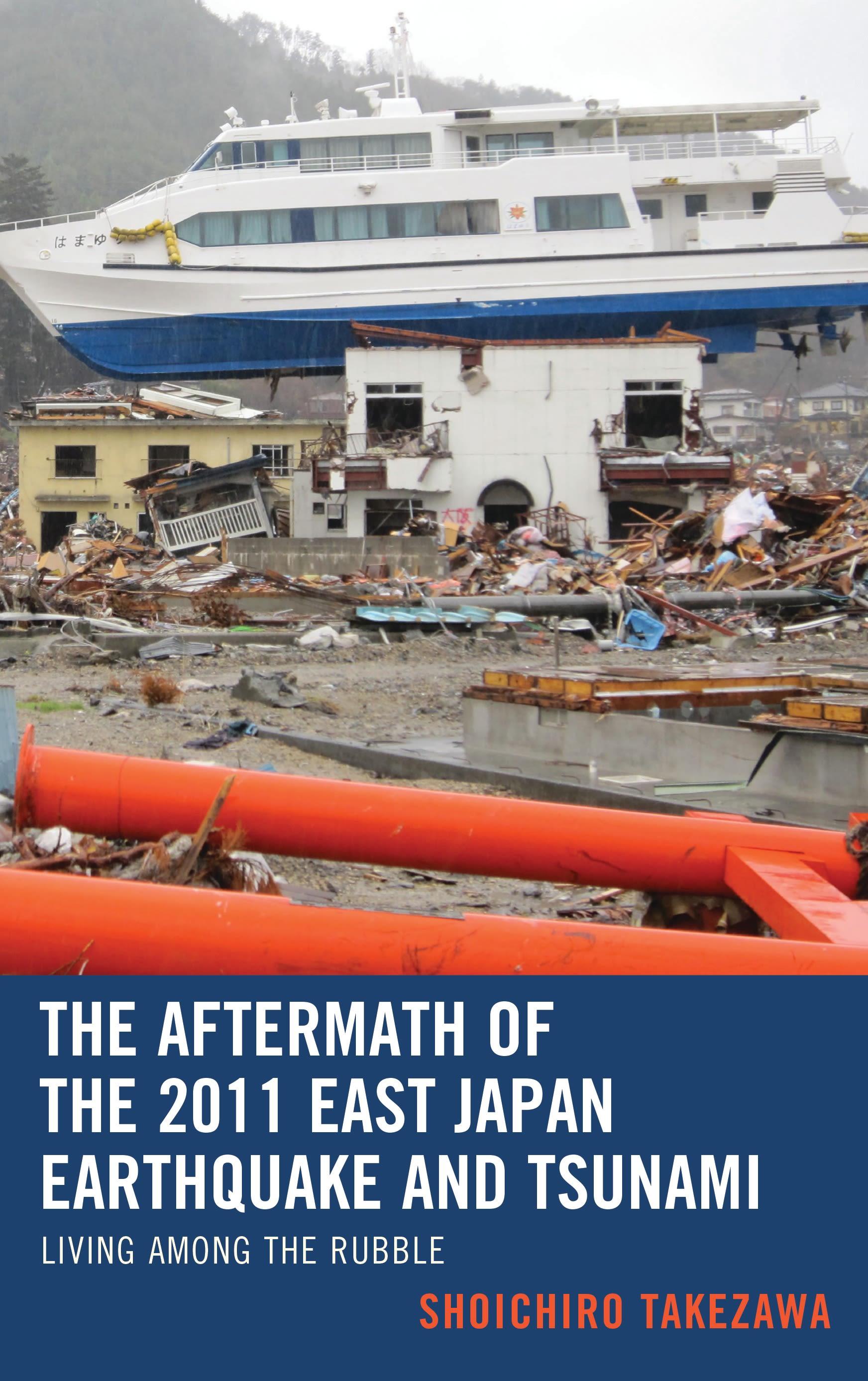
An insightful study in disaster anthropology, this book takes as its focus the fishing town of Otsuchi in Japan’s Iwate Prefecture, one of the worst damaged areas in the mammoth 2011 tsunami. Here, 1281 of the pre-tsunami population of 15000 were killed and 60% of houses destroyed. To make matters worse, the town’s administrative organs were completely obliterated, and fire ravaged the downtown area for three days, blocking external rescue attempts.
Complete with vivid and detailed witness testimony collected by the author, the book traces the course of eighteen months from the day of the disaster, through the subsequent months of community life in the evacuation centers, onto the struggles between the citizens and local governments in formulating reconstruction plans. It particularly addresses community interactions within the post-disaster context, assessing the locals’ varying degrees of success in organizing emergency committees to deal with such tasks as clearing rubble, hunting down food and obtaining fuel, and inquiring into the sociological reasons for these differences. It also casts new light on administrative failings that significantly augmented the loss of human lives in the disaster, and are threatening to bring further damage through insistence on reconstruction centered on enormous sea walls, against local citizens’ wishes.
Complete with vivid and detailed witness testimony collected by the author, the book traces the course of eighteen months from the day of the disaster, through the subsequent months of community life in the evacuation centers, onto the struggles between the citizens and local governments in formulating reconstruction plans. It particularly addresses community interactions within the post-disaster context, assessing the locals’ varying degrees of success in organizing emergency committees to deal with such tasks as clearing rubble, hunting down food and obtaining fuel, and inquiring into the sociological reasons for these differences. It also casts new light on administrative failings that significantly augmented the loss of human lives in the disaster, and are threatening to bring further damage through insistence on reconstruction centered on enormous sea walls, against local citizens’ wishes.
Pay easily by card, Klarna, Apple Pay or Google Pay. Not happy? You always have a 14-day money-back guarantee. Read more in our terms. If you have any questions, email us at hello@memmo.org.
Memmo makes studying easier – wherever you are in the world. We bring your course books and smart study tools together in one place: summaries, quizzes, podcasts and flashcards. Plus Ted, your study buddy who answers anything you wonder. Over 50,000 students already study here – built to help you learn faster and stress less.