
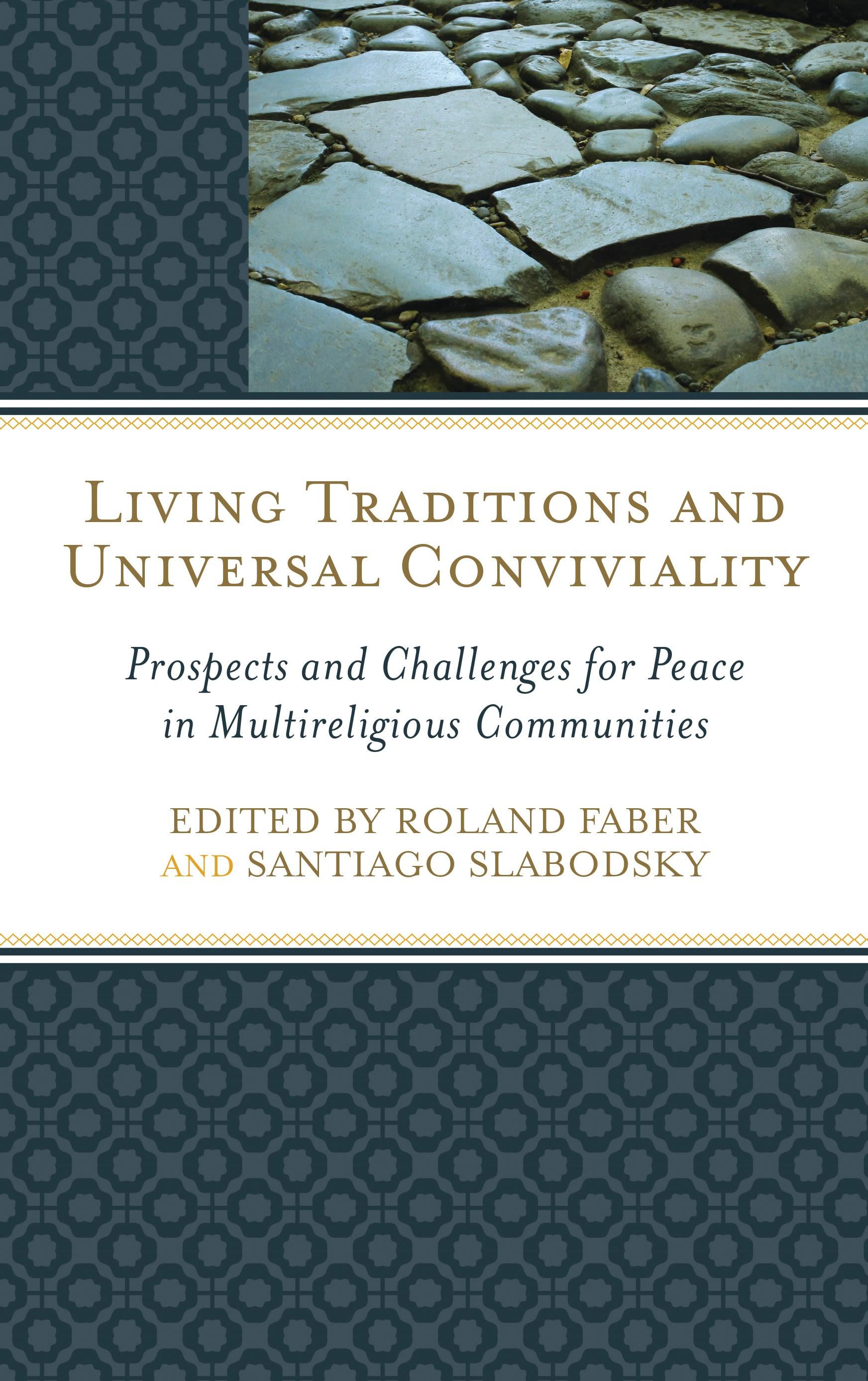
Living Traditions and Universal Conviviality
Author: Roland Faber, Catherine Keller, Helene Slessarev-Jamir, Brianne Donaldson, Rabbi Bradley Shavit Artson, Santiago Slabodsky, Steve Odin, Dan Dombrowski, Jacob Erickson, Meijun Fan, Ian Kluge, Jay McDaniel, C. Robert Mesle, Tokiyuki Nobuhara, Constance Wise
Publisher: Bloomsbury Publishing
Edition: 1
Published date: 2016
ISBN: 9781498513357
The World Parliament of Religions adopted the view that there will not be peace in this world without including peace among religions. Yet, even with the unified force of the world’s religions and wisdom traditions, this cannot be accomplished without justice among people. In one way or another, “unity” among religions, as based on justice and the will to accept the other’s religions and even irreligiosity as means of justice, will not prevail without an internal and external, spiritual, theological, philosophical and practical investigation into the very reasons for religious strife and fanaticism as well as the resources that people, cultures, religions and wisdom traditions might provide to disentangle them from the injustices of their host regimes, and to seek the “balance” that leads to a measure of universal fairness among the multiplicity of religious and non-religious expressions of humanity.
“Conviviality” expresses the depth and breadth of “living together,” which itself can be understood as a translation of a central term of Whitehead's philosophy and the process tradition—“concrescence” (growing together, becoming concrete)—as it is recently and increasingly used in different discourses to name the concrete community of difference of individuals, cultures, and religions in appreciation of the mutual inclusiveness of their lives.
This book seeks to bring together experts from different religious (and non-religious) traditions and spiritual persuasions to suggest ways in which the living wisdom traditions might contribute to, and transform themselves into, a universal conviviality among the people, cultures and religions of this world for a common future. It wishes to test the resources that we can contribute to this concurrent and urgent matter, aware of Whitehead's call for a radical transformation of power and violence in thought and action as, perhaps, the ultimate theory of conflict resolution.
“Conviviality” expresses the depth and breadth of “living together,” which itself can be understood as a translation of a central term of Whitehead's philosophy and the process tradition—“concrescence” (growing together, becoming concrete)—as it is recently and increasingly used in different discourses to name the concrete community of difference of individuals, cultures, and religions in appreciation of the mutual inclusiveness of their lives.
This book seeks to bring together experts from different religious (and non-religious) traditions and spiritual persuasions to suggest ways in which the living wisdom traditions might contribute to, and transform themselves into, a universal conviviality among the people, cultures and religions of this world for a common future. It wishes to test the resources that we can contribute to this concurrent and urgent matter, aware of Whitehead's call for a radical transformation of power and violence in thought and action as, perhaps, the ultimate theory of conflict resolution.
Pages: 284
Category: Religion & Teologi
e-ISBN: 9781498513364
Shipping weight: 1.2 kg
Ships in: 1-2 days
Pay easily by card, Klarna, Apple Pay or Google Pay. Not happy? You always have a 14-day money-back guarantee. Read more in our terms. If you have any questions, email us at hello@memmo.org.
Memmo makes studying easier – wherever you are in the world. We bring your course books and smart study tools together in one place: summaries, quizzes, podcasts and flashcards. Plus Ted, your study buddy who answers anything you wonder. Over 50,000 students already study here – built to help you learn faster and stress less.