
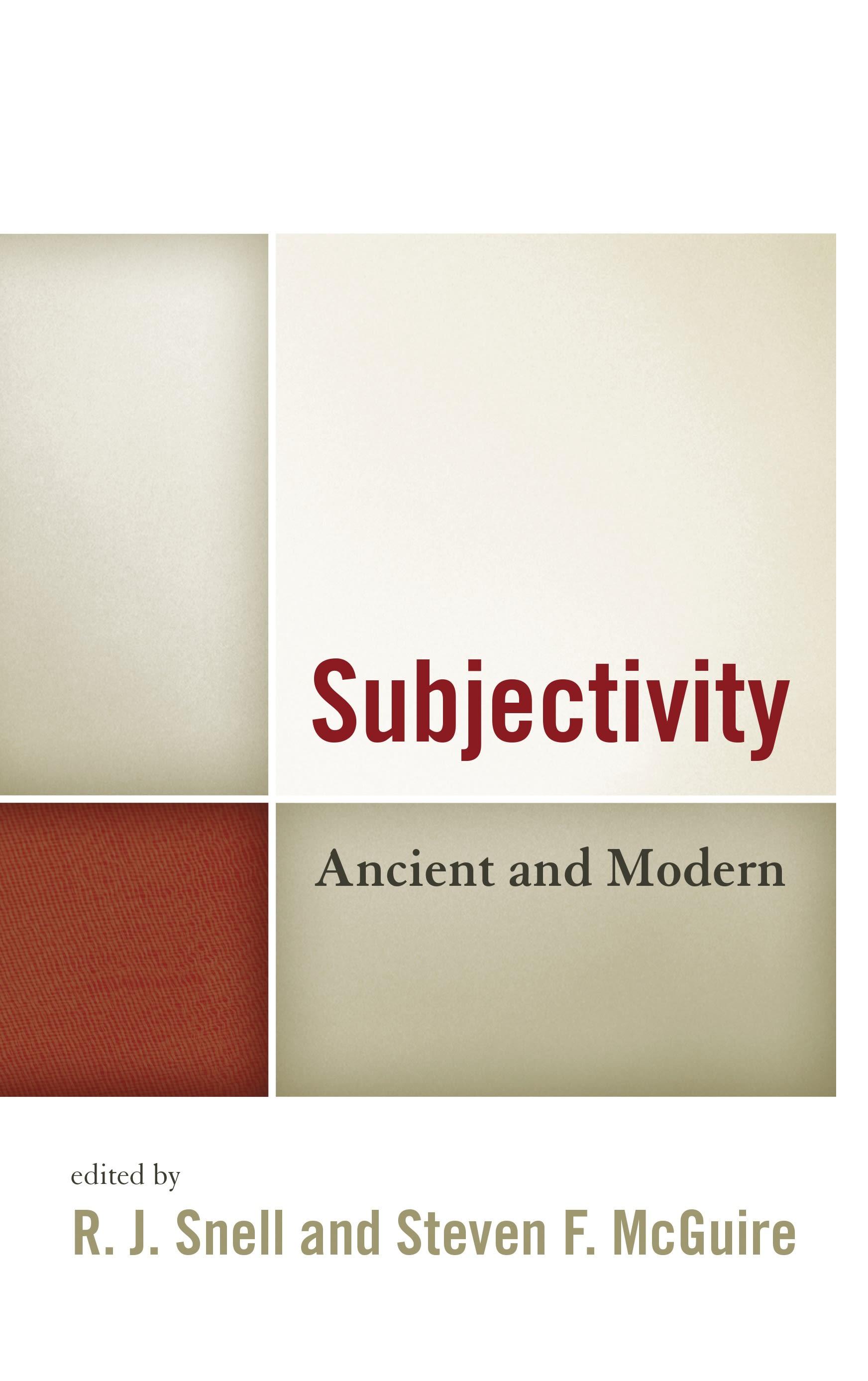
Subjectivity
Author: David Walsh, James Greenaway, Ralph C. Hancock, Daniel Mark, Phillip Cary, Lee Trepanier, Mark Shiffman, Richard Velkley, Steven F. McGuire, Elizabeth A. Murray, Matthew B. O'Brien, Sherif Girgis, Christopher O. Tollefsen, Amy Gilbert Richards, V. Bradley Lewis, Jeremy D. Wilkins, R. J. Snell
Publisher: Bloomsbury Publishing
Edition: 1
Published date: 2016
ISBN: 9781498513180
In Subjectivity, sixteen leading scholars examine the turn to the subject in modern philosophy and consider its historical antecedents in ancient and medieval thought. Some critics of modernity reject the turn to the subject as a specifically modern error, arguing that it logically leads to nihilism and moral relativism by divorcing the human mind from objective reality. Yet, some important thinkers of the last half-century--including Leo Strauss, Eric Voegelin, John Finnis, and Bernard Lonergan--consider a subjective starting point and claim to find a similar position in ancient and medieval thought. If correct, their positions suggest that one can adopt the subjective turn and remain true to the tradition.
This is a timely question. The common good of our polity encounters a situation in which many believe that there is no objective reality to which human minds and wills ought to conform, a conclusion that suggests we can define and construct reality. In light of this, the notion of a natural or objective reality to which human beings ought to conform becomes particularly vital. Should we, then, adopt the modern turn to subjectivity and argue for objective truth and moral order on its basis, or reject the subjective turn as part of the problem and return to an earlier approach that grounds these things in nature or some other external reality? Critics of modern subjectivity argue that the modern turn to subjectivity must be abandoned because it is the very source of the nominalism that threatens to undermine liberal democracy. Others argue, however, that subjectivity itself logically leads to the recognition of an objective reality beyond the mind of the individual. Edited by R. J. Snell and Steven F. McGuire, this collection will be of particular interest to intellectual historians, political philosophers, theologians, and philosophers.
This is a timely question. The common good of our polity encounters a situation in which many believe that there is no objective reality to which human minds and wills ought to conform, a conclusion that suggests we can define and construct reality. In light of this, the notion of a natural or objective reality to which human beings ought to conform becomes particularly vital. Should we, then, adopt the modern turn to subjectivity and argue for objective truth and moral order on its basis, or reject the subjective turn as part of the problem and return to an earlier approach that grounds these things in nature or some other external reality? Critics of modern subjectivity argue that the modern turn to subjectivity must be abandoned because it is the very source of the nominalism that threatens to undermine liberal democracy. Others argue, however, that subjectivity itself logically leads to the recognition of an objective reality beyond the mind of the individual. Edited by R. J. Snell and Steven F. McGuire, this collection will be of particular interest to intellectual historians, political philosophers, theologians, and philosophers.
Pay easily by card, Klarna, Apple Pay or Google Pay. Not happy? You always have a 14-day money-back guarantee. Read more in our terms. If you have any questions, email us at hello@memmo.org.
Memmo makes studying easier – wherever you are in the world. We bring your course books and smart study tools together in one place: summaries, quizzes, podcasts and flashcards. Plus Ted, your study buddy who answers anything you wonder. Over 50,000 students already study here – built to help you learn faster and stress less.