
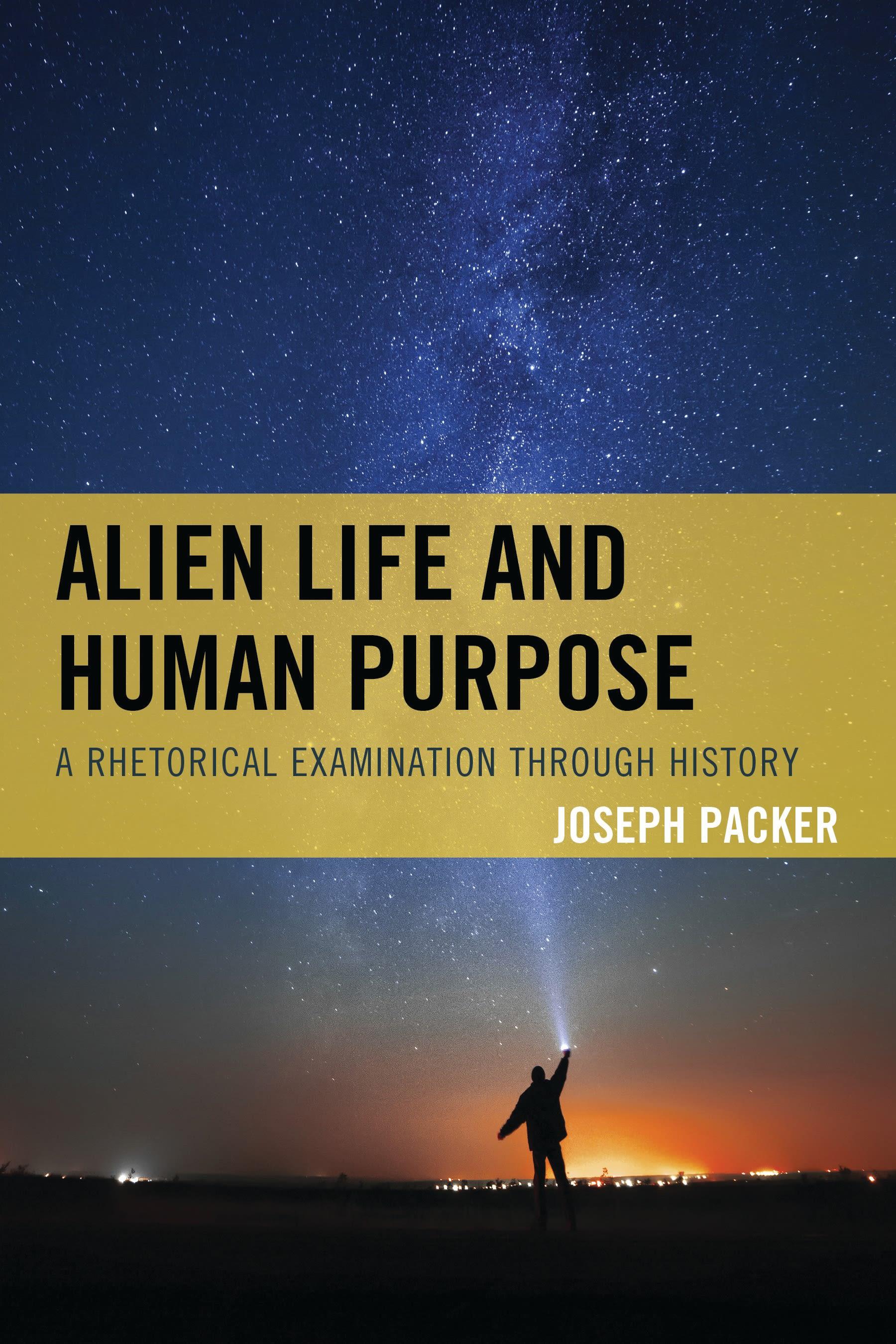
Alien Life and Human Purpose: A Rhetorical Examination through History provides a rhetorical examination of the way major historical figures connect their arguments for the absence of alien life, or “unity,” to their philosophical, religious, and ethical agendas. Although the unity myth has often existed in the background of society, shaping institutions and values, during periods where relativism gained prominence, its opponents actively wielded the unity myth as a response; Plato used the unity myth against the sophists, Anglican theologian and philosopher William Whewell against the utilitarians, co-discoverer of evolution Alfred Russell Wallace against the social Darwinists, university professors Frank J. Tipler and John D. Barrow against the postmodernists, etc. These individuals presented scientific defenses of unity and then used the “fact” of unity to claim the universe is teleological, knowable, and ordered, rather than chaotic and relativistic. This book argues that unity and its complimentary mythic function have played an important role in shaping values throughout history and more importantly continue to do so today.
Pay easily by card, Klarna, Apple Pay or Google Pay. Not happy? You always have a 14-day money-back guarantee. Read more in our terms. If you have any questions, email us at hello@memmo.org.
Memmo makes studying easier – wherever you are in the world. We bring your course books and smart study tools together in one place: summaries, quizzes, podcasts and flashcards. Plus Ted, your study buddy who answers anything you wonder. Over 50,000 students already study here – built to help you learn faster and stress less.