
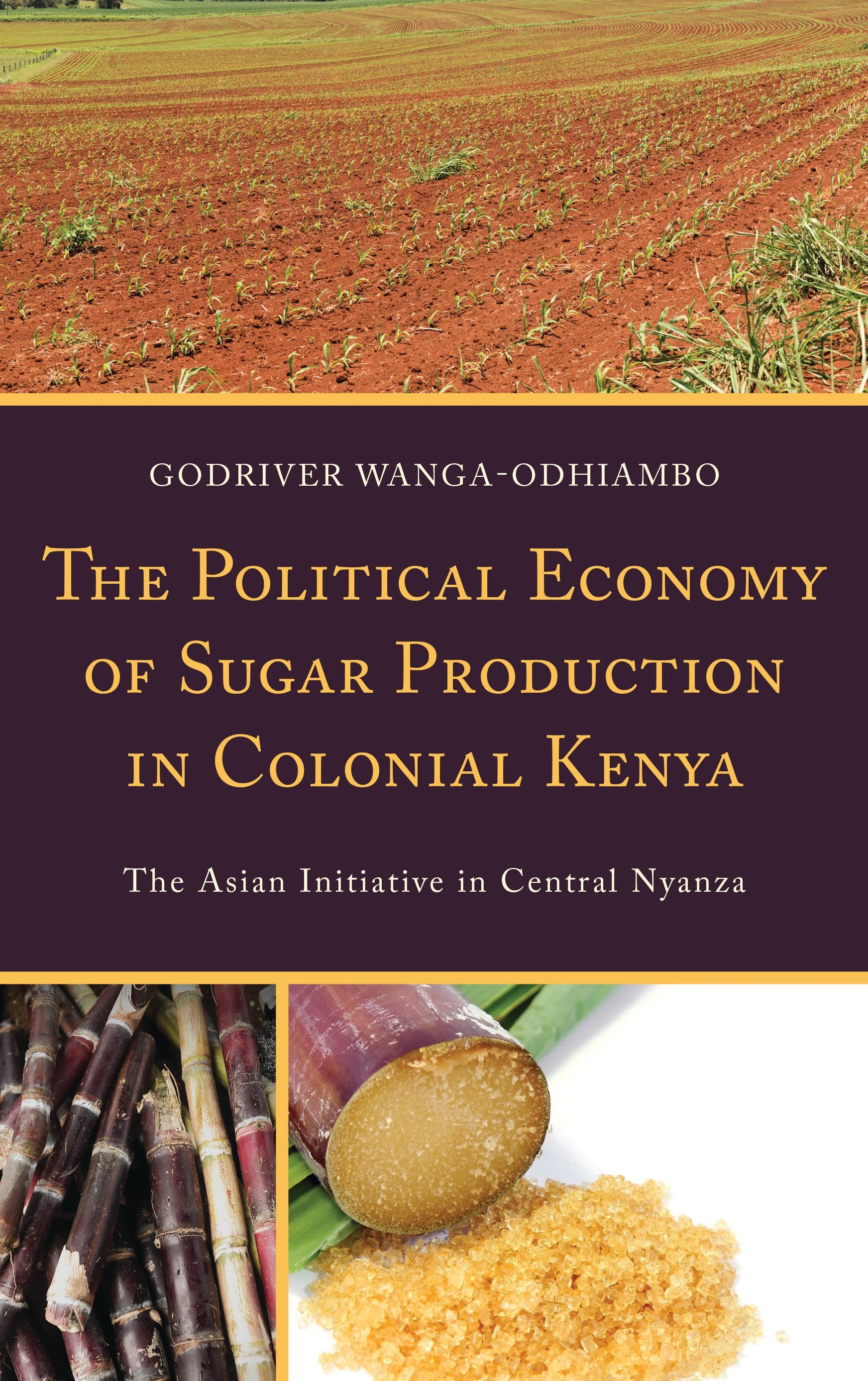
This book describes the Asian agency in sugar production in colonial Nyanza and additionally examines the Asian initiative and the development of commercial cane farming in Central Nyanza. It provides a different perspective on the Asian initiative in agriculture by showing how Asians were involved in sugarcane farming and how production of sugar in colonial Nyanza was eventually made possible by Asian capital.
This study relies mainly on primary sources, secondary sources, and oral interviews. The archival sources were derived from the Kenya National Archives. The primary materials included annual reports of the Department of Agriculture, District annual reports, Provincial reports, monthly intelligence reports, colonial officials’ correspondence, and correspondence from East Africa India National Congress. Oral interviews were also conducted to verify some information while the secondary sources were used to supplement thesources.
This work is unique first due to its extensive use of archival sources, as most of these archival sources have not been used by other scholars in the field. Secondly, it deals with all parts of the sugar production process; it shows the connection to the current sugar situation in Kenya and also provides a framework in which to understand the persistent insufficiency in Kenya’s sugar industry. This workprovides an important contribution to Kenyan economic history.
This study relies mainly on primary sources, secondary sources, and oral interviews. The archival sources were derived from the Kenya National Archives. The primary materials included annual reports of the Department of Agriculture, District annual reports, Provincial reports, monthly intelligence reports, colonial officials’ correspondence, and correspondence from East Africa India National Congress. Oral interviews were also conducted to verify some information while the secondary sources were used to supplement thesources.
This work is unique first due to its extensive use of archival sources, as most of these archival sources have not been used by other scholars in the field. Secondly, it deals with all parts of the sugar production process; it shows the connection to the current sugar situation in Kenya and also provides a framework in which to understand the persistent insufficiency in Kenya’s sugar industry. This workprovides an important contribution to Kenyan economic history.
Pages: 306
Category: Ekonomi & Utveckling
e-ISBN: 9781498511643
Shipping weight: 1.2 kg
Ships in: 1-2 days
Pay easily by card, Klarna, Apple Pay or Google Pay. Not happy? You always have a 14-day money-back guarantee. Read more in our terms. If you have any questions, email us at hello@memmo.org.
Memmo makes studying easier – wherever you are in the world. We bring your course books and smart study tools together in one place: summaries, quizzes, podcasts and flashcards. Plus Ted, your study buddy who answers anything you wonder. Over 50,000 students already study here – built to help you learn faster and stress less.