
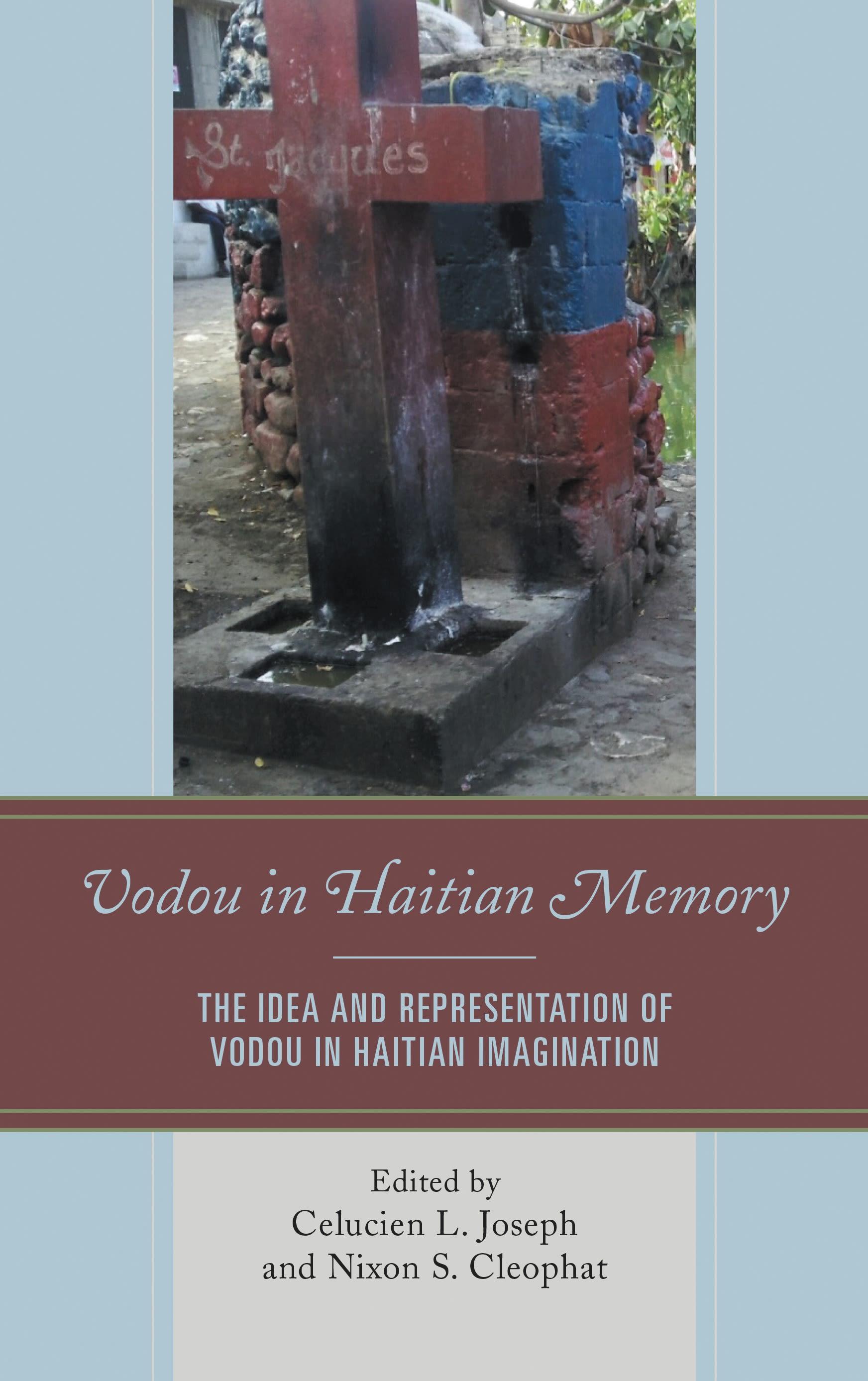
Throughout Haitian history—from 17th century colonial Saint-Domingue to 21st century postcolonial Haiti—arguably, the Afro-Haitian religion of Vodou has been represented as an “unsettling faith” and a “cultural paradox,” as expressed in various forms and modes of Haitian thought and life including literature, history, law, politics, painting, music, and art. Competing voices and conflicting ideas of Vodou have emerged from each of these cultural symbols and intellectual expressions. The Vodouist discourse has not only pervaded every aspect of the Haitian life and experience, it has defined the Haitian cosmology and worldview. Further, the Vodou faith has had a momentous impact on the evolution of Haitian intellectual, aesthetic, and literary imagination; comparatively, Vodou has shaped Haitian social ethics, sexual and gender identity, and theological discourse such as in the intellectual works and poetic imagination of Jean Price-Mars, Dantes Bellegarde, Jacques Roumain, Jacques Stephen Alexis, etc. Similarly, Vodou has shaped the discourse on the intersections of memory, trauma, history, collective redemption, and Haitian diasporic identity in Haitian women’s writings such as in the fiction of Edwidge Danticat, Myriam Chancy, etc.
The chapters in this collection tell a story about the dynamics of the Vodou faith and the rich ways Vodou has molded the Haitian narrative and psyche. The contributors of this book examine this constructed narrative from a multicultural voice that engages critically the discipline of ethnomusicology, drama, performance, art, anthropology, ethnography, economics, literature, intellectual history, philosophy, psychology, sociology, religion, and theology. Vodou is also studied from multiple theoretical approaches including queer, feminist theory, critical race theory, Marxism, postcolonial criticism, postmodernism, and psychoanalysis.
The chapters in this collection tell a story about the dynamics of the Vodou faith and the rich ways Vodou has molded the Haitian narrative and psyche. The contributors of this book examine this constructed narrative from a multicultural voice that engages critically the discipline of ethnomusicology, drama, performance, art, anthropology, ethnography, economics, literature, intellectual history, philosophy, psychology, sociology, religion, and theology. Vodou is also studied from multiple theoretical approaches including queer, feminist theory, critical race theory, Marxism, postcolonial criticism, postmodernism, and psychoanalysis.
Pages: 280
Category: Religion & Teologi
e-ISBN: 9781498508353
Shipping weight: 1.2 kg
Ships in: 1-2 days
Pay easily by card, Klarna, Apple Pay or Google Pay. Not happy? You always have a 14-day money-back guarantee. Read more in our terms. If you have any questions, email us at hello@memmo.org.
Memmo makes studying easier – wherever you are in the world. We bring your course books and smart study tools together in one place: summaries, quizzes, podcasts and flashcards. Plus Ted, your study buddy who answers anything you wonder. Over 50,000 students already study here – built to help you learn faster and stress less.