
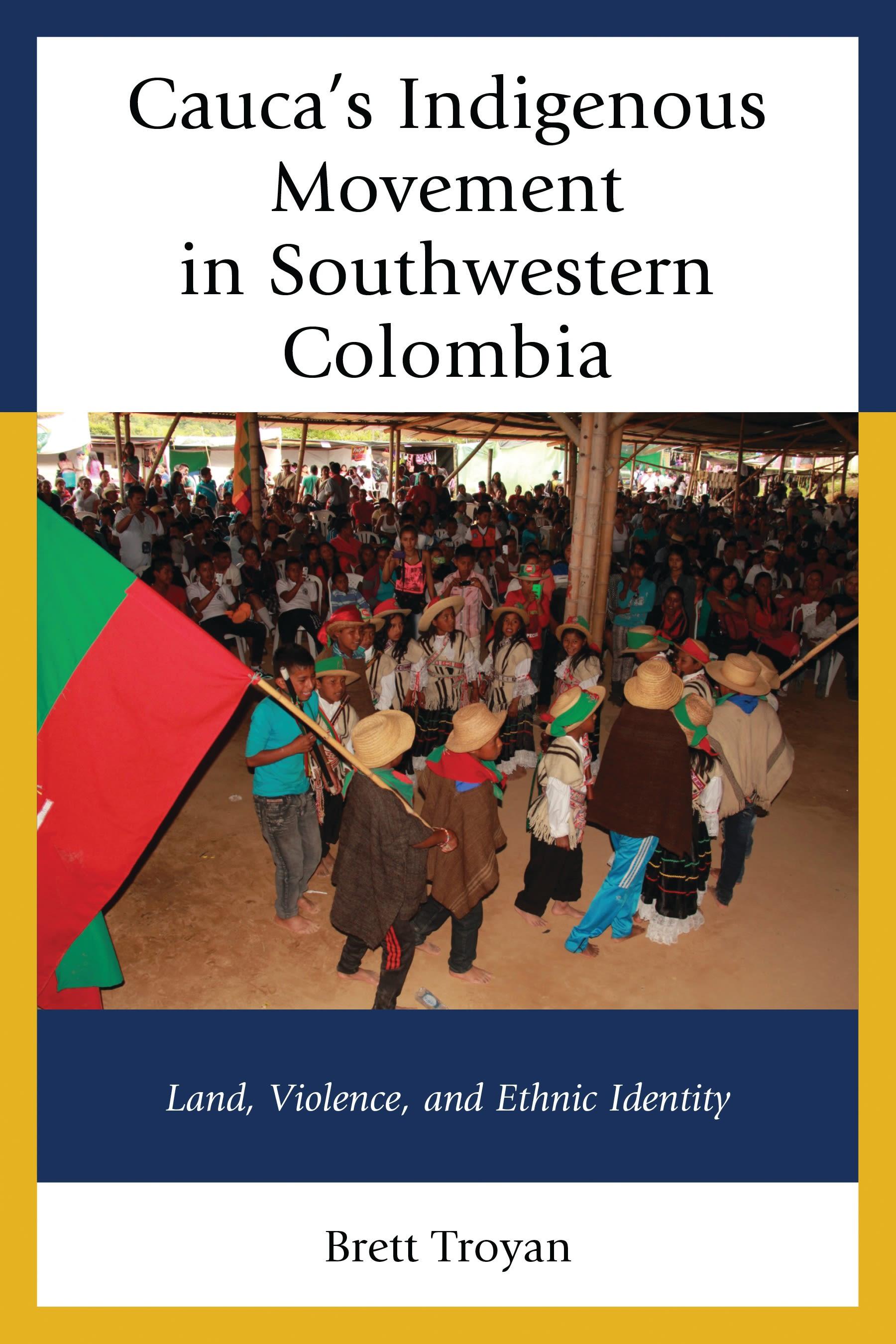
Cauca's Indigenous Movement in Southwestern Colombia: Land, Violence, and Ethnic Identity provides a vivid account of how the indigenous communities of Cauca in southwestern Colombia engaged with the Colombian central state. Troyan begins with the question of how 3.4 percent of the Colombian population obtained legal rights to close to a quarter of the national territory. Her in-depth study of the correspondence between the central state and indigenous communities of Cauca reveals that the nation state played a key role in the legitimization of land claims based on ethnic identity. Starting with the indigenous movement led by Manuel Quintín Lame in 1914, this book shows how, in contrast to the local authorities of Cauca, the central state adopted a more sympathetic albeit contradictory approach to indigenous communities’ grievances throughout the twentieth century. Land, Violence, and Cauca's Indigenous Movement in Southwestern Colombia presents an examination of state initiatives in the 1930s, 1950s, 1960s, and 1970s toward indigenous communities in Cauca, whichsheds light on the political and social construction of Colombian indigenous identity. Troyan also reveals how violence and the representation of violence shaped the conversations between the central state and indigenous communities of Cauca; the central state’s inability to exert a monopoly on violence, Troyan argues, places indigenous communities and their leaders in jeopardy despite the discursive legitimization of land claims based on ethnic identity.
Pay easily by card, Klarna, Apple Pay or Google Pay. Not happy? You always have a 14-day money-back guarantee. Read more in our terms. If you have any questions, email us at hello@memmo.org.
Memmo makes studying easier – wherever you are in the world. We bring your course books and smart study tools together in one place: summaries, quizzes, podcasts and flashcards. Plus Ted, your study buddy who answers anything you wonder. Over 50,000 students already study here – built to help you learn faster and stress less.