
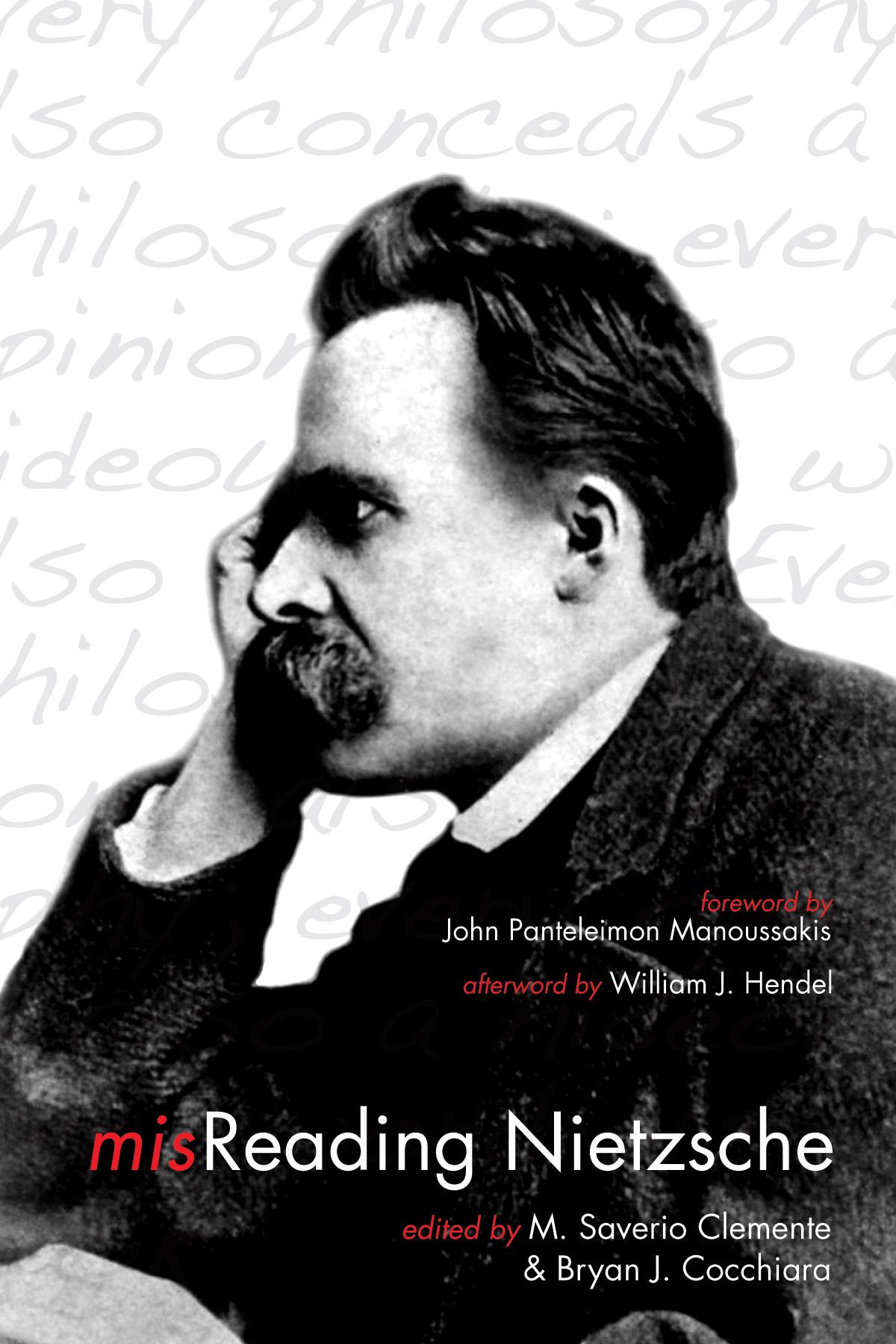
Perhaps more than any philosophy written in the past few centuries, the work of Friedrich Nietzsche has given rise to controversy, misunderstanding, and dissent. Today Nietzsche is remembered as the revolutionary author of such polemical ideas as the death of God, the revaluation of values, the will to untruth, and the Ubermensch. Yet is Nietzsche's philosophy as atheistic, relativistic, nihilistic, and immoral as some commentators have claimed? Or ought we perhaps to give more credence to Nietzsche's own assertion that one writes books "precisely to conceal what one harbors" (BGE, 9, 289)?
If "whatever is profound loves masks" (BGE, 2, 40) then might Nietzsche's more daring claims be interpreted as clever masks behind which he conceals a deeper philosophy and on which he reveals a hidden truth? Is it not possible that the standard readings of Nietzsche are in fact misreadings--that his work invites misreading, that it is intentionally unclear, deceptive, disguised?
The goal of this volume is to reread Nietzsche for all that he shows and all that he hides. It is to dig deeper into his work in order to challenge misreadings of old and invite misreadings anew--as, indeed, his work itself calls for and demands.
Pay easily by card, Klarna, Apple Pay or Google Pay. Not happy? You always have a 14-day money-back guarantee. Read more in our terms. If you have any questions, email us at hello@memmo.org.
Memmo makes studying easier – wherever you are in the world. We bring your course books and smart study tools together in one place: summaries, quizzes, podcasts and flashcards. Plus Ted, your study buddy who answers anything you wonder. Over 50,000 students already study here – built to help you learn faster and stress less.
You might also like
Buy the book0