
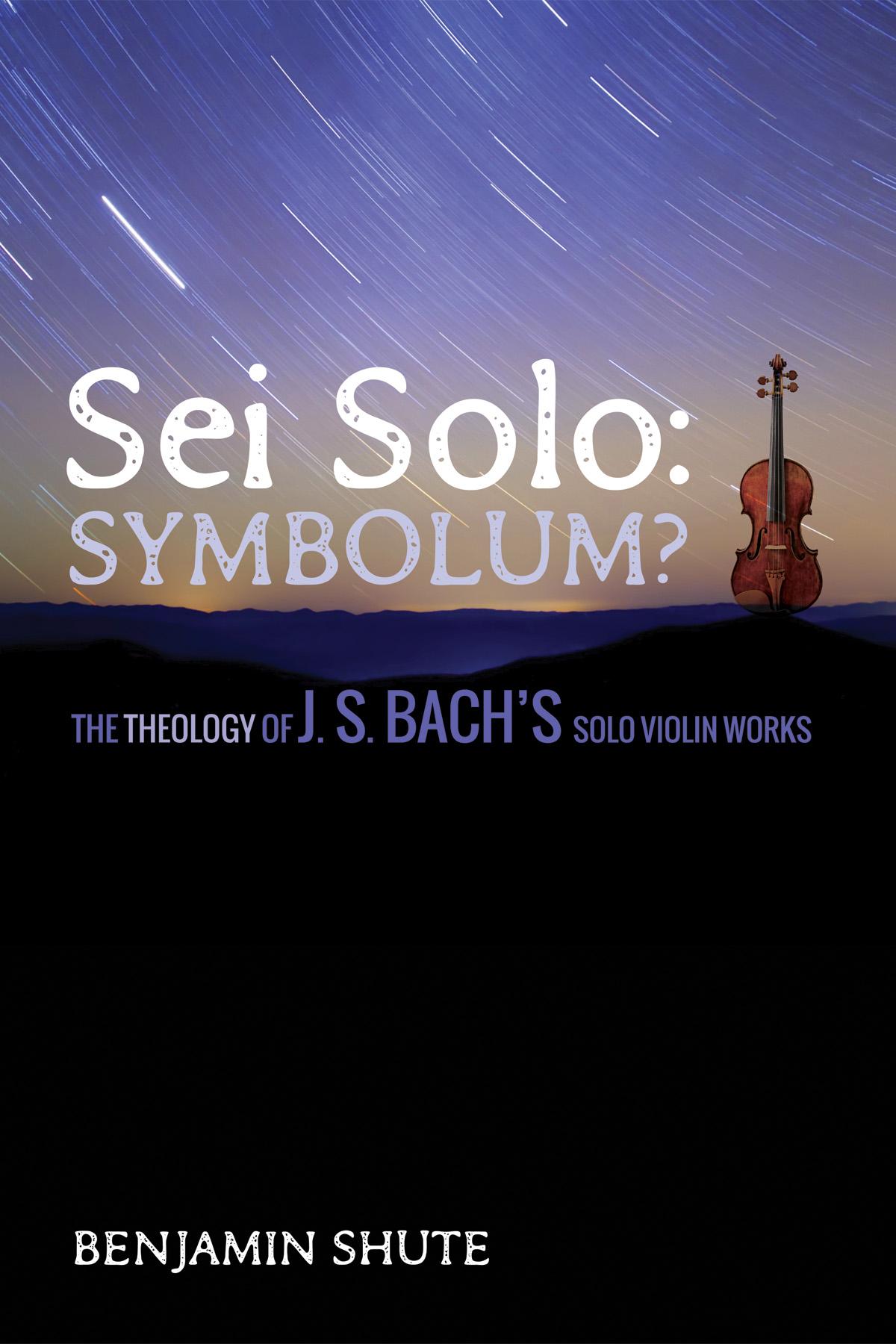
One of the jewels in the crown of Johann Sebastian Bach's sacred music is its use of astonishingly subtle and complex allegorical and representational devices. But when similar devices appear in the context of one of Bach's untexted, secular, instrumental collections such as the Six Solos (sonatas and partitas) for violin, the question arises whether he might be intending to embed discernible theological significances there as well, thus infusing the secular with the sacred. Such designs would be reasonably plausible within Bach's musical, cultural, and religious context.
Shute carefully investigates the extent to which musical features of the Six Solos that seem to invite theological parallels might indeed have been intended to do so. Although the precise extent of Bach's intentions cannot be ascertained with certainty, the degree of correlation among strong potential signifiers would seem to suggest that they, and many other features of the Six Solos, are best explained as the product of extensive theological-allegorical designs on Bach's part, like those evident in his texted vocal music.
Pay easily by card, Klarna, Apple Pay or Google Pay. Not happy? You always have a 14-day money-back guarantee. Read more in our terms. If you have any questions, email us at hello@memmo.org.
Memmo makes studying easier – wherever you are in the world. We bring your course books and smart study tools together in one place: summaries, quizzes, podcasts and flashcards. Plus Ted, your study buddy who answers anything you wonder. Over 50,000 students already study here – built to help you learn faster and stress less.
You might also like
Buy the book0