
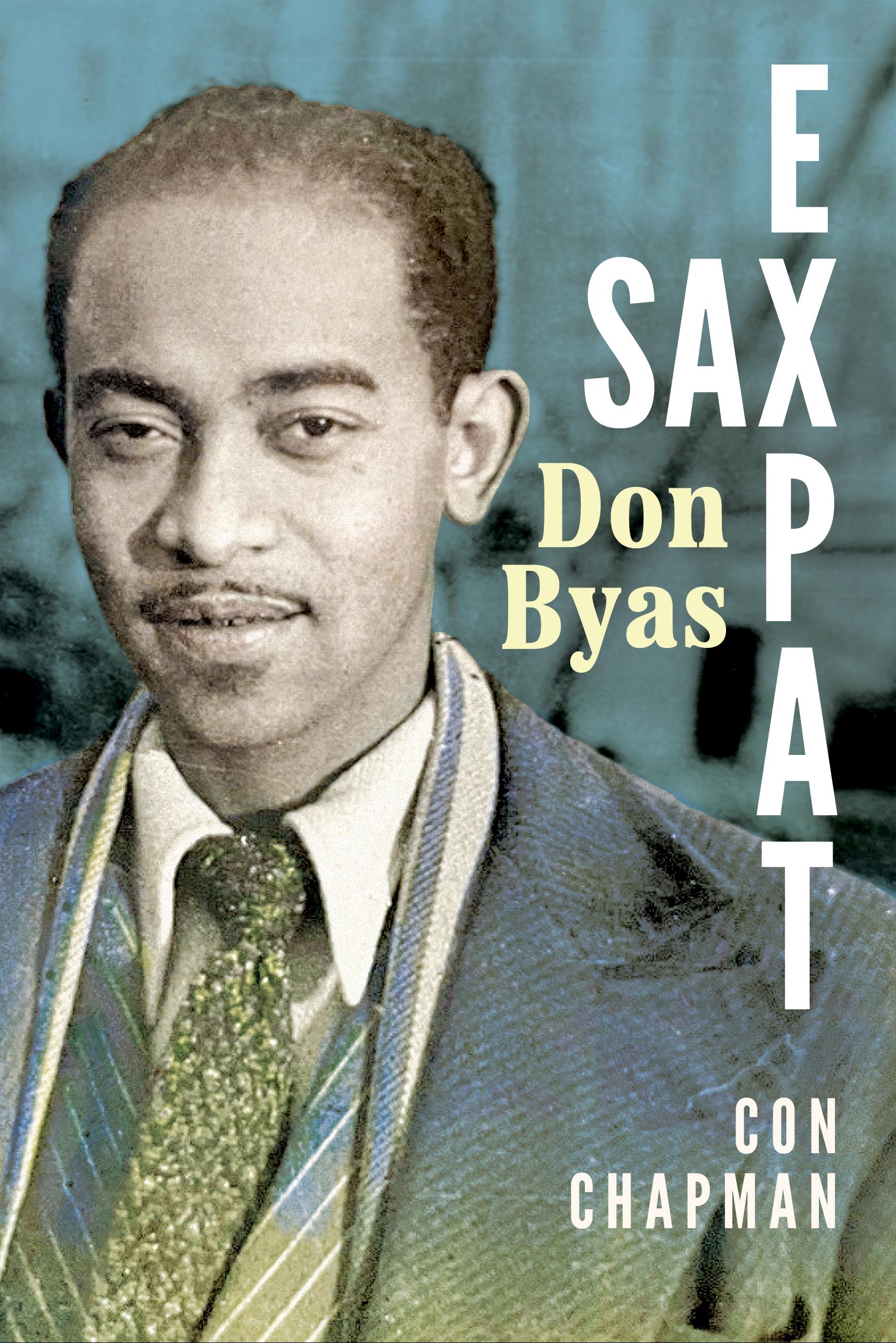
Honorable Mention Recipient for the 2026 Jazz Book of the Year in Biography or Autobiography from the Jazz Journalists Association
Don Byas (1913–1972) may be lesser known than the counterparts he played with—Count Basie, Duke Ellington, and Dizzy Gillespie, among others—but he was an enigma. He never stayed with a band for long, and eventually went solo partly to make more money and partly due to his inability to work with bandleaders. Often drinking to excess, alcohol fueled his sometimes-erratic behavior on and off the bandstand. He went through at least thirteen different groups in fifteen years of professional play before leaving for Europe in 1946.
Despite his fractious personality, in Europe he found peace and contentment as a family man in the Netherlands, where he lived out his days with his second wife and their four children. He learned at least seven languages during his years in Europe, and on traveling to a new country could pick up a few phrases in short order, soon speaking to the locals and even composing songs in their native tongue.
In Sax Expat: Don Byas, author Con Chapman argues that Byas’s relative obscurity arises from his choice to live in Europe, where he missed out on recording opportunities and exposure in the US that would have made him renowned and wealthier. His numerous achievements, including his solo on Count Basie’s “Harvard Blues,” which is a model of restrained invention; his interpretation of the sentimental movie theme “Laura”; and his duets with bassist Slam Stewart were included in the Smithsonian Collection of Classic Jazz and secured Byas’s place in jazz history. This biography brings to life an amazing jazz story.
Don Byas (1913–1972) may be lesser known than the counterparts he played with—Count Basie, Duke Ellington, and Dizzy Gillespie, among others—but he was an enigma. He never stayed with a band for long, and eventually went solo partly to make more money and partly due to his inability to work with bandleaders. Often drinking to excess, alcohol fueled his sometimes-erratic behavior on and off the bandstand. He went through at least thirteen different groups in fifteen years of professional play before leaving for Europe in 1946.
Despite his fractious personality, in Europe he found peace and contentment as a family man in the Netherlands, where he lived out his days with his second wife and their four children. He learned at least seven languages during his years in Europe, and on traveling to a new country could pick up a few phrases in short order, soon speaking to the locals and even composing songs in their native tongue.
In Sax Expat: Don Byas, author Con Chapman argues that Byas’s relative obscurity arises from his choice to live in Europe, where he missed out on recording opportunities and exposure in the US that would have made him renowned and wealthier. His numerous achievements, including his solo on Count Basie’s “Harvard Blues,” which is a model of restrained invention; his interpretation of the sentimental movie theme “Laura”; and his duets with bassist Slam Stewart were included in the Smithsonian Collection of Classic Jazz and secured Byas’s place in jazz history. This biography brings to life an amazing jazz story.
Pay easily by card, Klarna, Apple Pay or Google Pay. Not happy? You always have a 14-day money-back guarantee. Read more in our terms. If you have any questions, email us at hello@memmo.org.
Memmo makes studying easier – wherever you are in the world. We bring your course books and smart study tools together in one place: summaries, quizzes, podcasts and flashcards. Plus Ted, your study buddy who answers anything you wonder. Over 50,000 students already study here – built to help you learn faster and stress less.
You might also like
Buy the book0