
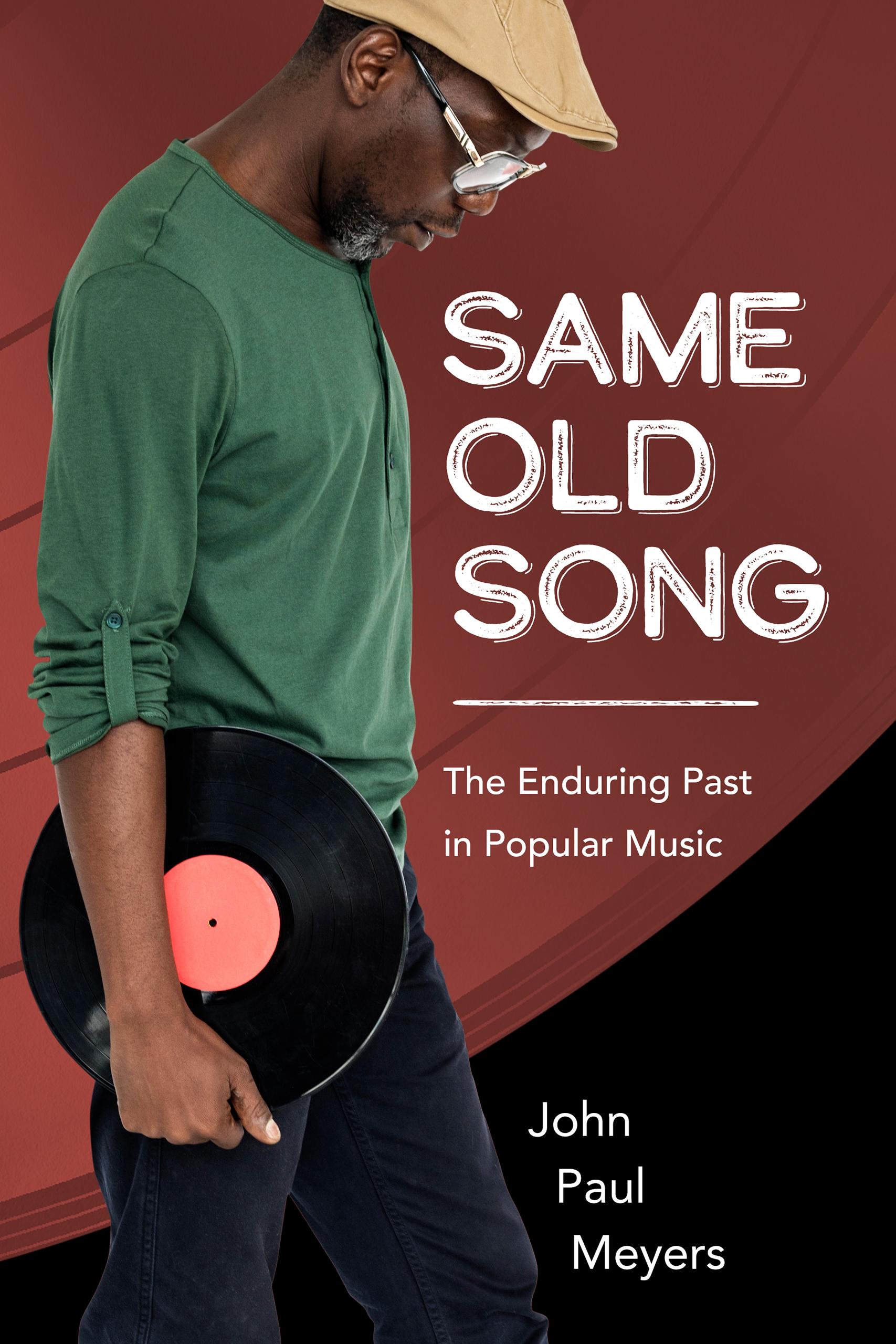
Popular music and its listeners are strongly associated with newness and youth. Young people can stay up late dancing to the latest hits and use cutting-edge technology for listening to and sharing fresh music. Many young people incorporate their devotion to new artists and styles into their own developing personalities. However, if popular music is a genre meant for the youthful, what are listeners to make of the widespread sampling of music from decades-old R&B tracks, sold-out anniversary tours by aging musicians, retrospective box sets of vintage recordings, museum exhibits, and performances by current pop stars invoking music and images of the past?
In Same Old Song: The Enduring Past in Popular Music, John Paul Meyers argues that these phenomena are part of what he calls “historical consciousness in popular music.” These deep relationships with the past are an important but underexamined aspect of how musicians and listeners engage with this key cultural form. In chapters ranging across the landscape of twentieth- and twenty-first-century music, Meyers finds indications of historical consciousness at work in multiple genres. Rock music canonizes its history in tribute performances and museums. Jazz and pop musicians cover tunes from the “Great American Songbook.” Hip-hop and contemporary R&B singers invoke Black popular music from the 1960s and 1970s. Examining the work of influential artists like Ella Fitzgerald, Bob Dylan, Miles Davis, Kanye West, Prince, D’Angelo, and Janelle Monáe, Meyers argues that contemporary artists’ homage to the past is key for understanding how music-lovers make meaning of popular music in the present.
In Same Old Song: The Enduring Past in Popular Music, John Paul Meyers argues that these phenomena are part of what he calls “historical consciousness in popular music.” These deep relationships with the past are an important but underexamined aspect of how musicians and listeners engage with this key cultural form. In chapters ranging across the landscape of twentieth- and twenty-first-century music, Meyers finds indications of historical consciousness at work in multiple genres. Rock music canonizes its history in tribute performances and museums. Jazz and pop musicians cover tunes from the “Great American Songbook.” Hip-hop and contemporary R&B singers invoke Black popular music from the 1960s and 1970s. Examining the work of influential artists like Ella Fitzgerald, Bob Dylan, Miles Davis, Kanye West, Prince, D’Angelo, and Janelle Monáe, Meyers argues that contemporary artists’ homage to the past is key for understanding how music-lovers make meaning of popular music in the present.
Pay easily by card, Klarna, Apple Pay or Google Pay. Not happy? You always have a 14-day money-back guarantee. Read more in our terms. If you have any questions, email us at hello@memmo.org.
Memmo makes studying easier – wherever you are in the world. We bring your course books and smart study tools together in one place: summaries, quizzes, podcasts and flashcards. Plus Ted, your study buddy who answers anything you wonder. Over 50,000 students already study here – built to help you learn faster and stress less.
You might also like
Buy the book0