
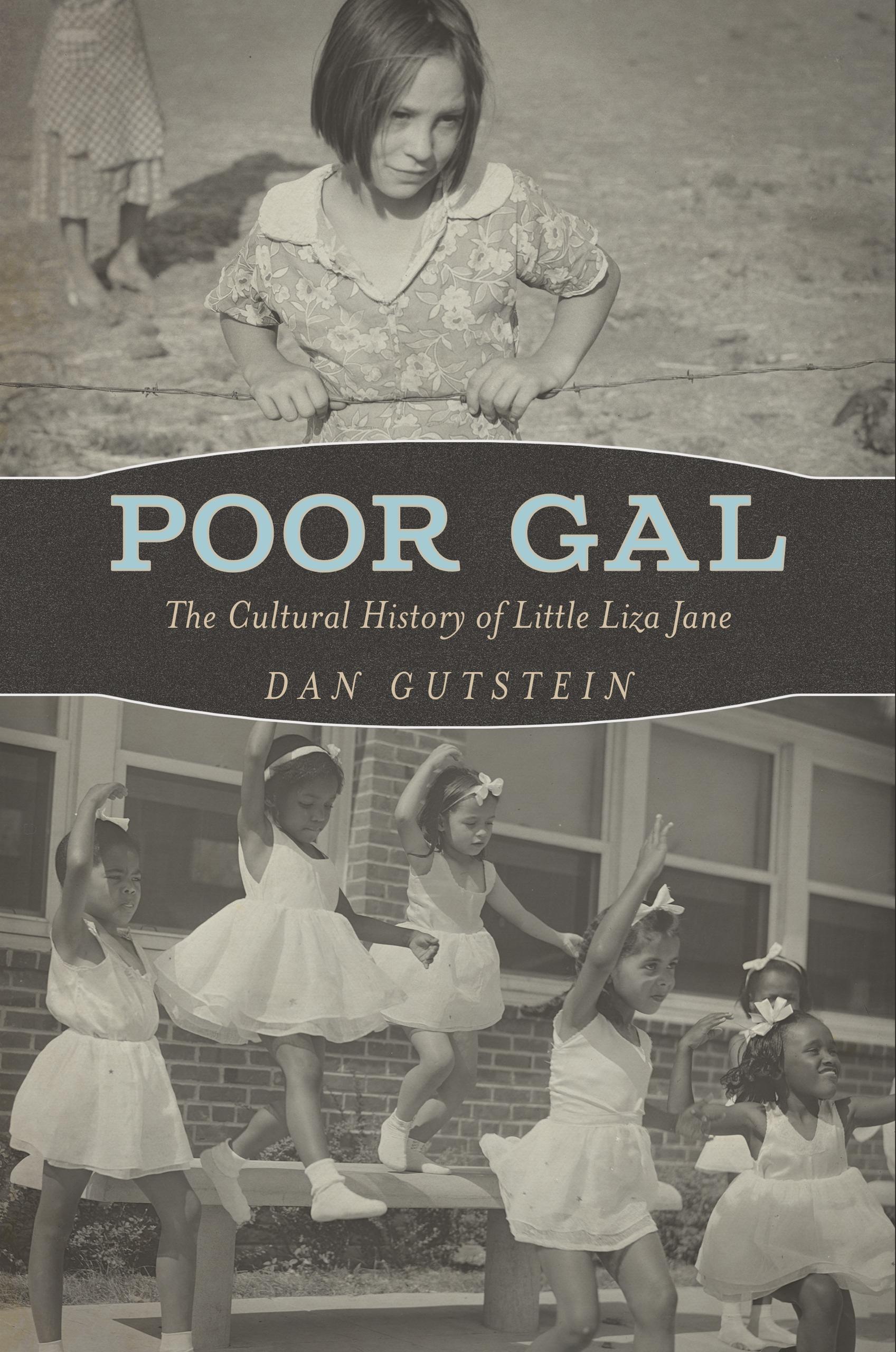
Poor Gal: The Cultural History of Little Liza Jane chronicles the origins and evolution of a folk tune beloved by millions worldwide. Dan Gutstein delves into the trajectory of the “Liza Jane” family of songs, including the most popular variant “Li’l Liza Jane.” Likely originating among enslaved people on southern plantations, the songs are still performed and recorded centuries later.
Evidence for these tunes as part of the repertoire of enslaved people comes from the Works Progress Administration ex-slave narratives that detail a range of lyrics and performance rituals related to “Liza Jane.” Civil War soldiers and minstrel troupes eventually adopted certain variants, including “Goodbye Liza Jane.” This version of the song prospered in the racist environment of burnt cork minstrelsy. Other familiar variants, such as “Little Liza Jane,” likely remained fixed in folk tradition until early twentieth-century sheet music popularized the melody.
New genres and a slate of stellar performers broadly adopted these folk songs, bringing the tunes to far-reaching listeners. In 1960, to an audience of more than thirty million viewers, Harry Belafonte performed “Little Liza Jane” on CBS. The song was featured on such popular radio shows as Fibber McGee & Molly; films such as Coquette; and a Mickey Mouse animation. Hundreds of recognizable performers—including Fats Domino, Bing Crosby, Nina Simone, Mississippi John Hurt, and Pete Seeger—embraced the “Liza Jane” family. David Bowie even released “Liza Jane” as his first single. Gutstein documents these famous renditions, as well as lesser-known characters integral to the song’s history. Drawing upon a host of cultural insights from experts—including Eileen Southern, Carl Sandburg, Thomas Talley, LeRoi Jones/Amiri Baraka, Charles Wolfe, Langston Hughes, and Alan Lomax—Gutstein charts the cross-cultural implications of a voyage unlike any other in the history of American folk music.
Evidence for these tunes as part of the repertoire of enslaved people comes from the Works Progress Administration ex-slave narratives that detail a range of lyrics and performance rituals related to “Liza Jane.” Civil War soldiers and minstrel troupes eventually adopted certain variants, including “Goodbye Liza Jane.” This version of the song prospered in the racist environment of burnt cork minstrelsy. Other familiar variants, such as “Little Liza Jane,” likely remained fixed in folk tradition until early twentieth-century sheet music popularized the melody.
New genres and a slate of stellar performers broadly adopted these folk songs, bringing the tunes to far-reaching listeners. In 1960, to an audience of more than thirty million viewers, Harry Belafonte performed “Little Liza Jane” on CBS. The song was featured on such popular radio shows as Fibber McGee & Molly; films such as Coquette; and a Mickey Mouse animation. Hundreds of recognizable performers—including Fats Domino, Bing Crosby, Nina Simone, Mississippi John Hurt, and Pete Seeger—embraced the “Liza Jane” family. David Bowie even released “Liza Jane” as his first single. Gutstein documents these famous renditions, as well as lesser-known characters integral to the song’s history. Drawing upon a host of cultural insights from experts—including Eileen Southern, Carl Sandburg, Thomas Talley, LeRoi Jones/Amiri Baraka, Charles Wolfe, Langston Hughes, and Alan Lomax—Gutstein charts the cross-cultural implications of a voyage unlike any other in the history of American folk music.
Pay easily by card, Klarna, Apple Pay or Google Pay. Not happy? You always have a 14-day money-back guarantee. Read more in our terms. If you have any questions, email us at hello@memmo.org.
Memmo makes studying easier – wherever you are in the world. We bring your course books and smart study tools together in one place: summaries, quizzes, podcasts and flashcards. Plus Ted, your study buddy who answers anything you wonder. Over 50,000 students already study here – built to help you learn faster and stress less.
You might also like
Buy the book0