
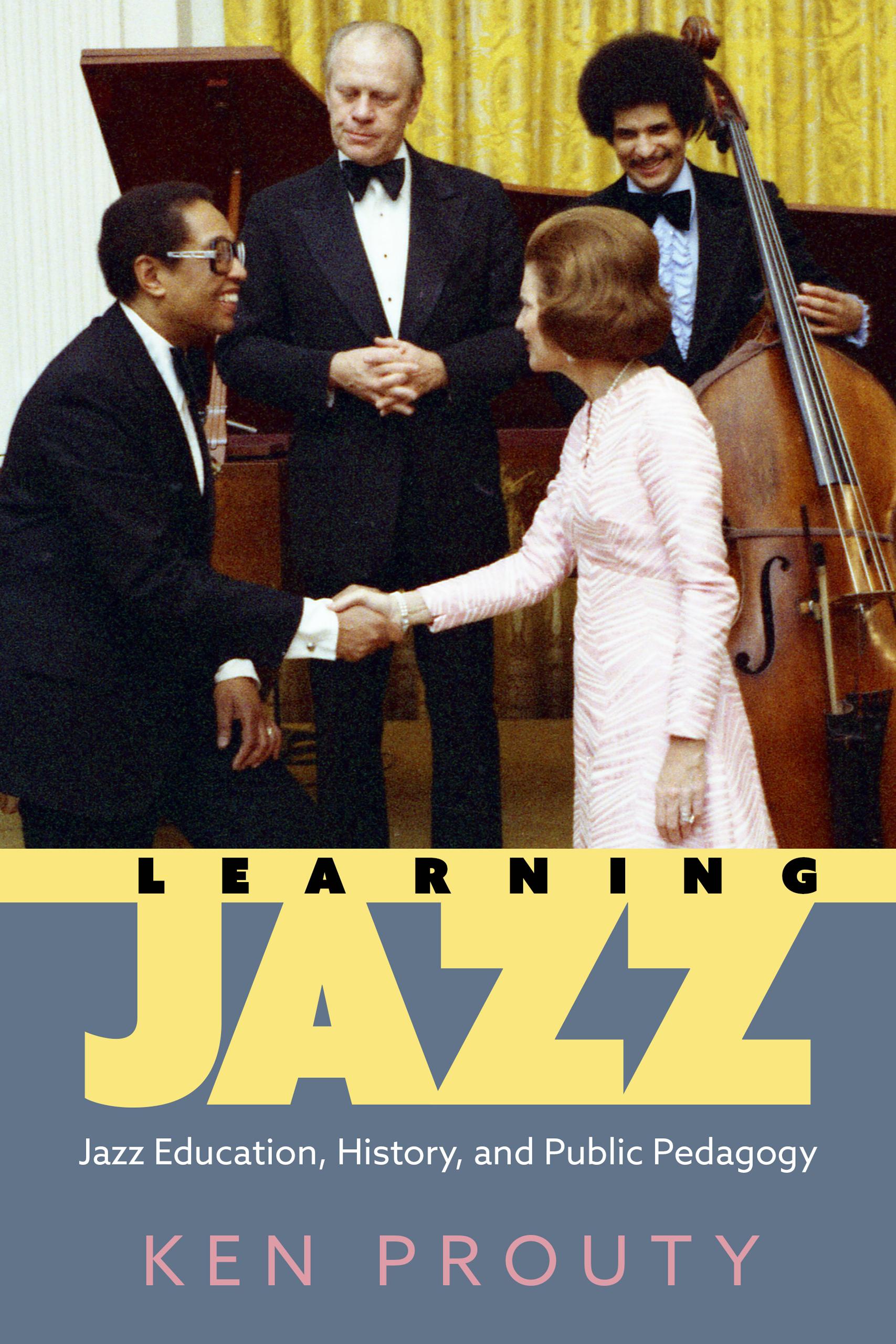
Learning Jazz: Jazz Education, History, and Public Pedagogy addresses a debate that has consumed practitioners and advocates since the music's early days. Studies on jazz learning typically focus on one of two methods: institutional education or the kinds of informal mentoring relationships long associated with the tradition. Ken Prouty argues that this distinction works against a common identity for audiences and communities. Rather, what happens within the institution impacts—and is impacted by—events and practices outside institutional contexts.
While formal institutions are well-defined in educational and civic contexts, informal institutions have profoundly influenced the development of jazz and its discourses. Drawing on historical case studies, Prouty details significant moments in jazz history. He examines the ways that early method books capitalized on a new commercial market, commandeering public expertise about the music. Chapters also discuss critic Paul Eduard Miller and his attempts to develop a jazz canon, as well as the disconnect between the spotlighted “great men” and the everyday realities of artists. Tackling race in jazz education, Prouty explores the intersections between identity and assessment; bandleaders Stan Kenton and Maynard Ferguson; public school segregation; Jazz at Lincoln Center; and more. He further examines jazz’s “public pedagogy,” and the sometimes-difficult relationships between “jazz people” and the general public. Ultimately, Learning Jazz posits that there is room for both institutional and noninstitutional forces in the educational realm of jazz.
While formal institutions are well-defined in educational and civic contexts, informal institutions have profoundly influenced the development of jazz and its discourses. Drawing on historical case studies, Prouty details significant moments in jazz history. He examines the ways that early method books capitalized on a new commercial market, commandeering public expertise about the music. Chapters also discuss critic Paul Eduard Miller and his attempts to develop a jazz canon, as well as the disconnect between the spotlighted “great men” and the everyday realities of artists. Tackling race in jazz education, Prouty explores the intersections between identity and assessment; bandleaders Stan Kenton and Maynard Ferguson; public school segregation; Jazz at Lincoln Center; and more. He further examines jazz’s “public pedagogy,” and the sometimes-difficult relationships between “jazz people” and the general public. Ultimately, Learning Jazz posits that there is room for both institutional and noninstitutional forces in the educational realm of jazz.
Pay easily by card, Klarna, Apple Pay or Google Pay. Not happy? You always have a 14-day money-back guarantee. Read more in our terms. If you have any questions, email us at hello@memmo.org.
Memmo makes studying easier – wherever you are in the world. We bring your course books and smart study tools together in one place: summaries, quizzes, podcasts and flashcards. Plus Ted, your study buddy who answers anything you wonder. Over 50,000 students already study here – built to help you learn faster and stress less.
You might also like
Buy the book0