
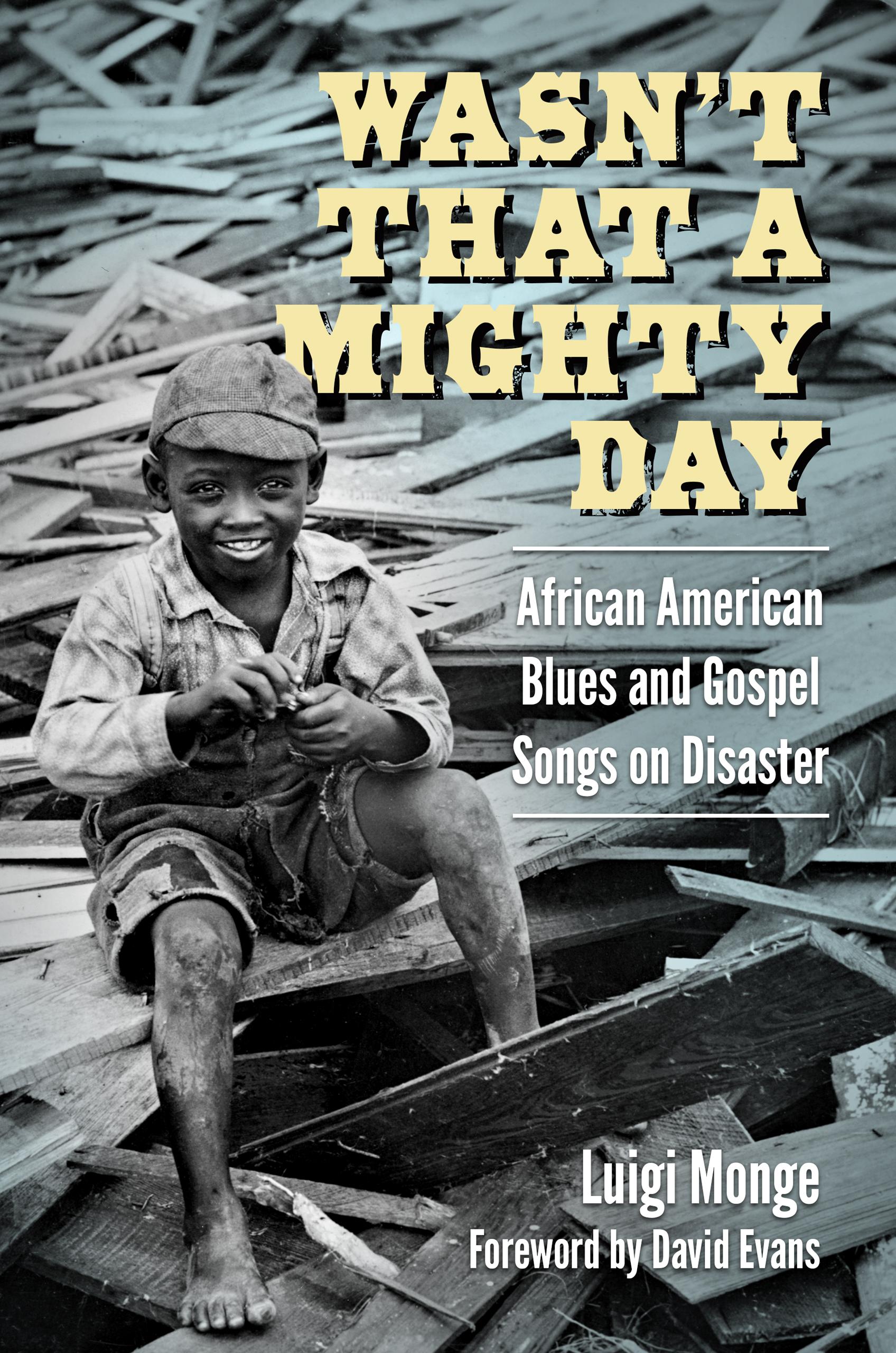
Winner of the 2023 Award for Excellence for Best History in the category of Best Historical Research in Recorded Blues, R&B, Gospel, Hip Hop, or Soul Music from the Association for Recorded Sound Collections
Wasn’t That a Mighty Day: African American Blues and Gospel Songs on Disaster takes a comprehensive look at sacred and secular disaster songs, shining a spotlight on their historical and cultural importance. Featuring newly transcribed lyrics, the book offers sustained attention to how both Black and white communities responded to many of the tragic events that occurred before the mid-1950s.
Through detailed textual analysis, Luigi Monge explores songs on natural disasters (hurricanes, floods, tornadoes, and earthquakes); accidental disasters (sinkings, fires, train wrecks, explosions, and air disasters); and infestations, epidemics, and diseases (the boll weevil, the jake leg, and influenza). Analyzed songs cover some of the most well-known disasters of the time period from the sinking of the Titanic and the 1930 Drought to the Hindenburg accident, and more. Thirty previously unreleased African American disaster songs appear in this volume for the first time, revealing their pertinence to the relevant disasters.
By comparing the song lyrics to critical moments in history, Monge is able to explore how deeply and directly these catastrophes affected Black communities; how African Americans in general, and blues and gospel singers in particular, faced and reacted to disaster; whether these collective tragedies prompted different reactions among white people and, if so, why; and more broadly, how the role of memory in recounting and commenting on historical and cultural facts shaped African American society from 1879 to 1955.
Wasn’t That a Mighty Day: African American Blues and Gospel Songs on Disaster takes a comprehensive look at sacred and secular disaster songs, shining a spotlight on their historical and cultural importance. Featuring newly transcribed lyrics, the book offers sustained attention to how both Black and white communities responded to many of the tragic events that occurred before the mid-1950s.
Through detailed textual analysis, Luigi Monge explores songs on natural disasters (hurricanes, floods, tornadoes, and earthquakes); accidental disasters (sinkings, fires, train wrecks, explosions, and air disasters); and infestations, epidemics, and diseases (the boll weevil, the jake leg, and influenza). Analyzed songs cover some of the most well-known disasters of the time period from the sinking of the Titanic and the 1930 Drought to the Hindenburg accident, and more. Thirty previously unreleased African American disaster songs appear in this volume for the first time, revealing their pertinence to the relevant disasters.
By comparing the song lyrics to critical moments in history, Monge is able to explore how deeply and directly these catastrophes affected Black communities; how African Americans in general, and blues and gospel singers in particular, faced and reacted to disaster; whether these collective tragedies prompted different reactions among white people and, if so, why; and more broadly, how the role of memory in recounting and commenting on historical and cultural facts shaped African American society from 1879 to 1955.
Pay easily by card, Klarna, Apple Pay or Google Pay. Not happy? You always have a 14-day money-back guarantee. Read more in our terms. If you have any questions, email us at hello@memmo.org.
Memmo makes studying easier – wherever you are in the world. We bring your course books and smart study tools together in one place: summaries, quizzes, podcasts and flashcards. Plus Ted, your study buddy who answers anything you wonder. Over 50,000 students already study here – built to help you learn faster and stress less.
You might also like
Buy the book0