
CHOICE Outstanding Academic Title for 2020
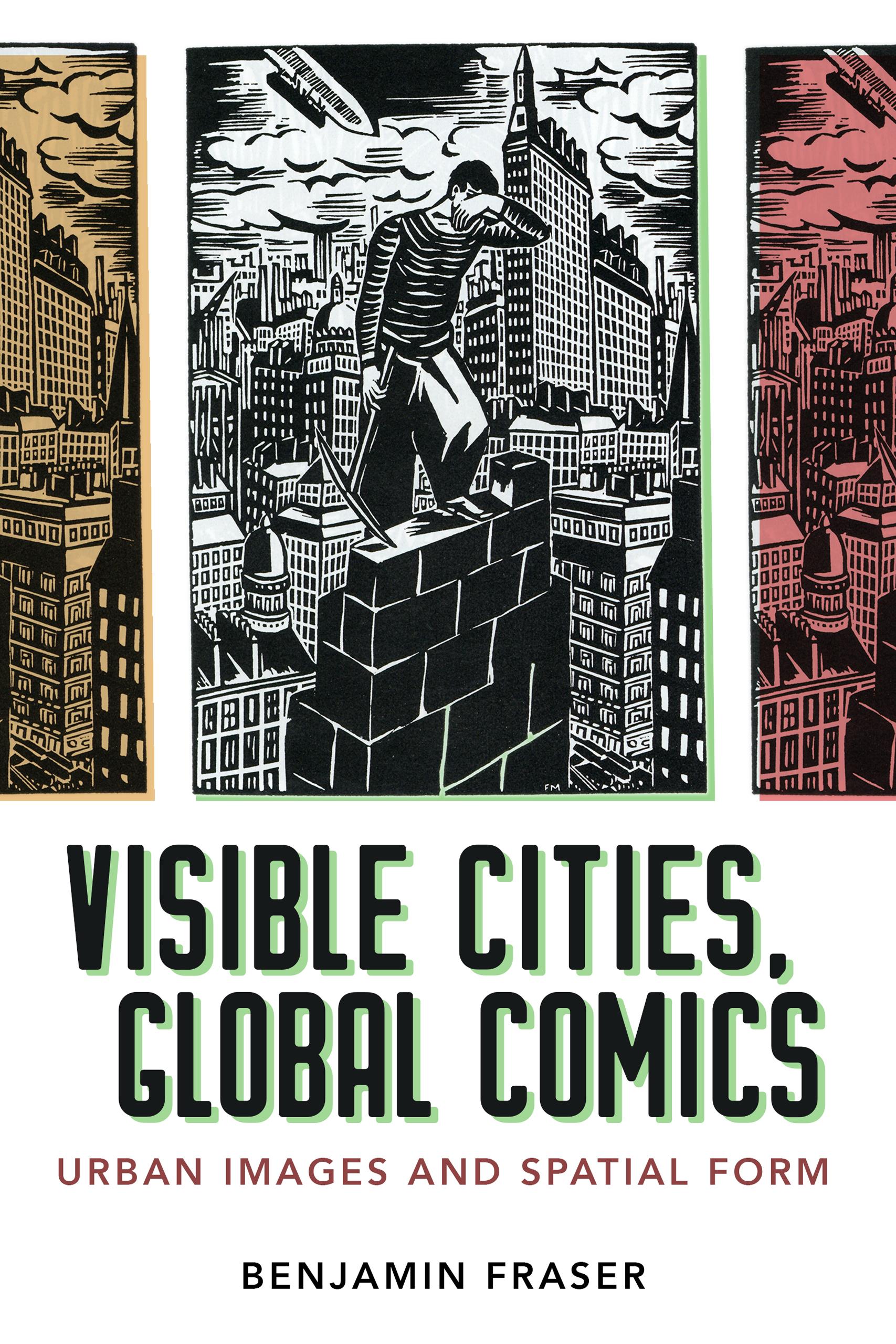
More and more people are noticing links between urban geography and the spaces within the layout of panels on the comics page. Benjamin Fraser explores the representation of the city in a range of comics from across the globe. Comics address the city as an idea, a historical fact, a social construction, a material-built environment, a shared space forged from the collective imagination, or as a social arena navigated according to personal desire. Accordingly, Fraser brings insights from urban theory to bear on specific comics.
The works selected comprise a variety of international, alternative, and independent small-press comics artists, from engravings and early comics to single-panel work, graphic novels, manga, and trading cards, by artists such as Will Eisner, Tsutomu Nihei, Hariton Pushwagner, Julie Doucet, Frans Masereel, and Chris Ware.
In the first monograph on this subject, Fraser touches on many themes of modern urban life: activism, alienation, consumerism, flânerie, gentrification, the mystery story, science fiction, sexual orientation, and working-class labor. He leads readers to images of such cities as Barcelona, Buenos Aires, London, Lyon, Madrid, Montevideo, Montreal, New York, Oslo, Paris, São Paolo, and Tokyo.
Through close readings, each chapter introduces readers to specific comics artists and works and investigates a range of topics related to the medium’s spatial form, stylistic variation, and cultural prominence. Mainly, Fraser mixes interest in urbanism and architecture with the creative strategies that comics artists employ to bring their urban images to life.
More and more people are noticing links between urban geography and the spaces within the layout of panels on the comics page. Benjamin Fraser explores the representation of the city in a range of comics from across the globe. Comics address the city as an idea, a historical fact, a social construction, a material-built environment, a shared space forged from the collective imagination, or as a social arena navigated according to personal desire. Accordingly, Fraser brings insights from urban theory to bear on specific comics.
The works selected comprise a variety of international, alternative, and independent small-press comics artists, from engravings and early comics to single-panel work, graphic novels, manga, and trading cards, by artists such as Will Eisner, Tsutomu Nihei, Hariton Pushwagner, Julie Doucet, Frans Masereel, and Chris Ware.
In the first monograph on this subject, Fraser touches on many themes of modern urban life: activism, alienation, consumerism, flânerie, gentrification, the mystery story, science fiction, sexual orientation, and working-class labor. He leads readers to images of such cities as Barcelona, Buenos Aires, London, Lyon, Madrid, Montevideo, Montreal, New York, Oslo, Paris, São Paolo, and Tokyo.
Through close readings, each chapter introduces readers to specific comics artists and works and investigates a range of topics related to the medium’s spatial form, stylistic variation, and cultural prominence. Mainly, Fraser mixes interest in urbanism and architecture with the creative strategies that comics artists employ to bring their urban images to life.
Pay easily by card, Klarna, Apple Pay or Google Pay. Not happy? You always have a 14-day money-back guarantee. Read more in our terms. If you have any questions, email us at hello@memmo.org.
Memmo makes studying easier – wherever you are in the world. We bring your course books and smart study tools together in one place: summaries, quizzes, podcasts and flashcards. Plus Ted, your study buddy who answers anything you wonder. Over 75,000 students already study here – built to help you learn faster and stress less.
You might also like
Buy the book0