
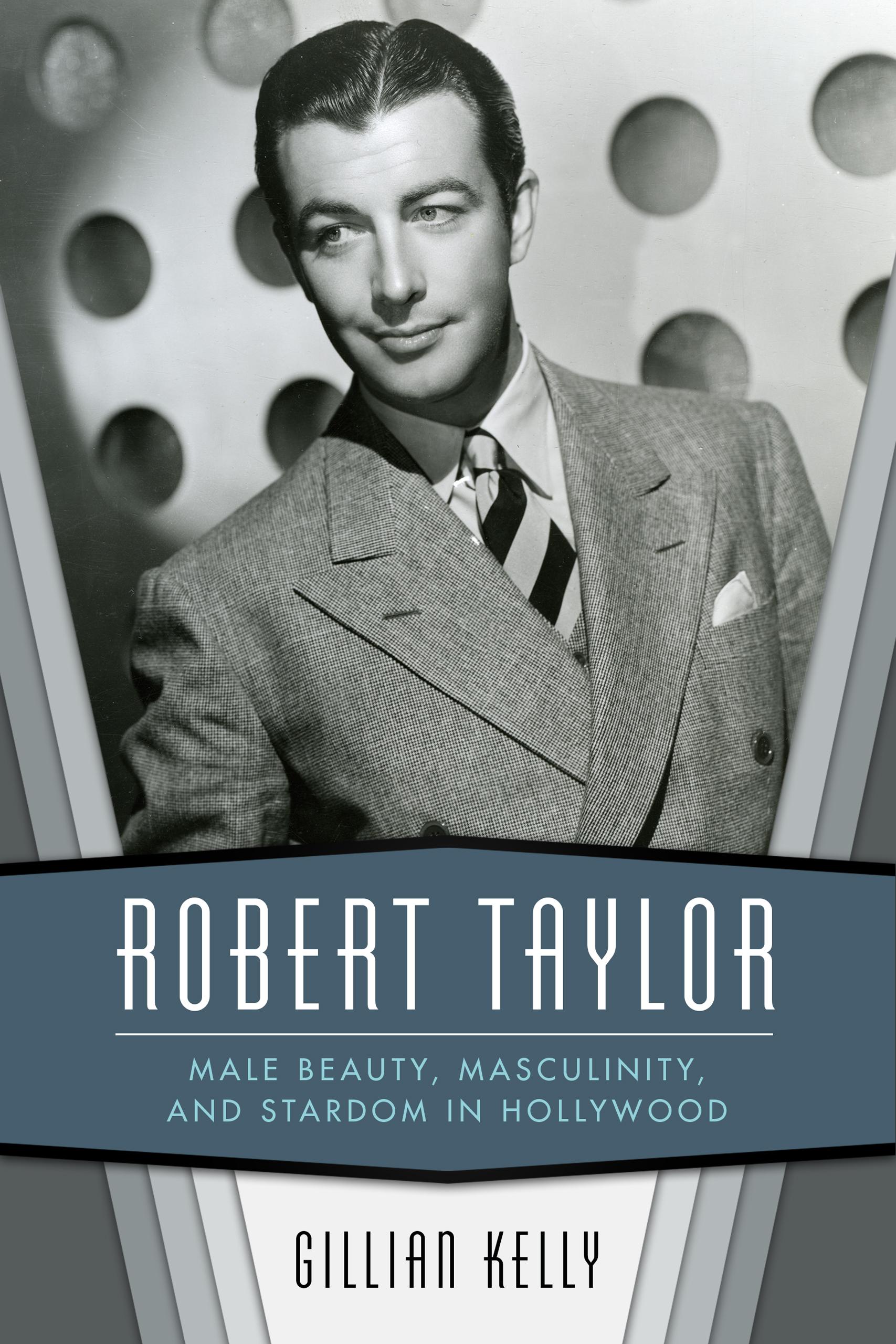
Because of his lengthy screen resume that includes almost eighty appearances in such movies as Camille and Waterloo Bridge, as well as a marriage and divorce to actress Barbara Stanwyck, Robert Taylor was a central figure of Hollywood’s classical era. Despite this, he can be regarded as a “lost” star, an interesting contradiction given the continued success he enjoyed during his lifetime.
In Robert Taylor: Male Beauty, Masculinity, and Stardom in Hollywood, author Gillian Kelly investigates the initial construction and subsequent developments of Taylor's star persona across his thirty-five-year career. By examining concepts of male beauty, men as object of the erotic gaze, white American masculinity, and the unusual longevity of a career initially based on looks, Kelly highlights how gender, masculinity, and male stars and the ageing process affected Taylor's career. Placing Taylor within the histories of both Hollywood’s classical era and mid-twentieth-century America, this study positions him firmly within the wider industrial, cultural, and socioeconomic contexts in which he worked.
Kelly examines Taylor’s film and television work as well as ephemeral material, such as fan magazines, to assess how his on- and off-screen personas were created and developed over time. Taking a mostly chronological approach, Kelly places Taylor’s persona within specific historical moments in order to show the complex paradox of his image remaining consistently recognizable while also shifting seamlessly within the Hollywood industry. Furthermore, she explores Taylor’s importance to Hollywood cinema by demonstrating how a star persona like his can “fit” so well, and for so long, that it almost becomes invisible and, eventually, almost forgotten.
In Robert Taylor: Male Beauty, Masculinity, and Stardom in Hollywood, author Gillian Kelly investigates the initial construction and subsequent developments of Taylor's star persona across his thirty-five-year career. By examining concepts of male beauty, men as object of the erotic gaze, white American masculinity, and the unusual longevity of a career initially based on looks, Kelly highlights how gender, masculinity, and male stars and the ageing process affected Taylor's career. Placing Taylor within the histories of both Hollywood’s classical era and mid-twentieth-century America, this study positions him firmly within the wider industrial, cultural, and socioeconomic contexts in which he worked.
Kelly examines Taylor’s film and television work as well as ephemeral material, such as fan magazines, to assess how his on- and off-screen personas were created and developed over time. Taking a mostly chronological approach, Kelly places Taylor’s persona within specific historical moments in order to show the complex paradox of his image remaining consistently recognizable while also shifting seamlessly within the Hollywood industry. Furthermore, she explores Taylor’s importance to Hollywood cinema by demonstrating how a star persona like his can “fit” so well, and for so long, that it almost becomes invisible and, eventually, almost forgotten.
Pages: 218
Category: Film- & Medievetenskap
e-ISBN: 9781496823151
Shipping weight: 1.2 kg
Ships in: 1-2 days
Pay easily by card, Klarna, Apple Pay or Google Pay. Not happy? You always have a 14-day money-back guarantee. Read more in our terms. If you have any questions, email us at hello@memmo.org.
Memmo makes studying easier – wherever you are in the world. We bring your course books and smart study tools together in one place: summaries, quizzes, podcasts and flashcards. Plus Ted, your study buddy who answers anything you wonder. Over 50,000 students already study here – built to help you learn faster and stress less.
You might also like
Buy the book0