
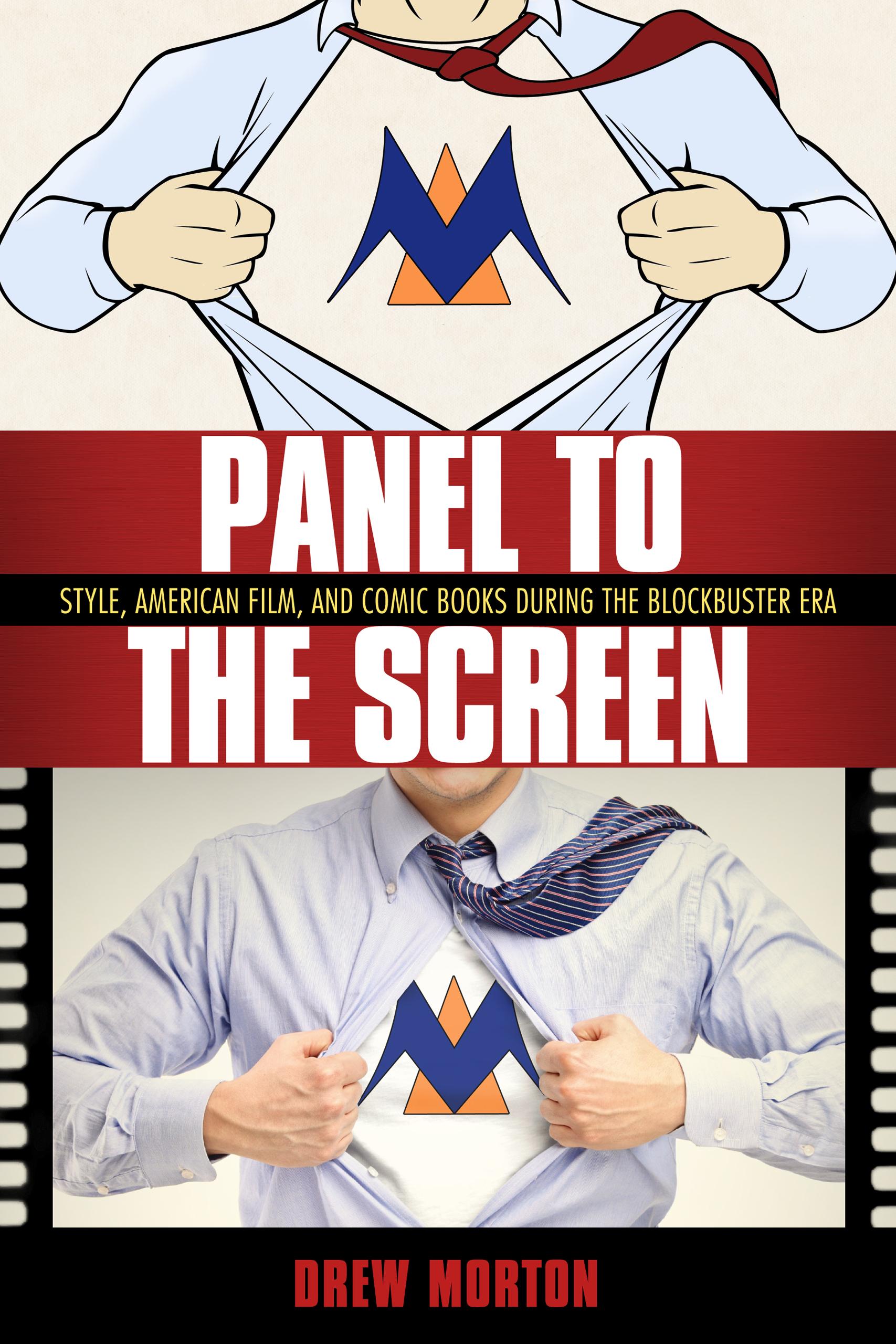
Over the past forty years, American film has entered into a formal interaction with the comic book. Such comic book adaptations as Sin City, 300, and Scott Pilgrim vs. the World have adopted components of their source materials' visual style. The screen has been fractured into panels, the photographic has given way to the graphic, and the steady rhythm of cinematic time has evolved into a far more malleable element. In other words, films have begun to look like comics.
Yet, this interplay also occurs in the other direction. In order to retain cultural relevancy, comic books have begun to look like films. Frank Miller's original Sin City comics are indebted to film noir while Stephen King's The Dark Tower series could be a Sergio Leone spaghetti western translated onto paper. Film and comic books continuously lean on one another to reimagine their formal attributes and stylistic possibilities.
In Panel to the Screen, Drew Morton examines this dialogue in its intersecting and rapidly changing cultural, technological, and industrial contexts. Early on, many questioned the prospect of a "low" art form suited for children translating into “high” art material capable of drawing colossal box office takes. Now the naysayers are as quiet as the queued crowds at Comic-Cons are massive. Morton provides a nuanced account of this phenomenon by using formal analysis of the texts in a real-world context of studio budgets, grosses, and audience reception.
Yet, this interplay also occurs in the other direction. In order to retain cultural relevancy, comic books have begun to look like films. Frank Miller's original Sin City comics are indebted to film noir while Stephen King's The Dark Tower series could be a Sergio Leone spaghetti western translated onto paper. Film and comic books continuously lean on one another to reimagine their formal attributes and stylistic possibilities.
In Panel to the Screen, Drew Morton examines this dialogue in its intersecting and rapidly changing cultural, technological, and industrial contexts. Early on, many questioned the prospect of a "low" art form suited for children translating into “high” art material capable of drawing colossal box office takes. Now the naysayers are as quiet as the queued crowds at Comic-Cons are massive. Morton provides a nuanced account of this phenomenon by using formal analysis of the texts in a real-world context of studio budgets, grosses, and audience reception.
Pages: 208
Category: Film- & Medievetenskap
e-ISBN: 9781496809797
Shipping weight: 1.2 kg
Ships in: 1-2 days
Pay easily by card, Klarna, Apple Pay or Google Pay. Not happy? You always have a 14-day money-back guarantee. Read more in our terms. If you have any questions, email us at hello@memmo.org.
Memmo makes studying easier – wherever you are in the world. We bring your course books and smart study tools together in one place: summaries, quizzes, podcasts and flashcards. Plus Ted, your study buddy who answers anything you wonder. Over 50,000 students already study here – built to help you learn faster and stress less.
You might also like
Buy the book0