
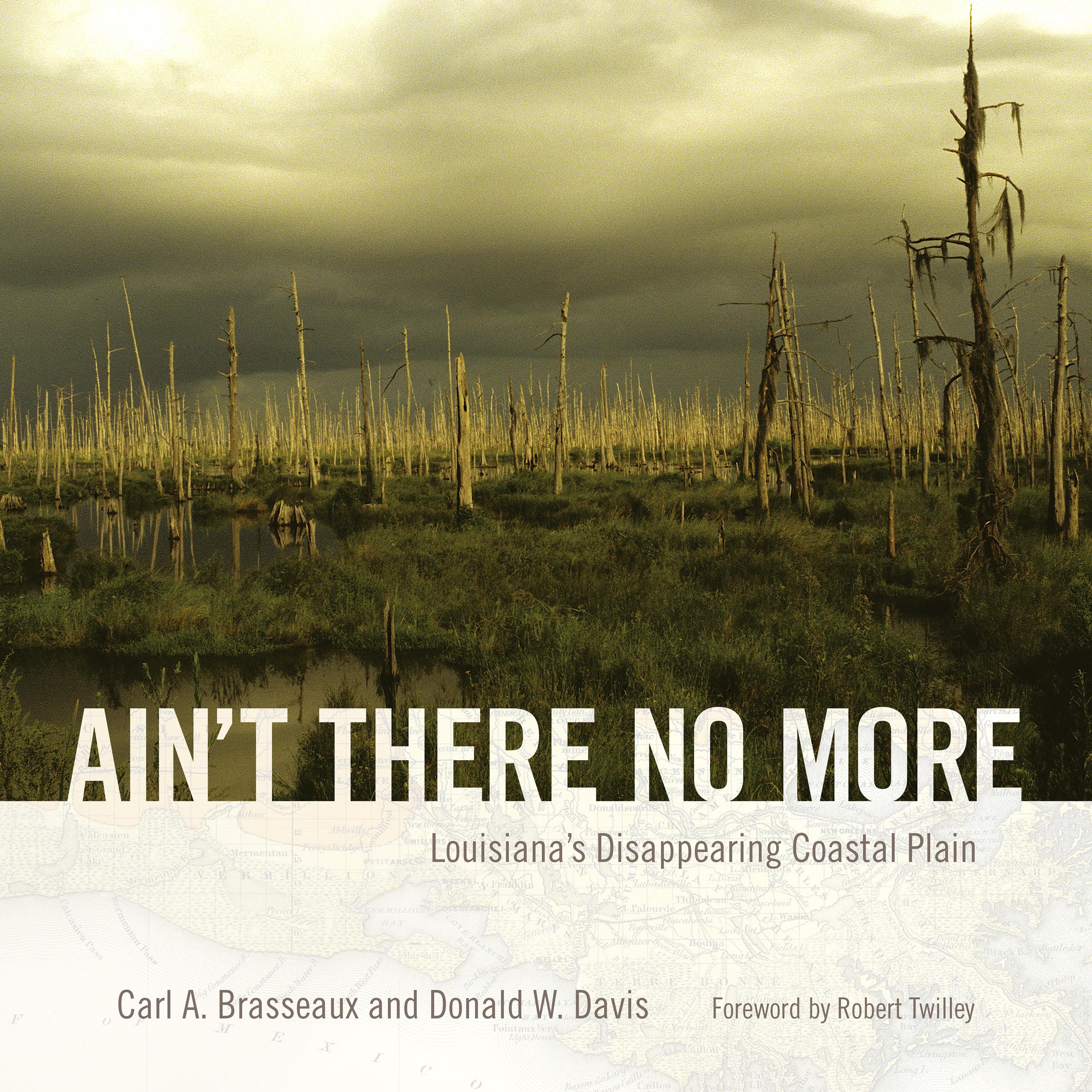
Winner of the 2018 Louisiana Literary Award given by the Louisiana Library Association
For centuries, outlanders have openly denigrated Louisiana's coastal wetlands residents and their stubborn refusal to abandon the region's fragile prairies tremblants despite repeated natural and, more recently, man-made disasters. Yet, the cumulative environmental knowledge these wetlands survivors have gained through painful experiences over the course of two centuries holds invaluable keys to the successful adaptation of modern coastal communities throughout the globe. As Hurricane Sandy recently demonstrated, coastal peoples everywhere face rising sea levels, disastrous coastal erosion, and, inevitably, difficult lifestyle choices.
Along the Bayou State's coast the most insidious challenges are man-made. Since channelization of the Mississippi River in the wake of the 1927 flood, which diverted sediments and nutrients from the wetlands, coastal Louisiana has lost to erosion, subsidence, and rising sea levels a land mass roughly twice the size of Connecticut. State and national policymakers were unable to reverse this environmental catastrophe until Hurricane Katrina focused a harsh spotlight on the human consequences of eight decades of neglect. Yet, even today, the welfare of Louisiana's coastal plain residents remains, at best, an afterthought in state and national policy discussions.
For coastal families, the Gulf water lapping at the doorstep makes this morass by no means a scholarly debate over abstract problems. Ain't There No More renders an easily read history filled with new insights and possibilities. Rare, previously unpublished images documenting a disappearing way of life accompany the narrative. The authors bring nearly a century of combined experience to distilling research and telling this story in a way invaluable to Louisianans, to policymakers, and to all those concerned with rising sea levels and seeking a long-term solution.
For centuries, outlanders have openly denigrated Louisiana's coastal wetlands residents and their stubborn refusal to abandon the region's fragile prairies tremblants despite repeated natural and, more recently, man-made disasters. Yet, the cumulative environmental knowledge these wetlands survivors have gained through painful experiences over the course of two centuries holds invaluable keys to the successful adaptation of modern coastal communities throughout the globe. As Hurricane Sandy recently demonstrated, coastal peoples everywhere face rising sea levels, disastrous coastal erosion, and, inevitably, difficult lifestyle choices.
Along the Bayou State's coast the most insidious challenges are man-made. Since channelization of the Mississippi River in the wake of the 1927 flood, which diverted sediments and nutrients from the wetlands, coastal Louisiana has lost to erosion, subsidence, and rising sea levels a land mass roughly twice the size of Connecticut. State and national policymakers were unable to reverse this environmental catastrophe until Hurricane Katrina focused a harsh spotlight on the human consequences of eight decades of neglect. Yet, even today, the welfare of Louisiana's coastal plain residents remains, at best, an afterthought in state and national policy discussions.
For coastal families, the Gulf water lapping at the doorstep makes this morass by no means a scholarly debate over abstract problems. Ain't There No More renders an easily read history filled with new insights and possibilities. Rare, previously unpublished images documenting a disappearing way of life accompany the narrative. The authors bring nearly a century of combined experience to distilling research and telling this story in a way invaluable to Louisianans, to policymakers, and to all those concerned with rising sea levels and seeking a long-term solution.
Pages: 232
Category: Miljövetenskap & Klimat
e-ISBN: 9781496809490
Shipping weight: 1.2 kg
Ships in: 1-2 days
Pay easily by card, Klarna, Apple Pay or Google Pay. Not happy? You always have a 14-day money-back guarantee. Read more in our terms. If you have any questions, email us at hello@memmo.org.
Memmo makes studying easier – wherever you are in the world. We bring your course books and smart study tools together in one place: summaries, quizzes, podcasts and flashcards. Plus Ted, your study buddy who answers anything you wonder. Over 50,000 students already study here – built to help you learn faster and stress less.
You might also like
Buy the book0