
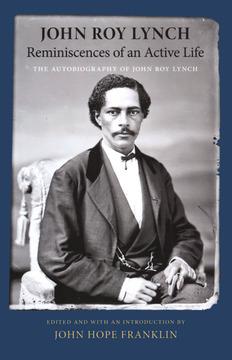
Born into slavery on a Louisiana plantation, John Roy Lynch (1847–1939) came to adulthood during the Reconstruction Era and lived a public-spirited life for over three decades. His political career began in 1869 with his appointment as justice of the peace. Within the year, he was elected to the Mississippi legislature and was later elected Speaker of the House. At age twenty-five, Lynch became the first African American from Mississippi to be elected to the United States Congress. He led the fight to secure passage of the Civil Rights Bill of 1875. In 1884, he was elected temporary chairman of the Eighth Republican National Convention and was the first black American to deliver the keynote address.
His autobiography, Reminiscences of an Active Life, reflects Lynch's thoughtful and nuanced understanding of the past and of his own experience. The book, written when he was ninety, challenges a number of traditional arguments about Reconstruction. In his experience, African Americans in the South competed on an equal basis with whites; the state governments were responsive to the needs of the people; and race was not always a decisive factor in the politics of Reconstruction.
The autobiography, which would not be published until 1970, provides rich material for the study of American politics and race relations during Reconstruction. It sheds light on presidential patronage, congressional deals, and personality conflicts among national political figures. Lynch's childhood reflections reveal new dimensions to our understanding of black experience during slavery and beyond. An introduction by John Hope Franklin puts Lynch's public and private lives in the context of his times and provides an overview of how Reminiscences of an Active Life came to be written.
His autobiography, Reminiscences of an Active Life, reflects Lynch's thoughtful and nuanced understanding of the past and of his own experience. The book, written when he was ninety, challenges a number of traditional arguments about Reconstruction. In his experience, African Americans in the South competed on an equal basis with whites; the state governments were responsive to the needs of the people; and race was not always a decisive factor in the politics of Reconstruction.
The autobiography, which would not be published until 1970, provides rich material for the study of American politics and race relations during Reconstruction. It sheds light on presidential patronage, congressional deals, and personality conflicts among national political figures. Lynch's childhood reflections reveal new dimensions to our understanding of black experience during slavery and beyond. An introduction by John Hope Franklin puts Lynch's public and private lives in the context of his times and provides an overview of how Reminiscences of an Active Life came to be written.
Pages: 570
Category: Biografi & Memoarer
e-ISBN: 9781496800411
Shipping weight: 1.2 kg
Ships in: 1-2 days
Pay easily by card, Klarna, Apple Pay or Google Pay. Not happy? You always have a 14-day money-back guarantee. Read more in our terms. If you have any questions, email us at hello@memmo.org.
Memmo makes studying easier – wherever you are in the world. We bring your course books and smart study tools together in one place: summaries, quizzes, podcasts and flashcards. Plus Ted, your study buddy who answers anything you wonder. Over 50,000 students already study here – built to help you learn faster and stress less.
You might also like
Buy the book0