
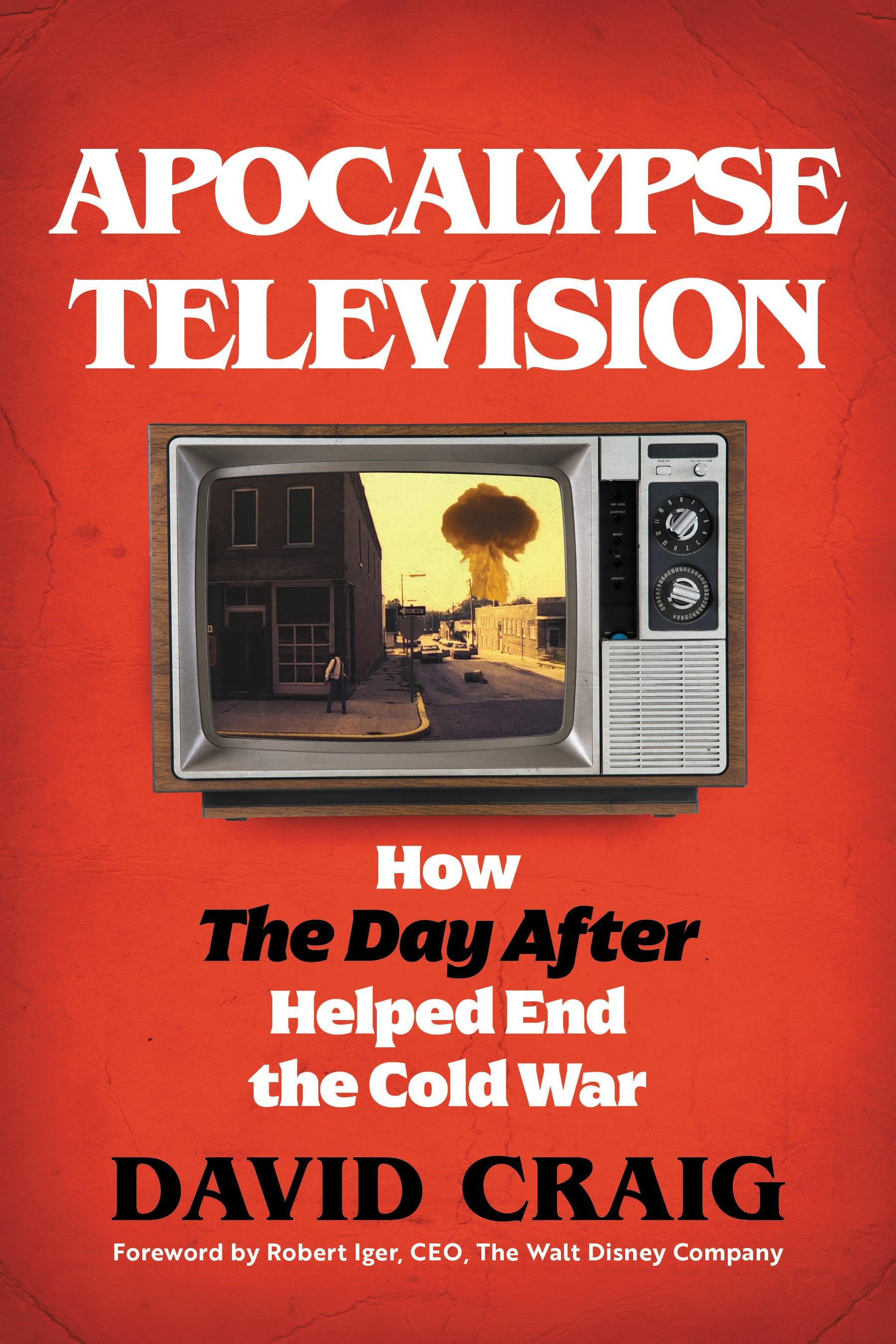
On November 20, 1983, a three-hour made-for-TV movie The Day After premiered on ABC. Set in the heartland of Lawrence, Kansas, the film depicted the events before, during, and after a Soviet nuclear attack with vivid scenes of the post-apocalyptic hellscape that would follow. The film was viewed by over 100 million Americans and remains the highest rated TV movie in history. After the premiere, ABC News aired an episode of Viewpoint, a live special featuring some of the most prominent public intellectuals of the debating the virtues of the Arms Race and the prospect of a winnable nuclear war. The response to the film proved more powerful than perhaps any film or television program in the history of media. Aside from its record-shattering Nielsen ratings, it enjoyed critical acclaim as well as international box office success in theatrical screenings.
The path to primetime for The Day After proved nearly as treacherous as the film’s narrative. Battles ensued behind the scenes at the network, between the network and the filmmakers, with Broadcast Standards and Ad Sales, in the edit room and on the set, including the “nuke-mares” experienced by the cast. After the director was pushed aside, he contemplated suicide while also engineering a comeback through the press. But these skirmishes pale in comparison to the culture wars triggered by the film in the press, alongside a growing Nuclear Freeze movement, and from a united, pro-nuclear Right. Once efforts to alter the script failed, the White House conducted a full-throttled propaganda campaign to hijack the film’s message.
Apocalypse Television features a dramatic insider’s account of the making of and backlash against The Day After. No other book has told this story in similar fashion, venturing behind-the-scenes of the programming and news divisions at ABC, Reagan officials in the White House who mounted the propaganda campaign, rogue publicists who hijacked the film to promote a Nuclear Freeze, the backlash from the conservative movement and Religious Right, the challenges encountered by film’s production team from conception to reception, and the experiences of the citizens of Lawrence, Kansas, where the film was set and shot, if also, ground zero in America’s nuclear heartland.
The path to primetime for The Day After proved nearly as treacherous as the film’s narrative. Battles ensued behind the scenes at the network, between the network and the filmmakers, with Broadcast Standards and Ad Sales, in the edit room and on the set, including the “nuke-mares” experienced by the cast. After the director was pushed aside, he contemplated suicide while also engineering a comeback through the press. But these skirmishes pale in comparison to the culture wars triggered by the film in the press, alongside a growing Nuclear Freeze movement, and from a united, pro-nuclear Right. Once efforts to alter the script failed, the White House conducted a full-throttled propaganda campaign to hijack the film’s message.
Apocalypse Television features a dramatic insider’s account of the making of and backlash against The Day After. No other book has told this story in similar fashion, venturing behind-the-scenes of the programming and news divisions at ABC, Reagan officials in the White House who mounted the propaganda campaign, rogue publicists who hijacked the film to promote a Nuclear Freeze, the backlash from the conservative movement and Religious Right, the challenges encountered by film’s production team from conception to reception, and the experiences of the citizens of Lawrence, Kansas, where the film was set and shot, if also, ground zero in America’s nuclear heartland.
Pages: 272
Category: Film- & Medievetenskap
e-ISBN: 9781493079186
Shipping weight: 1.2 kg
Ships in: 1-2 days
Pay easily by card, Klarna, Apple Pay or Google Pay. Not happy? You always have a 14-day money-back guarantee. Read more in our terms. If you have any questions, email us at hello@memmo.org.
Memmo makes studying easier – wherever you are in the world. We bring your course books and smart study tools together in one place: summaries, quizzes, podcasts and flashcards. Plus Ted, your study buddy who answers anything you wonder. Over 50,000 students already study here – built to help you learn faster and stress less.