
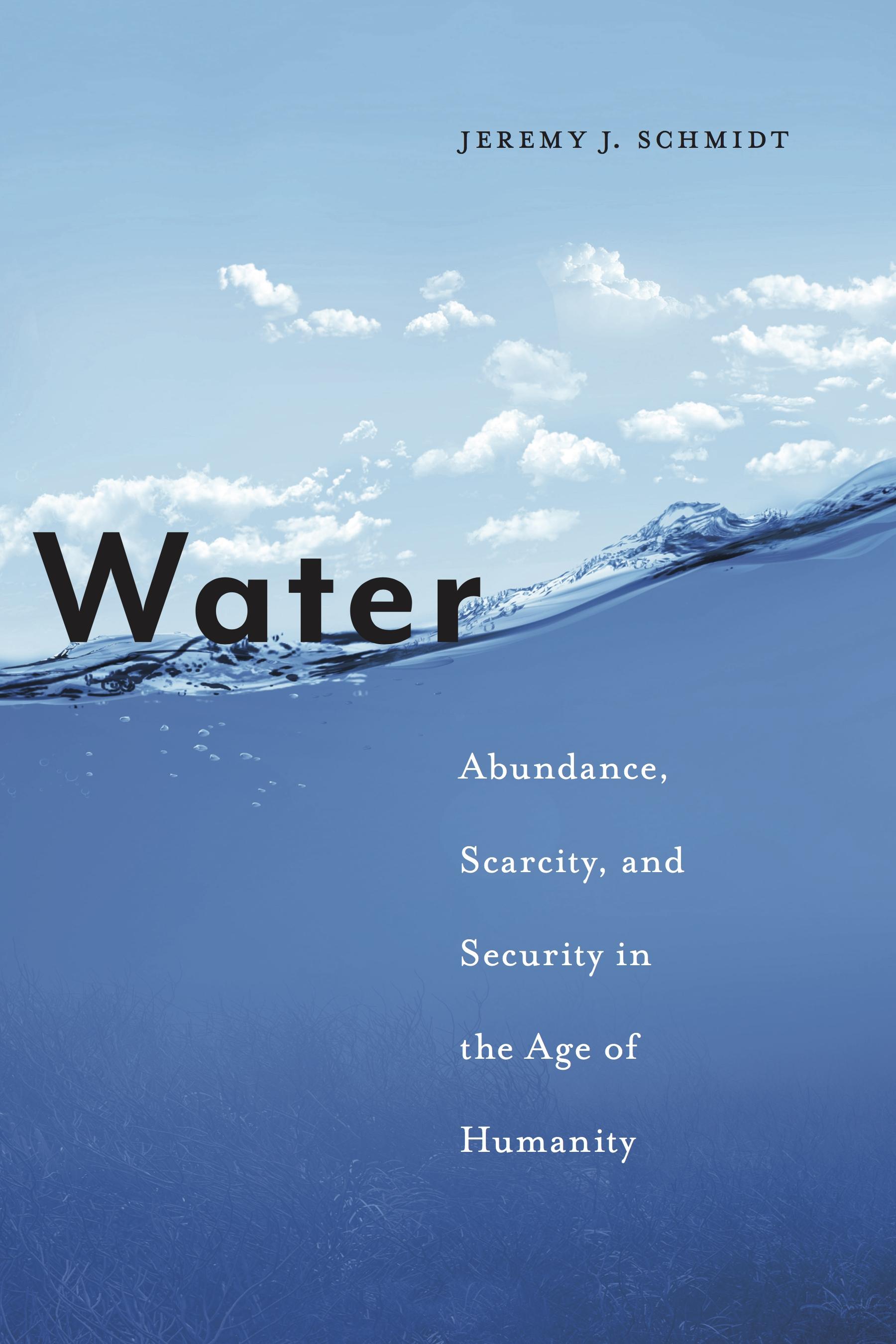
An intellectual history of America's water management philosophy
Humans take more than their geological share of water, but they do not benefit from it equally. This imbalance has created an era of intense water scarcity that affects the security of individuals, states, and the global economy. For many, this brazen water grab and the social inequalities it produces reflect the lack of a coherent philosophy connecting people to the planet. Challenging this view, Jeremy Schmidt shows how water was made a “resource” that linked geology, politics, and culture to American institutions. Understanding the global spread and evolution of this philosophy is now key to addressing inequalities that exist on a geological scale.
Water: Abundance, Scarcity, and Security in the Age of Humanity details the remarkable intellectual history of America’s water management philosophy. It shows how this philosophy shaped early twentieth-century conservation in the United States, influenced American international development programs, and ultimately shaped programs of global governance that today connect water resources to the Earth system. Schmidt demonstrates how the ways we think about water reflect specific public and societal values, and illuminates the process by which the American approach to water management came to dominate the global conversation about water.
Debates over how human impacts on the planet are connected to a new geological epoch—the Anthropocene—tend to focus on either the social causes of environmental crises or scientific assessments of the Earth system. Schmidt shows how, when it comes to water, the two are one and the same. The very way we think about managing water resources validates putting ever more water to use for some human purposes at the expense of others.
Pay easily by card, Klarna, Apple Pay or Google Pay. Not happy? You always have a 14-day money-back guarantee. Read more in our terms. If you have any questions, email us at hello@memmo.org.
Memmo makes studying easier – wherever you are in the world. We bring your course books and smart study tools together in one place: summaries, quizzes, podcasts and flashcards. Plus Ted, your study buddy who answers anything you wonder. Over 50,000 students already study here – built to help you learn faster and stress less.