
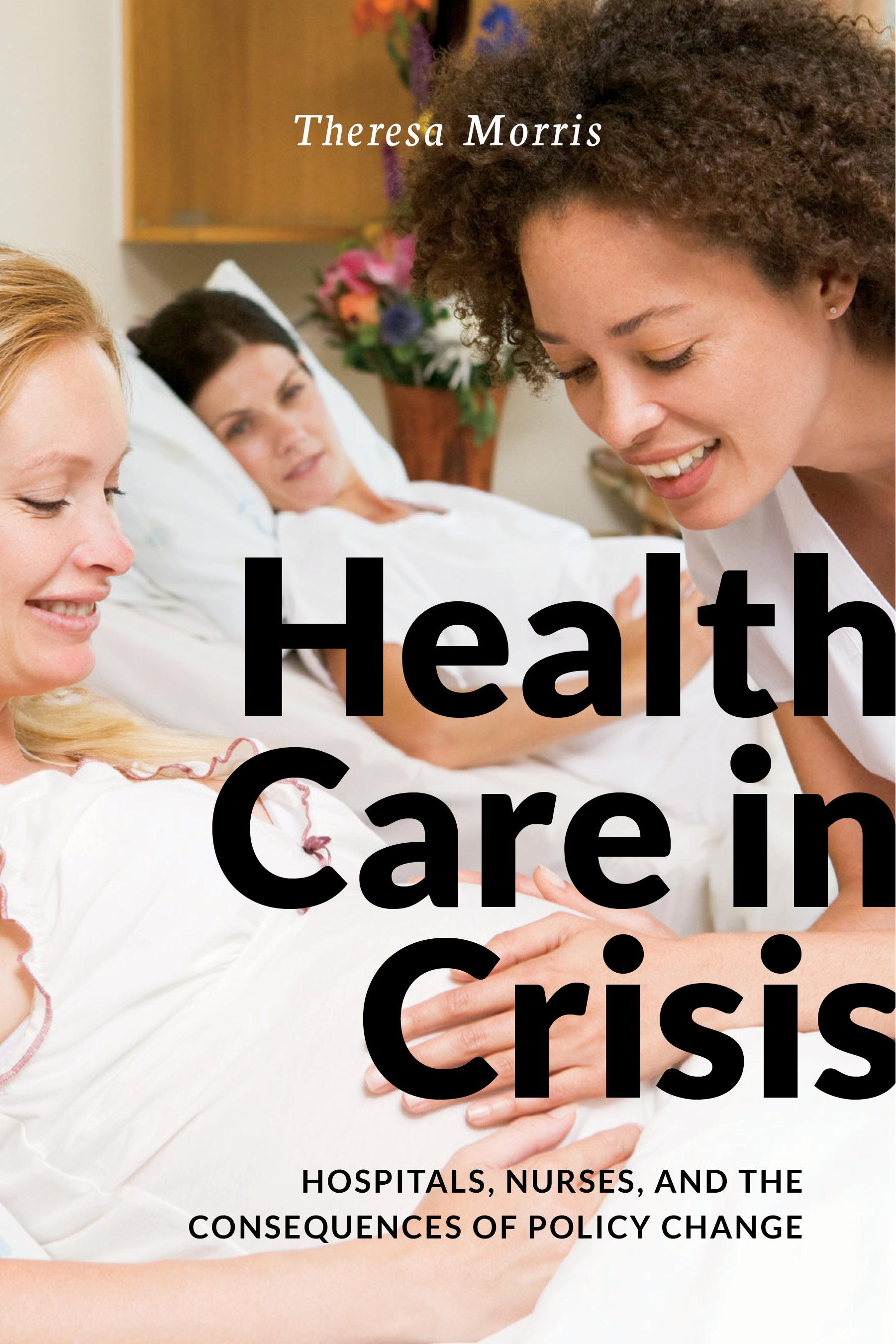
An inside look into how hospitals, nurses, and patients are faring under the Affordable Care Act
More and more not-for-profit hospitals are becoming financially unstable and being acquired by large hospital systems. The effects range from not having necessary life-saving equipment to losing the most experienced nurses to better jobs at other hospitals. In Health Care in Crisis, Theresa Morris takes an in-depth look at how this unintended consequence of the Affordable Care Act plays out in a non-profit hospital’s obstetrical ward.
Based on ethnographic observations of and in-depth interviews with obstetrical nurses and hospital administrators at a community, not-for-profit hospital in New England, Health Care in Crisis examines how nurses’ care of patients changed over the three-year period in which the Affordable Care Act was implemented, state Medicaid funds to hospitals were slashed, and hospitals were being acquired by a for-profit hospital system. Morris explains how the tumultuous political-economic changes have challenged obstetrical nurses, who are at the front lines of providing care for women during labor and birth.
In the context of a new environment where hospital reimbursements are tied to performance, nursing has come under much scrutiny as documentation of births—already laboriously high—has reached even greater levels. Providing patient-centered care is an organizational challenge that nurses struggle to master in this context. Some nurses become bogged down by new processes and bureaucratic procedures, while others focus on buffering patients from the effects of these changes with little success. Morris maintains that what is most important in delivering quality care to patients is the amount of interaction time spent with patients, yet finding that time is a real challenge in this new environment.
As questions and policies regarding health care are changing rapidly, Health Care in Crisis tells an important story of how these changes affect nurses’ ability to care for their patients.
Pay easily by card, Klarna, Apple Pay or Google Pay. Not happy? You always have a 14-day money-back guarantee. Read more in our terms. If you have any questions, email us at hello@memmo.org.
Memmo makes studying easier – wherever you are in the world. We bring your course books and smart study tools together in one place: summaries, quizzes, podcasts and flashcards. Plus Ted, your study buddy who answers anything you wonder. Over 50,000 students already study here – built to help you learn faster and stress less.