
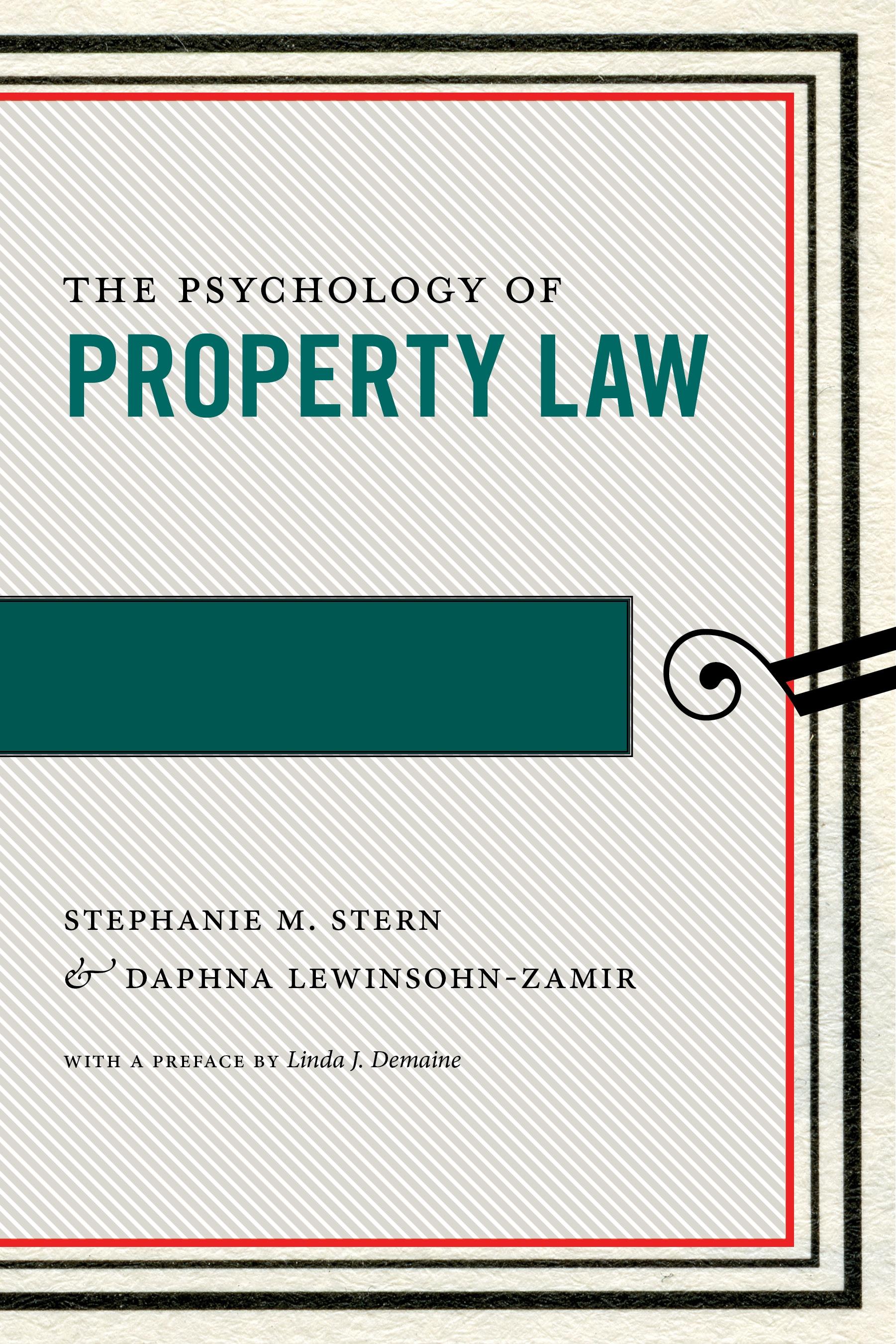
Considers how research in psychology offers new perspectives on property law, and suggests avenues of reform
Property law governs the acquisition, use and transfer of resources. It resolves competing claims to property, provides legal rules for transactions, affords protection to property from interference by the state, and determines remedies for injury to property rights. In seeking to accomplish these goals, the law of property is concerned with human cognition and behavior. How do we allocate property, both initially and over time, and what factors determine the perceived fairness of those distributions? What social and psychological forces underlie determinations that certain uses of property are reasonable? What remedies do property owners prefer?
The Psychology of Property Law explains how assumptions about human judgement, decision-making and behavior have shaped different property rules and examines to what extent these assumptions are supported by the research. Employing key findings from psychology, the book considers whether property law’s goals could be achieved more successfully with different rules. In addition, the book highlights property laws and conflicts that offer productive areas for further behaviorally-informed research.
The book critically addresses several topics from property law for which psychology has a great deal to contribute. These include ownership and possession, legal protections for residential and personal property, takings of property by the state, redistribution through property law, real estate transactions, discrimination in housing and land use, and remedies for injury to property.
Pay easily by card, Klarna, Apple Pay or Google Pay. Not happy? You always have a 14-day money-back guarantee. Read more in our terms. If you have any questions, email us at hello@memmo.org.
Memmo makes studying easier – wherever you are in the world. We bring your course books and smart study tools together in one place: summaries, quizzes, podcasts and flashcards. Plus Ted, your study buddy who answers anything you wonder. Over 50,000 students already study here – built to help you learn faster and stress less.