
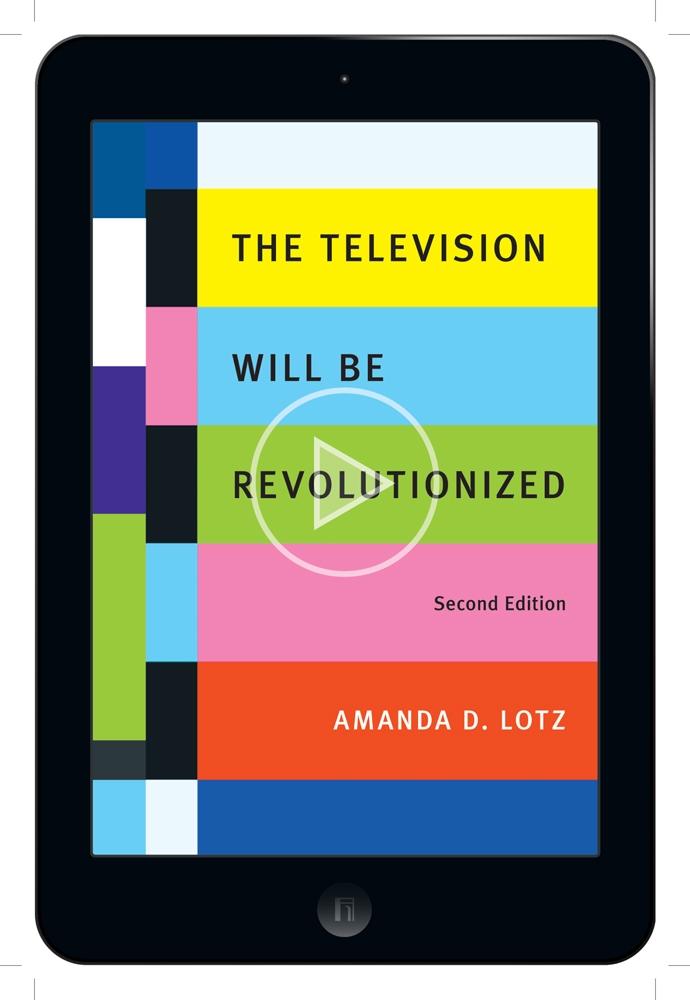
Go behind the TV screen to explore what is changing, why it is changing, and why the changes matters
Many proclaimed the “end of television” in the early years of the twenty-first century, as capabilities and features of the boxes that occupied a central space in American living rooms for the preceding fifty years were radically remade. In this revised, second edition of her definitive book, Amanda D. Lotz proves that rumors of the death of television were greatly exaggerated and explores how new distribution and viewing technologies have resurrected the medium. Shifts in the basic practices of making and distributing television have not been hastening its demise, but are redefining what we can do with television, what we expect from it, how we use it—in short, revolutionizing it.
Television, as both a technology and a tool for cultural storytelling, remains as important today as ever, but it has changed in fundamental ways. The Television Will Be Revolutionized provides a sophisticated history of the present, examining television in what Lotz terms the “post-network” era while providing frameworks for understanding the continued change in the medium. The second edition addresses adjustments throughout the industry wrought by broadband delivered television such as Netflix, YouTube, and cross-platform initiatives like TV Everywhere, as well as how technologies such as tablets and smartphones have changed how and where we view. Lotz begins to deconstruct the future of different kinds of television—exploring how “prized content,” live television sports and contests, and linear viewing may all be “television,” but very different types of television for both viewers and producers.
Through interviews with those working in the industry, surveys of trade publications, and consideration of an extensive array of popular shows, Lotz takes us behind the screen to explore what is changing, why it is changing, and why the changes matter.
Pay easily by card, Klarna, Apple Pay or Google Pay. Not happy? You always have a 14-day money-back guarantee. Read more in our terms. If you have any questions, email us at hello@memmo.org.
Memmo makes studying easier – wherever you are in the world. We bring your course books and smart study tools together in one place: summaries, quizzes, podcasts and flashcards. Plus Ted, your study buddy who answers anything you wonder. Over 50,000 students already study here – built to help you learn faster and stress less.