
Winner, 2024 George Freedley Memorial Award, given by the Theatre Library Association
Winner, Labriola National American Indian Data Center 2025 National Book Award
Winner, 2025 Outstanding Book Award (for Scholarly Achievement), given by the Association for Theatre in Higher Education
Finalist, 2025 John W. Frick Book Award, given by the American Theatre and Drama Society
Considers the character of the “Stage Indian” in American theater and its racial and political impact
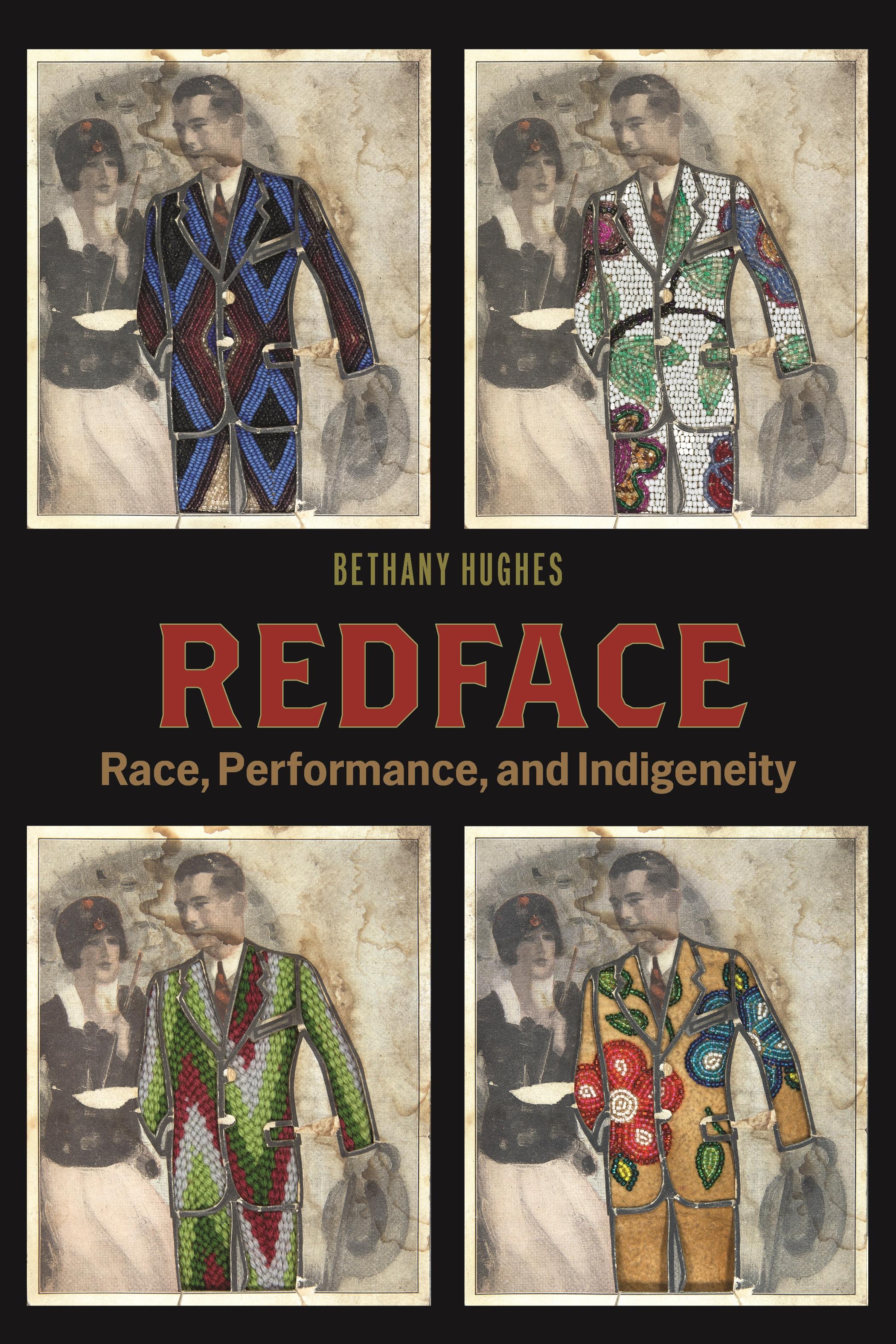
Redface unearths the history of the theatrical phenomenon of redface in nineteenth- and twentieth-century America. Like blackface, redface was used to racialize Indigenous peoples and nations, and even more crucially, exclude them from full citizenship in the United States. Arguing that redface is more than just the costumes or makeup an actor wears, Bethany Hughes contends that it is a collaborative, curatorial process through which artists and audiences make certain bodies legible as “Indian.” By chronicling how performances and definitions of redface rely upon legibility and delineations of race that are culturally constructed and routinely shifting, this book offers an understanding of how redface works to naturalize a very particular version of history and, in doing so, mask its own performativity.
Tracing the “Stage Indian” from its early nineteenth-century roots to its proliferation across theatrical entertainment forms and turn of the twenty-first century attempts to address its racist legacy, Redface uses case studies in law and civic life to understand its offstage impact. Hughes connects extensive scholarship on the “Indian” in American culture to the theatrical history of racial impersonation and critiques of settler colonialism, demonstrating redface’s high stakes for Indigenous and non-Indigenous alike. Revealing the persistence of redface and the challenges of fixing it, Redface closes by offering readers an embodied rehearsal of what it would mean to read not for the “Indian” but for Indigenous theater and performance as it has always existed in the US.
Pay easily by card, Klarna, Apple Pay or Google Pay. Not happy? You always have a 14-day money-back guarantee. Read more in our terms. If you have any questions, email us at hello@memmo.org.
Memmo makes studying easier – wherever you are in the world. We bring your course books and smart study tools together in one place: summaries, quizzes, podcasts and flashcards. Plus Ted, your study buddy who answers anything you wonder. Over 75,000 students already study here – built to help you learn faster and stress less.