
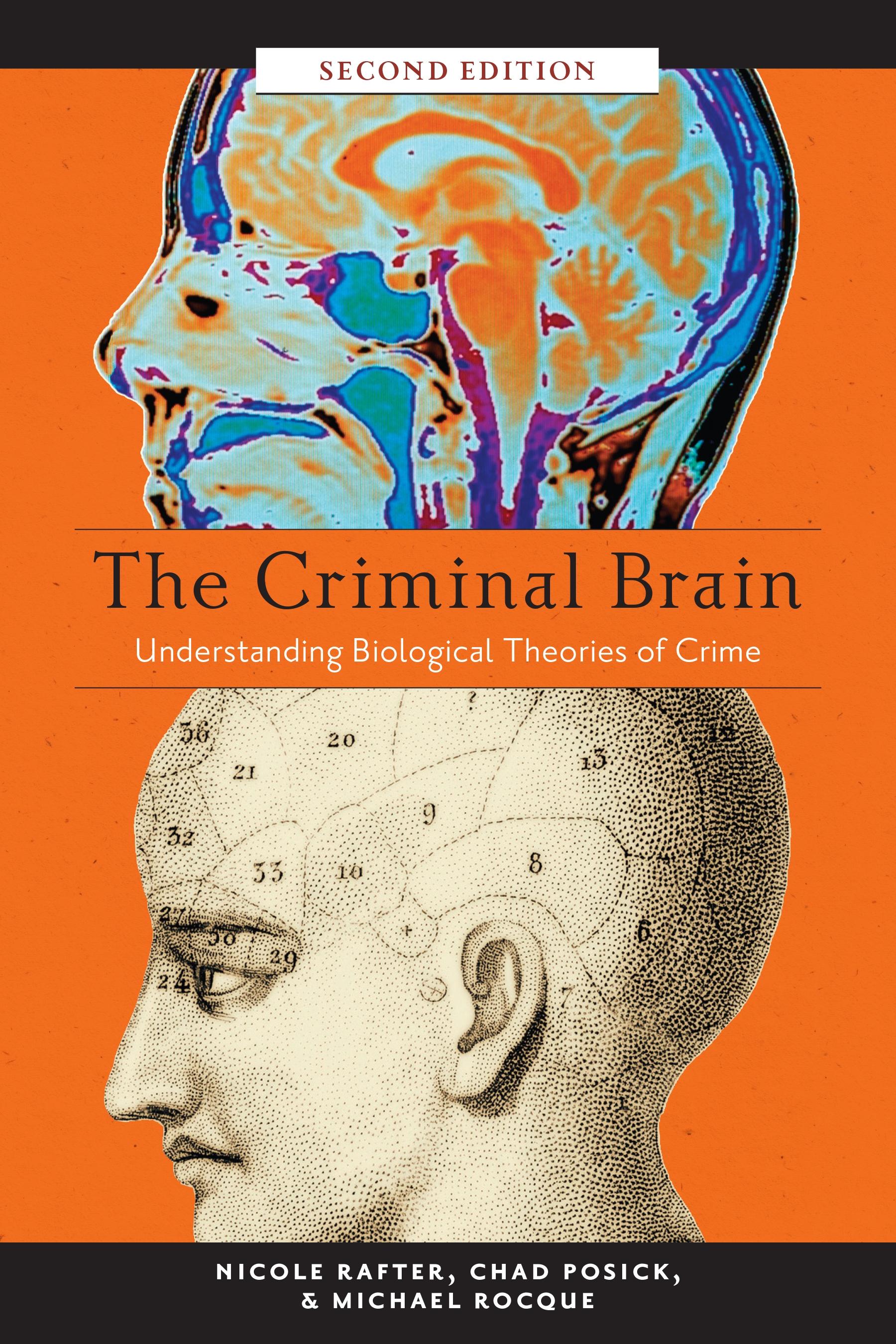
A lively, up-to-date overview of the newest research in biosocial criminology
What is the relationship between criminality and biology? Nineteenth-century phrenologists insisted that criminality was innate, inherent in the offender’s brain matter. While they were eventually repudiated as pseudo-scientists, today the pendulum has swung back. Both criminologists and biologists have begun to speak of a tantalizing but disturbing possibility: that criminality may be inherited as a set of genetic deficits that place one at risk to commit theft, violence, or acts of sexual deviance. But what do these new theories really assert? Are they as dangerous as their forerunners, which the Nazis and other eugenicists used to sterilize, incarcerate, and even execute thousands of supposed “born” criminals? How can we prepare for a future in which leaders may propose crime-control programs based on biology?
In this second edition of The Criminal Brain, Nicole Rafter, Chad Posick, and Michael Rocque describe early biological theories of crime and provide a lively, up-to-date overview of the newest research in biosocial criminology. New chapters introduce the theories of the latter part of the 20th century; apply and critically assess current biosocial and evolutionary theories, the developments in neuro-imaging, and recent progressions in fields such as epigenetics; and finally, provide a vision for the future of criminology and crime policy from a biosocial perspective. The book is a careful, critical examination of each research approach and conclusion. Both compiling and analyzing the body of scholarship devoted to understanding the criminal brain, this volume serves as a condensed, accessible, and contemporary exploration of biological theories of crime and their everyday relevance.
Pay easily by card, Klarna, Apple Pay or Google Pay. Not happy? You always have a 14-day money-back guarantee. Read more in our terms. If you have any questions, email us at hello@memmo.org.
Memmo makes studying easier – wherever you are in the world. We bring your course books and smart study tools together in one place: summaries, quizzes, podcasts and flashcards. Plus Ted, your study buddy who answers anything you wonder. Over 50,000 students already study here – built to help you learn faster and stress less.