
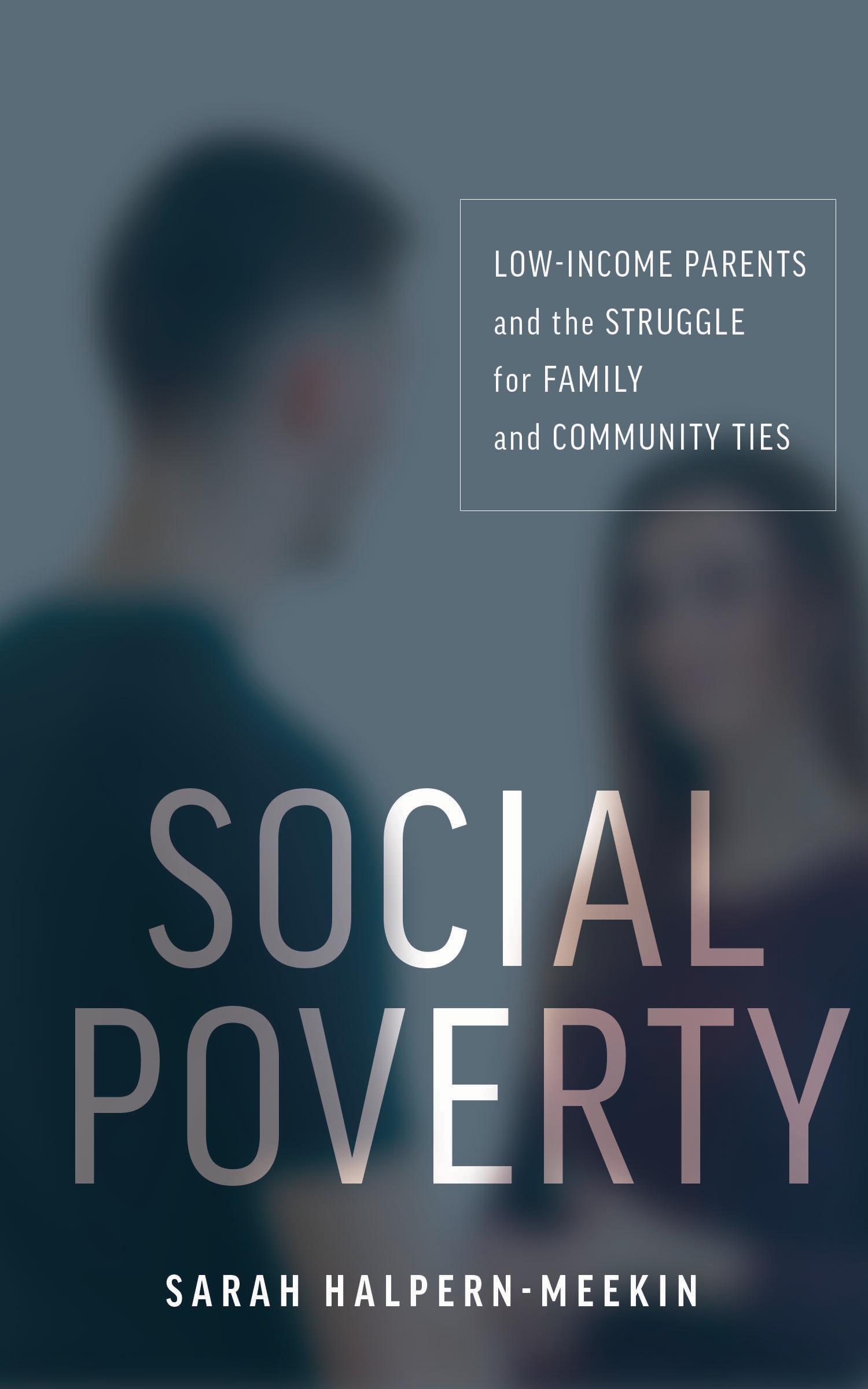
How low-income people cope with the emotional dimensions of poverty
Could a lack of close, meaningful social ties be a public—rather than just a private—problem? In Social Poverty, Sarah Halpern-Meekin provides a much-needed window into the nature of social ties among low-income, unmarried parents, highlighting their often-ignored forms of hardship. Drawing on in-depth interviews with thirty-one couples, collected during their participation in a government-sponsored relationship education program called Family Expectations, she brings unprecedented attention to the relational and emotional dimensions of socioeconomic disadvantage.
Poverty scholars typically focus on the economic use value of social ties—for example, how relationships enable access to job leads, informal loans, or a spare bedroom.However, Halpern-Meekin introduces the important new concept of “social poverty,” identifying it not just as a derivative of economic poverty, but as its own condition, which also perpetuates poverty. Through a careful and nuanced analysis of the strengths and limitations of relationship classes, she shines a light on the fundamental place of core socioemotional needs in our lives.
Engaging and compassionate, Social Poverty highlights a new direction for policy and poverty research that can enrich our understanding of disadvantaged families around the country.
Pay easily by card, Klarna, Apple Pay or Google Pay. Not happy? You always have a 14-day money-back guarantee. Read more in our terms. If you have any questions, email us at hello@memmo.org.
Memmo makes studying easier – wherever you are in the world. We bring your course books and smart study tools together in one place: summaries, quizzes, podcasts and flashcards. Plus Ted, your study buddy who answers anything you wonder. Over 50,000 students already study here – built to help you learn faster and stress less.