
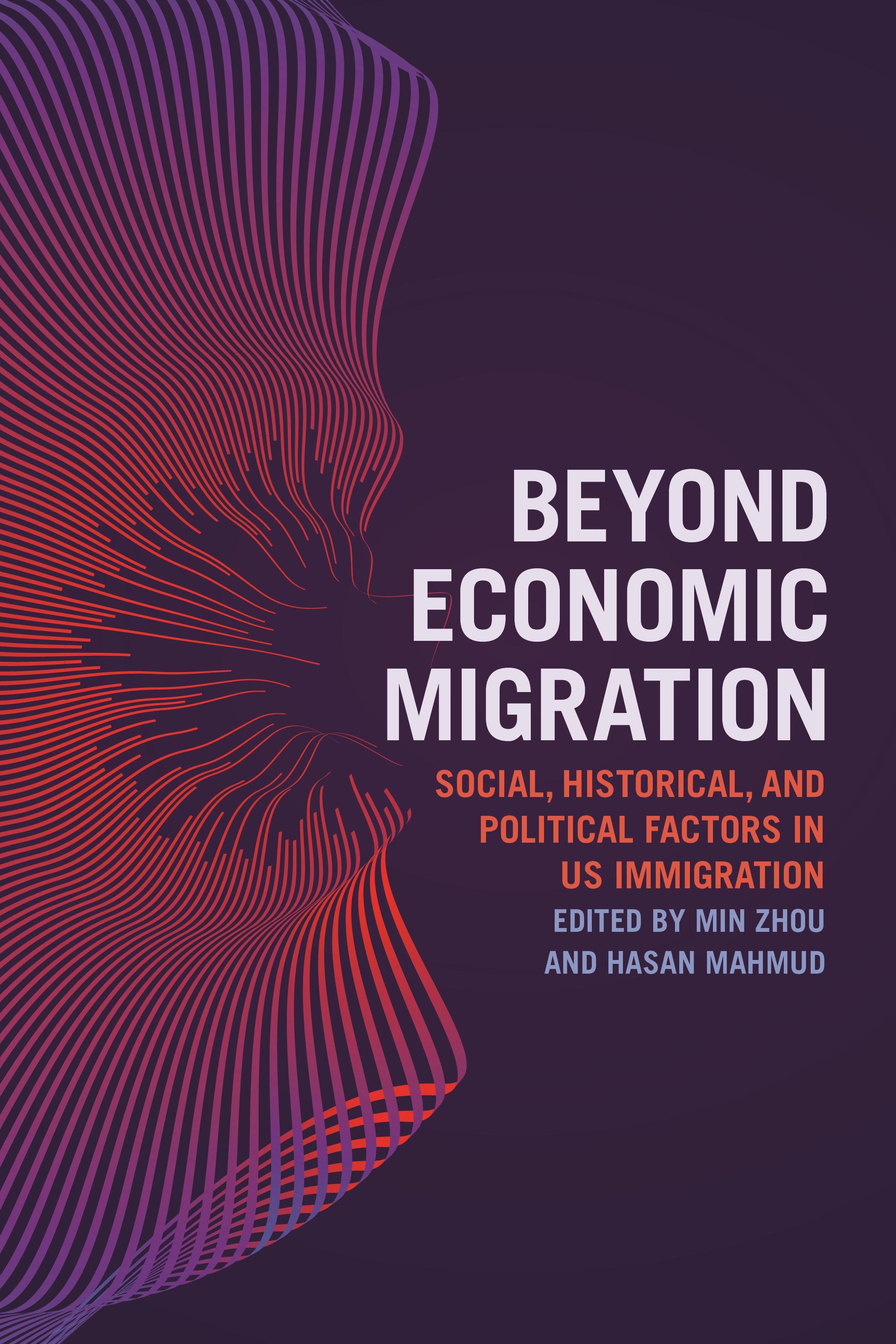
Offers a critique of the economic model of immigration
Most understandings of migration to the US focus on two primary factors. Either there was trouble in the home country, such as political unrest or famine, that pushed people out, or there was a general yearning for “a better life” or “more opportunity,” often conceptualized as the American Dream.
Although many contemporary migrants in the United States have been driven by economic interests, the processes of immigration and integration are shaped also by the intersection of a range of noneconomic factors in both sending and receiving countries. The contributors to Beyond Economic Migration offer a nuanced look at a range of issues affecting motives to migrate and outcomes of integration, including US immigration policy and the visa system, labor market incorporation, employment precarity, identity and belonging, and transnationalism relating to female migrants, student migrants, and temporary foreign workers.
Beyond Economic Migration argues that, for the dream of fair and equitable migration to be realized, analyses of cross-border movements, resettlement, and integration must pay attention to how migrants’ individual attributes interact with institutional mechanisms and social processes.
Pay easily by card, Klarna, Apple Pay or Google Pay. Not happy? You always have a 14-day money-back guarantee. Read more in our terms. If you have any questions, email us at hello@memmo.org.
Memmo makes studying easier – wherever you are in the world. We bring your course books and smart study tools together in one place: summaries, quizzes, podcasts and flashcards. Plus Ted, your study buddy who answers anything you wonder. Over 50,000 students already study here – built to help you learn faster and stress less.