
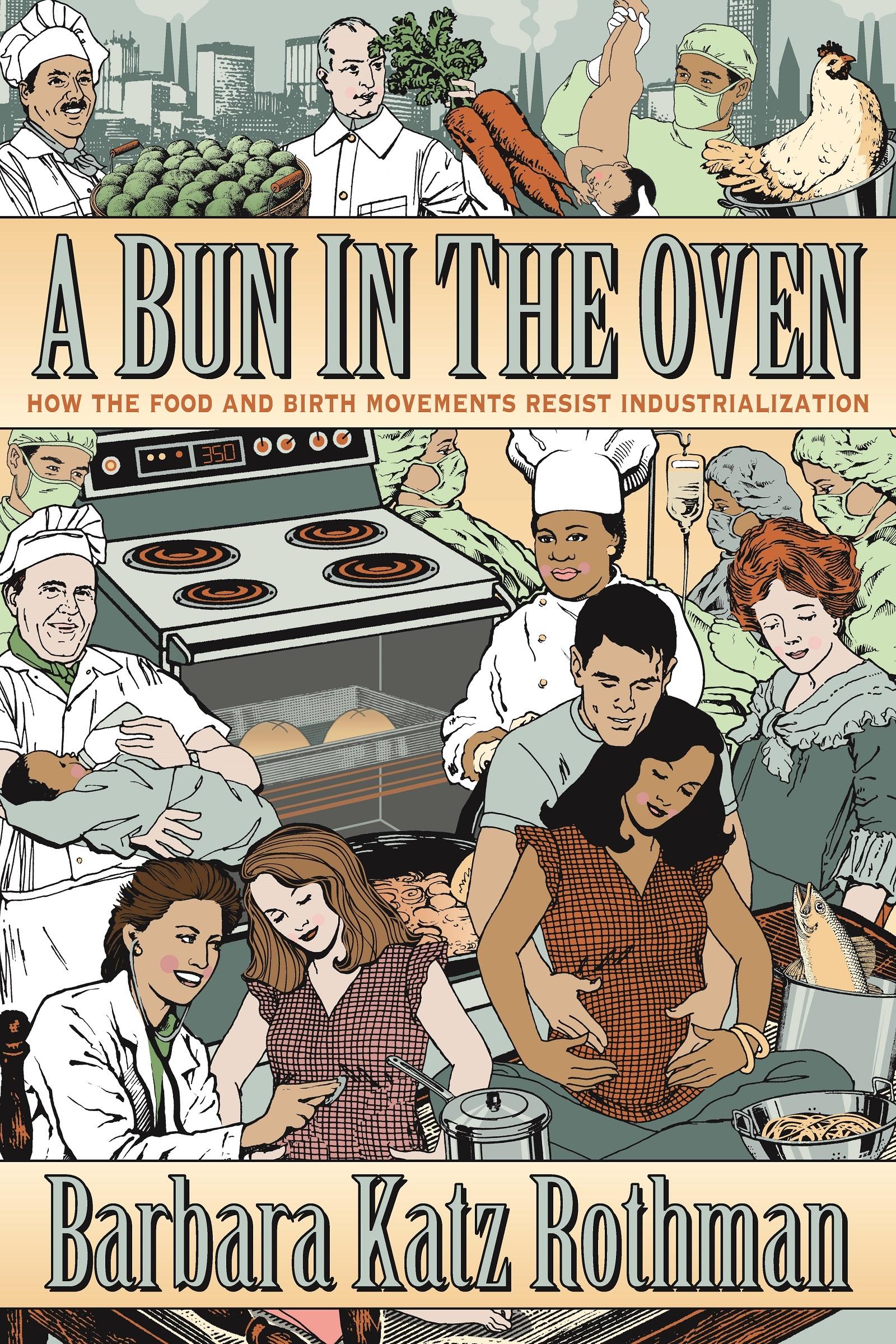
There are people dedicated to improving the way we eat, and people dedicated to improving the way we give birth. A Bun in the Oven is the first comparison of these two social movements. The food movement has seemingly exploded, but little has changed in the diet of most Americans. And while there’s talk of improving the childbirth experience, most births happen in large hospitals, about a third result in C-sections, and the US does not fare well in infant or maternal outcomes.
In A Bun in the Oven Barbara Katz Rothman traces the food and the birth movements through three major phases over the course of the 20th century in the United States: from the early 20th century era of scientific management; through to the consumerism of Post World War II with its ‘turn to the French’ in making things gracious; to the late 20th century counter-culture midwives and counter-cuisine cooks. The book explores the tension throughout all of these eras between the industrial demands of mass-management and profit-making, and the social movements—composed largely of women coming together from very different feminist sensibilities—which are working to expose the harmful consequences of industrialization, and make birth and food both meaningful and healthy.
Katz Rothman, an internationally recognized sociologist named ‘midwife to the movement’ by the Midwives Alliance of North America, turns her attention to the lessons to be learned from the food movement, and the parallel forces shaping both of these consumer-based social movements. In both movements, issues of the natural, the authentic, and the importance of ‘meaningful’ and ‘personal’ experiences get balanced against discussions of what is sensible, convenient and safe. And both movements operate in a context of commercial and corporate interests, which places profit and efficiency above individual experiences and outcomes. A Bun in the Oven brings new insight into the relationship between our most intimate, personal experiences, the industries that control them, and the social movements that resist the industrialization of life and seek to birth change.
Pay easily by card, Klarna, Apple Pay or Google Pay. Not happy? You always have a 14-day money-back guarantee. Read more in our terms. If you have any questions, email us at hello@memmo.org.
Memmo makes studying easier – wherever you are in the world. We bring your course books and smart study tools together in one place: summaries, quizzes, podcasts and flashcards. Plus Ted, your study buddy who answers anything you wonder. Over 50,000 students already study here – built to help you learn faster and stress less.