
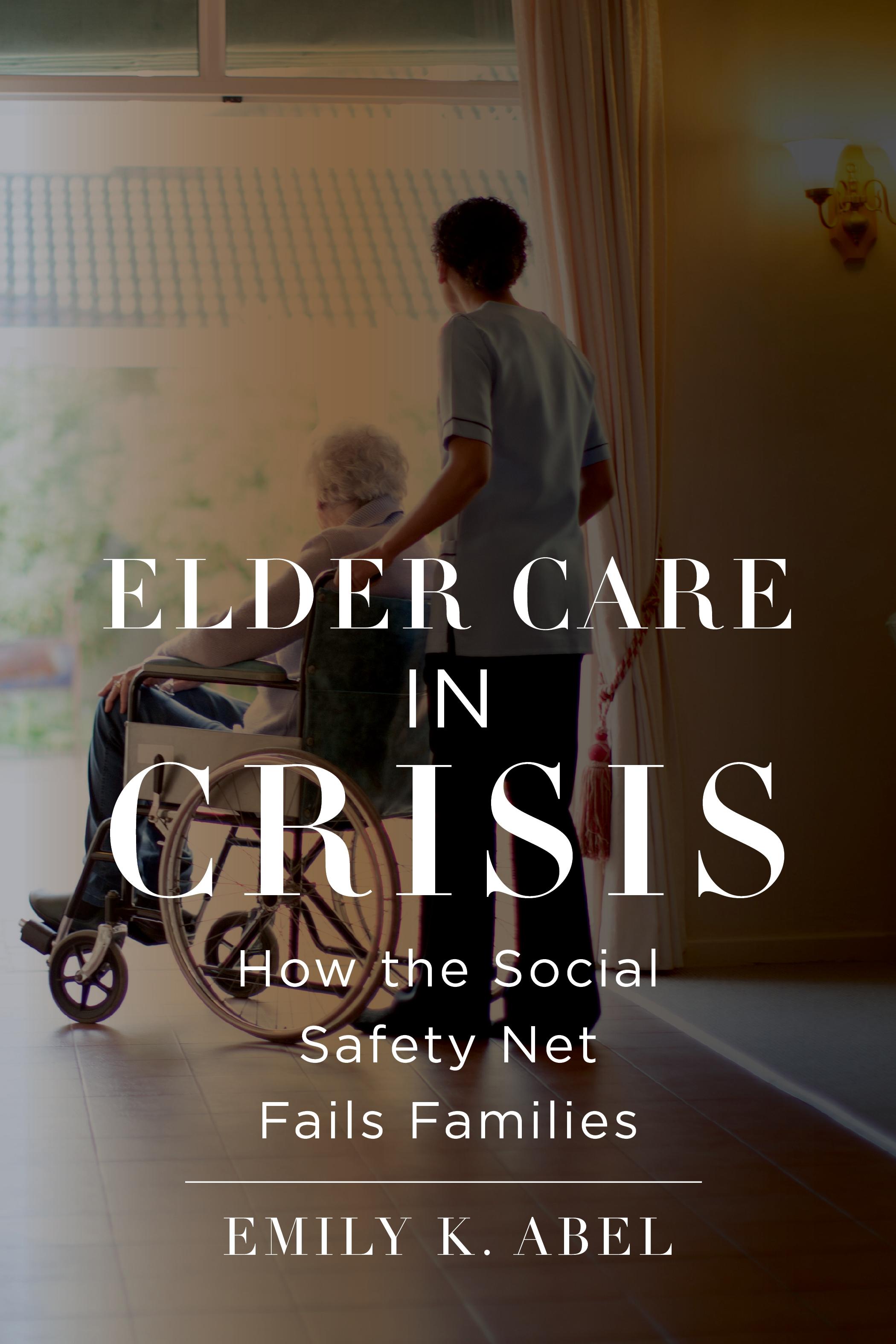
Explains why there is a crisis in caring for elderly people and how the COVID-19 pandemic exacerbated it
Because government policies are based on an ethic of family responsibility, repeated calls to support family members caring for the burgeoning elderly population have gone unanswered. Without publicly funded long-term care services, many family caregivers cannot find relief from obligations that threaten to overwhelm them. The crisis also stems from the plight of direct care workers (nursing home assistants and home health aides), most of whom are women from racially marginalized groups who receive little respect, remuneration, or job security.
Drawing on an online support group for people caring for spouses and partners with dementia, Elder Care in Crisis examines the availability and quality of respite care (which provides temporary relief from the burdens of care), the long, tortuous process through which family members decide whether to move spouses and partners to institutions, and the likelihood that caregivers will engage in political action to demand greater public support. When the pandemic began, caregivers watched in horror as nursing homes turned into deathtraps and then locked their doors to visitors. Terrified by the possibility of loved ones in nursing homes contracting the disease or suffering from loneliness, some caregivers brought them home. Others endured the pain of leaving relatives with severe cognitive impairments at the hospital door and the difficulties of sheltering in place with people with dementia who could not understand safety regulations or describe their symptoms. Direct care workers were compelled to accept unsafe conditions or leave the labor force. At the same time, however, the disaster provided an impetus for change and helped activists and scholars develop a vision of a future in which care is central to social life.
Elder Care in Crisis exposes the harrowing state of growing old in America, offering concrete solutions and illustrating why they are necessary.
Pay easily by card, Klarna, Apple Pay or Google Pay. Not happy? You always have a 14-day money-back guarantee. Read more in our terms. If you have any questions, email us at hello@memmo.org.
Memmo makes studying easier – wherever you are in the world. We bring your course books and smart study tools together in one place: summaries, quizzes, podcasts and flashcards. Plus Ted, your study buddy who answers anything you wonder. Over 50,000 students already study here – built to help you learn faster and stress less.