
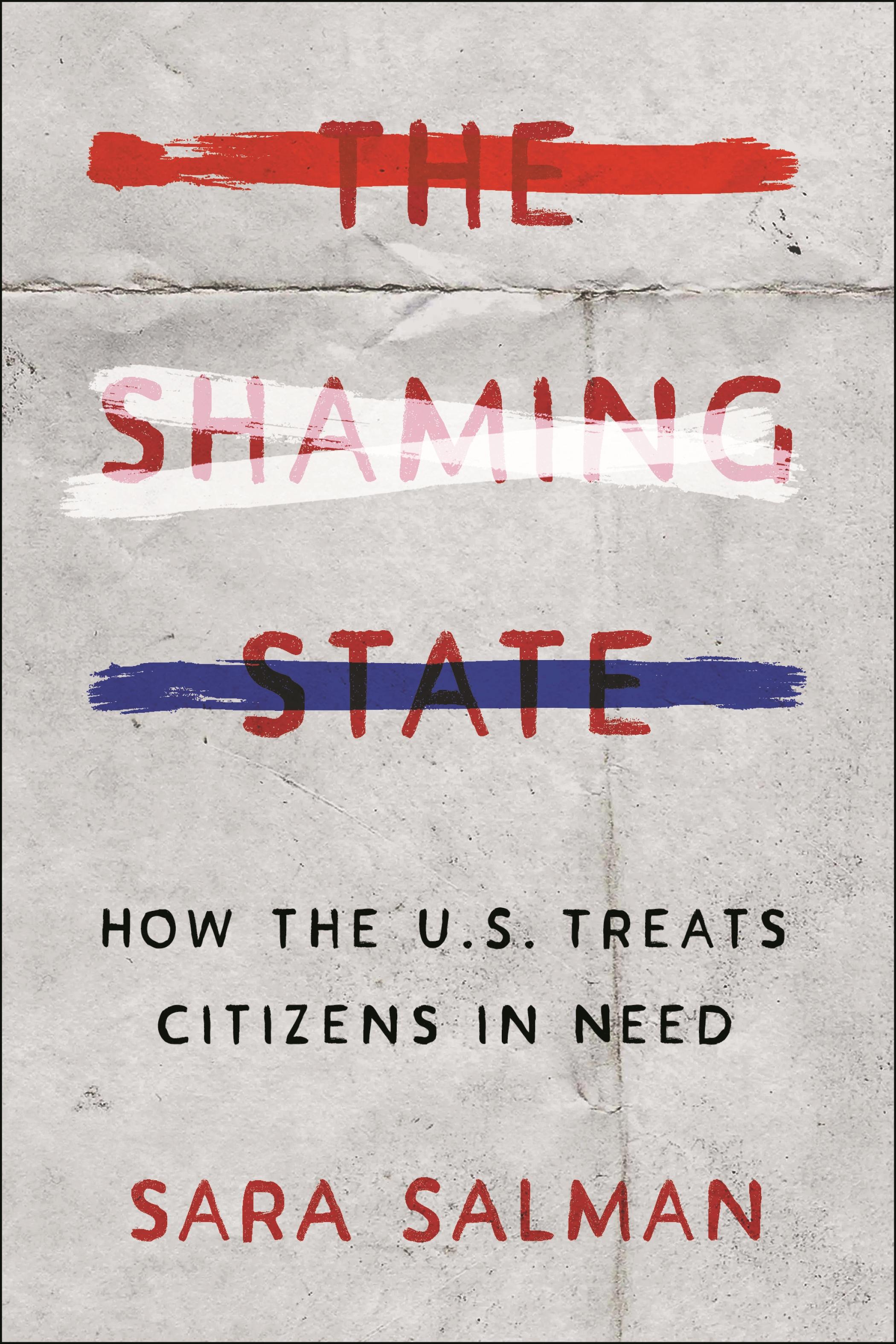
WINNER, 2024 Jock Young Criminological Imagination Book Award, given by the Division on Critical Criminology & Social Justice of American Society of Criminology
A riveting indictment of a government that fails to help citizens in need of aid, protection, and
humanity
The Shaming State argues that Americans have been abandoned by a government that has relinquished its duties of care toward its citizens. Sara Salman describes a government that withholds care in times of need and instead shames the very citizens it claims to serve, both poor and middle class. She argues that the state does so by emphasizing personal responsibility, thus tacitly blaming the needy for relying on state programs. This blame is pervasive in the American cultural imagination, existing in political discourse and internalized by Americans. This book explores how shaming is exhibited by state and political institutions by showing the ways in which the state withholds care, and how people who need that care are humiliated for failing to be self-sufficient.
The Shaming State investigates the vanishing horizon of social rights in the United States and the dwindling of government support to both lower- and middle-class people. Focusing on Iraqi refugees and white home-owning New Yorkers, Salman demonstrates how both groups were faced with immense difficulty and humiliation when searching for access to assistance programs maintained by the government. Looking at the long-range trends, she argues that the last forty years have made the United States a market fundamentalist country, where the government does not offer unified aid and increasingly asks citizens to assume personal responsibility in the face of uncontrollable disasters. Whether it was Hurricane Katrina almost two decades ago or the ongoing COVID-19 pandemic, the indifferent and stagnant response by the American government not only amplified the consequences of these disasters but also increased hostility towards the vulnerable groups who needed help. Ultimately, The Shaming State tells stories of abandonment, loss, shame, and rage experienced by Americans and how the government has let them down time and time again.
Pay easily by card, Klarna, Apple Pay or Google Pay. Not happy? You always have a 14-day money-back guarantee. Read more in our terms. If you have any questions, email us at hello@memmo.org.
Memmo makes studying easier – wherever you are in the world. We bring your course books and smart study tools together in one place: summaries, quizzes, podcasts and flashcards. Plus Ted, your study buddy who answers anything you wonder. Over 50,000 students already study here – built to help you learn faster and stress less.