
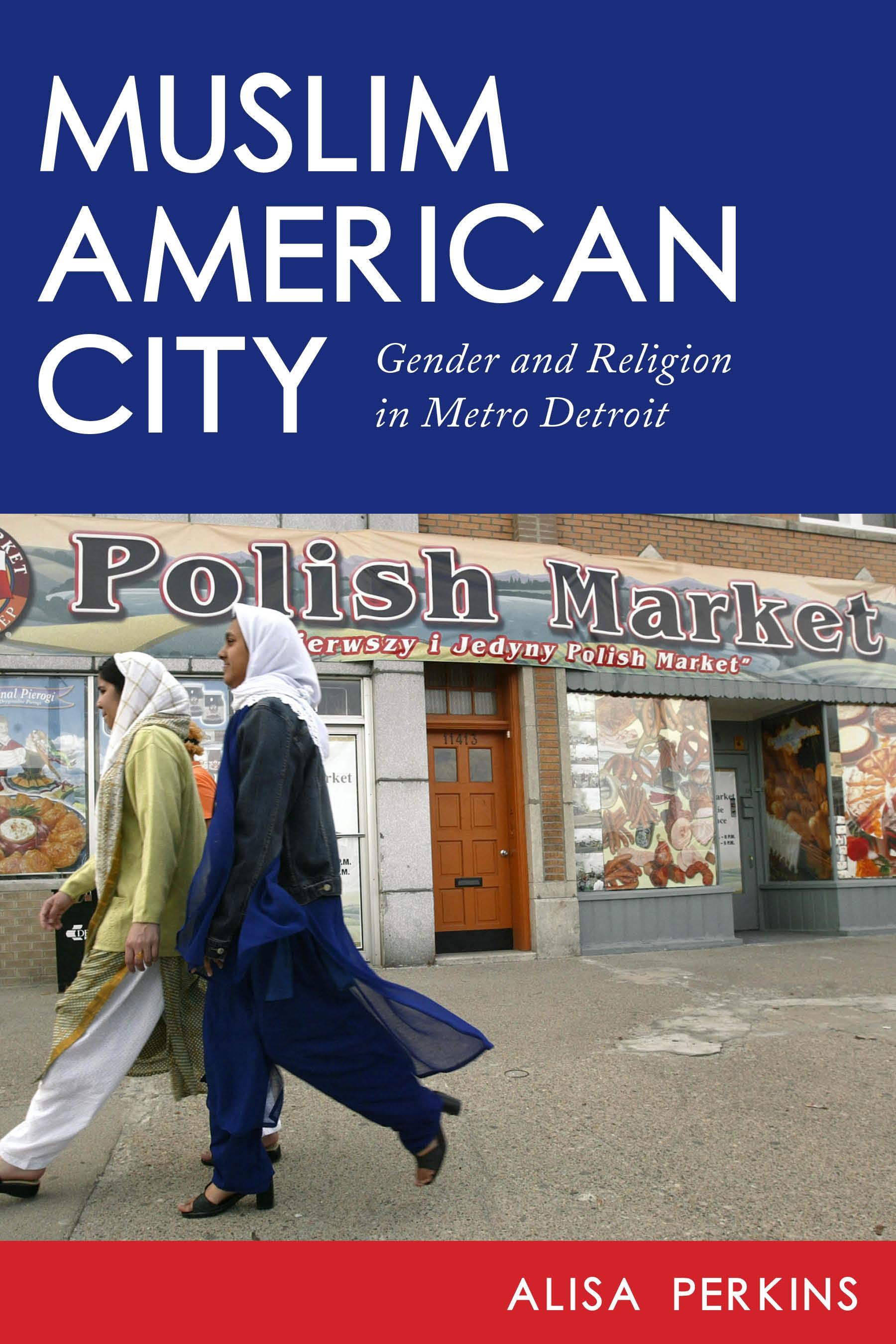
Explores how Muslim Americans test the boundaries of American pluralism
In 2004, the al-Islah Islamic Center in Hamtramck, Michigan, set off a contentious controversy when it requested permission to use loudspeakers to broadcast the adhān, or Islamic call to prayer. The issue gained international notoriety when media outlets from around the world flocked to the city to report on what had become a civil battle between religious tolerance and Islamophobic sentiment. The Hamtramck council voted unanimously to allow mosques to broadcast the adhān, making it one of the few US cities to officially permit it through specific legislation.
Muslim American City explores how debates over Muslim Americans’ use of both public and political space have challenged and ultimately reshaped the boundaries of urban belonging. Drawing on more than ten years of ethnographic research in Hamtramck, which boasts one of the largest concentrations of Muslim residents of any American city, Alisa Perkins shows how the Muslim American population has grown and asserted itself in public life. She explores, for example, the efforts of Muslim American women to maintain gender norms in neighborhoods, mosques, and schools, as well as Muslim Americans’ efforts to organize public responses to municipal initiatives. Her in-depth fieldwork incorporates the perspectives of both Muslims and non-Muslims, including Polish Catholics, African American Protestants, and other city residents.
Drawing particular attention to Muslim American expressions of religious and cultural identity in civil life—particularly in response to discrimination and stereotyping—Perkins questions the popular assumption that the religiosity of Muslim minorities hinders their capacity for full citizenship in secular societies. She shows how Muslims and non-Muslims have, through their negotiations over the issues over the use of space, together invested Muslim practice with new forms of social capital and challenged nationalist and secularist notions of belonging.
Pay easily by card, Klarna, Apple Pay or Google Pay. Not happy? You always have a 14-day money-back guarantee. Read more in our terms. If you have any questions, email us at hello@memmo.org.
Memmo makes studying easier – wherever you are in the world. We bring your course books and smart study tools together in one place: summaries, quizzes, podcasts and flashcards. Plus Ted, your study buddy who answers anything you wonder. Over 50,000 students already study here – built to help you learn faster and stress less.