
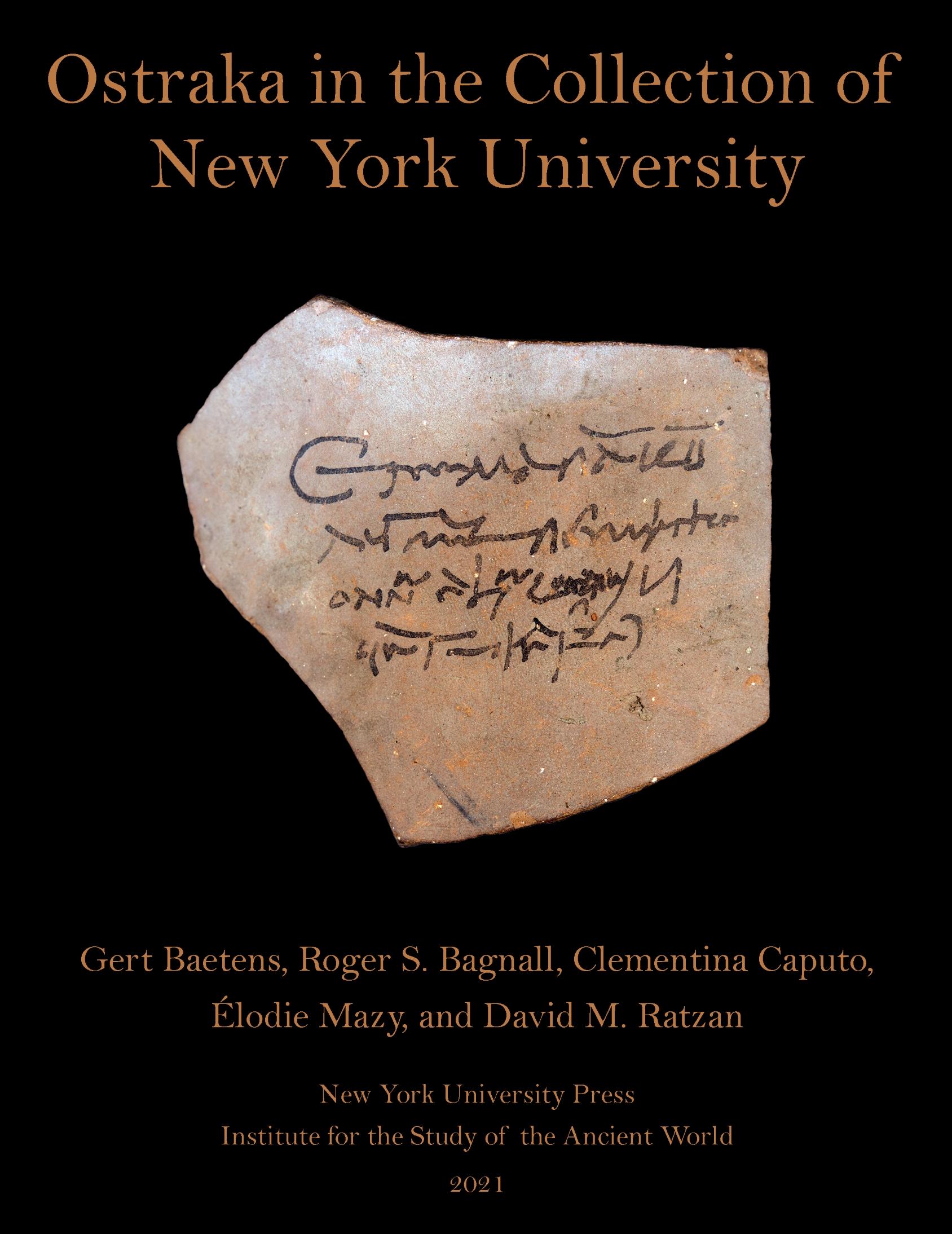
A comprehensive edition and commentary of 77 ostraka
Ostraka in the Collection of New York University is a comprehensive edition and commentary of 77 ostraka, or potsherds with ancient texts written on them, from Greco-Roman and late antique Egypt. Seventy-two of these ostraca are housed in NYU Special Collections, originally purchased by Caspar Kraemer in 1932, then the chair of the NYU Classics Department. Although Kraemer advertised the imminent publication of the texts in 1934 and later collaborated with the famed papyrologist Herbert Youtie, neither completed the project. The ostraka in this small collection span the 2nd century BCE to the 8th century CE and include both Greek and Coptic texts. The majority, however, form a coherent dossier of tax receipts related to mortuary activities in Upper Egypt during the reign of Augustus (texts 7-70, dated from roughly the last quarter of the 1st century BCE to 12 CE). The five ostraka published in this volume not held by NYU include one that had been part of Kraemer’s original purchase but was subsequently lost (thankfully preserved in a photograph in Youtie’s archive at the University of Michigan), and four ostraka now held by the Los Angeles County Museum of Art. The latter four texts were purchased separately and published previously, but clearly belong to the same group of texts. They are included in this volume both for the sake of completeness and because the present authors were able to improve the readings in light of the context provided by the dossier as a whole. In addition to the scholarly edition of these texts, the volume contains a full discussion of their provenance, the taxes involved, the taxpayers and tax-collectors, and a ceramological analysis of the sherds as media for these texts.
The book will be of interest primarily to specialists in papyrology and scholars who study the economic history of the ancient Mediterranean, Hellenistic Egypt, the Roman empire, and papyrology.
Pay easily by card, Klarna, Apple Pay or Google Pay. Not happy? You always have a 14-day money-back guarantee. Read more in our terms. If you have any questions, email us at hello@memmo.org.
Memmo makes studying easier – wherever you are in the world. We bring your course books and smart study tools together in one place: summaries, quizzes, podcasts and flashcards. Plus Ted, your study buddy who answers anything you wonder. Over 75,000 students already study here – built to help you learn faster and stress less.