
Honorable Mention, Rachel Carson Prize, given by the Society for the Social Studies of Science
Finalist, 2023 ASAP Book Award, given by the Association for the Study of the Arts of the Present
Studies the intersections of incarceration, medical science, and race in postwar America
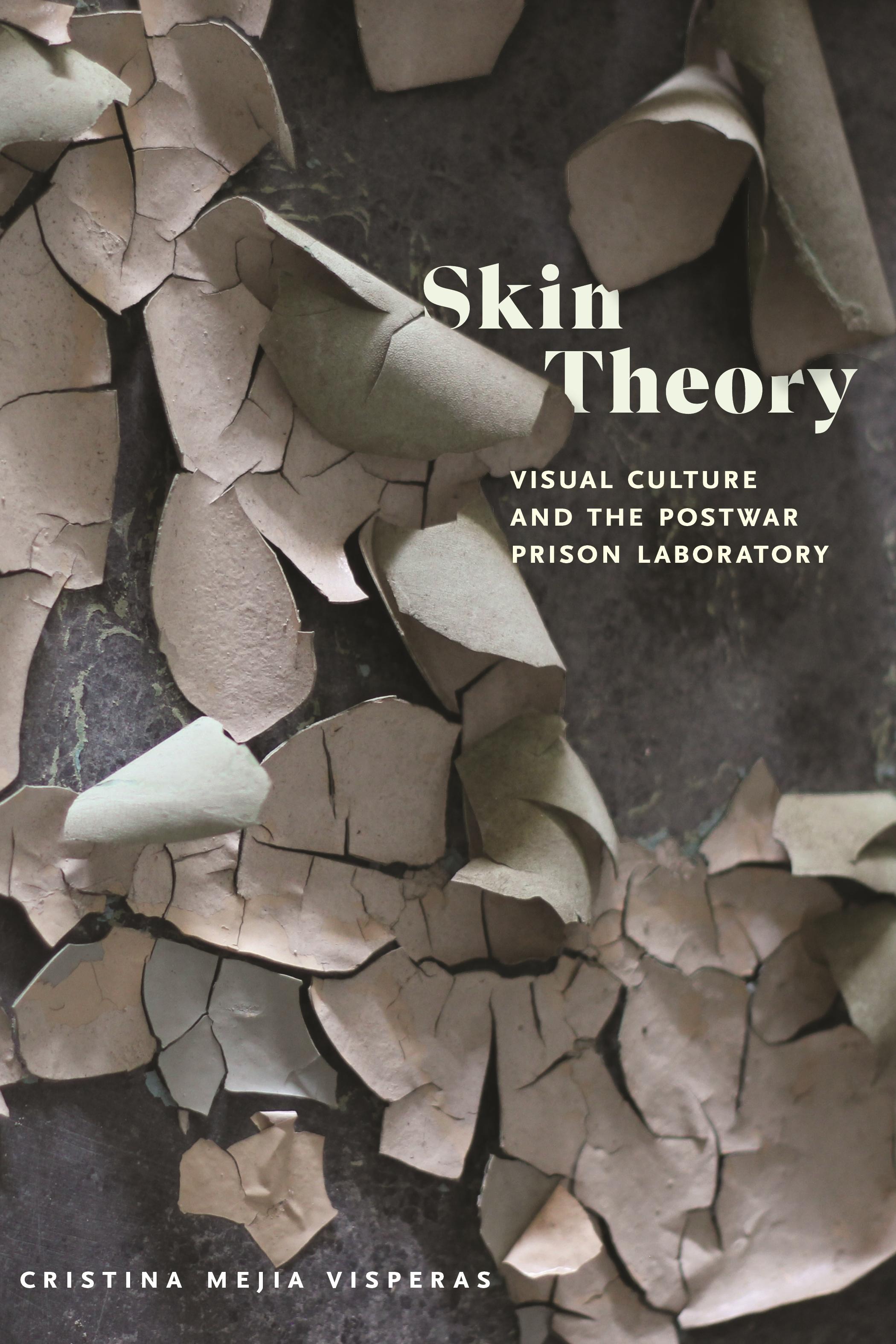
In February 1966, a local newspaper described the medical science program at Holmesburg Prison, Philadelphia, a “golden opportunity to conduct widespread medical tests under perfect control conditions.” Helmed by Albert M. Kligman, a University of Pennsylvania professor, these tests enrolled hundreds of the prison’s predominantly Black population in studies determining the efficacy and safety of a wide variety of substances, from common household products to chemical warfare agents. These experiments at Holmesburg were hardly unique; in the postwar United States, the use of incarcerated test subjects was standard practice among many research institutions and pharmaceutical companies. Skin Theory examines the prison as this space for scientific knowledge production, showing how the “perfect control conditions” of the prison dovetailed into the visual regimes of laboratory work. To that end, Skin Theory offers an important reframing of visual approaches to race in histories of science, medicine, and technology, shifting from issues of scientific racism to the scientific rationality of racism itself.
In this highly original work, Cristina Mejia Visperas approaches science as a fundamentally racial project by analyzing the privileged object and instrument of Kligman’s experiments: the skin. She theorizes the skin as visual technology, as built environment, and as official discourse, developing a compelling framework for understanding the intersections of race, incarceration, and medical science in postwar America.
Pay easily by card, Klarna, Apple Pay or Google Pay. Not happy? You always have a 14-day money-back guarantee. Read more in our terms. If you have any questions, email us at hello@memmo.org.
Memmo makes studying easier – wherever you are in the world. We bring your course books and smart study tools together in one place: summaries, quizzes, podcasts and flashcards. Plus Ted, your study buddy who answers anything you wonder. Over 50,000 students already study here – built to help you learn faster and stress less.