
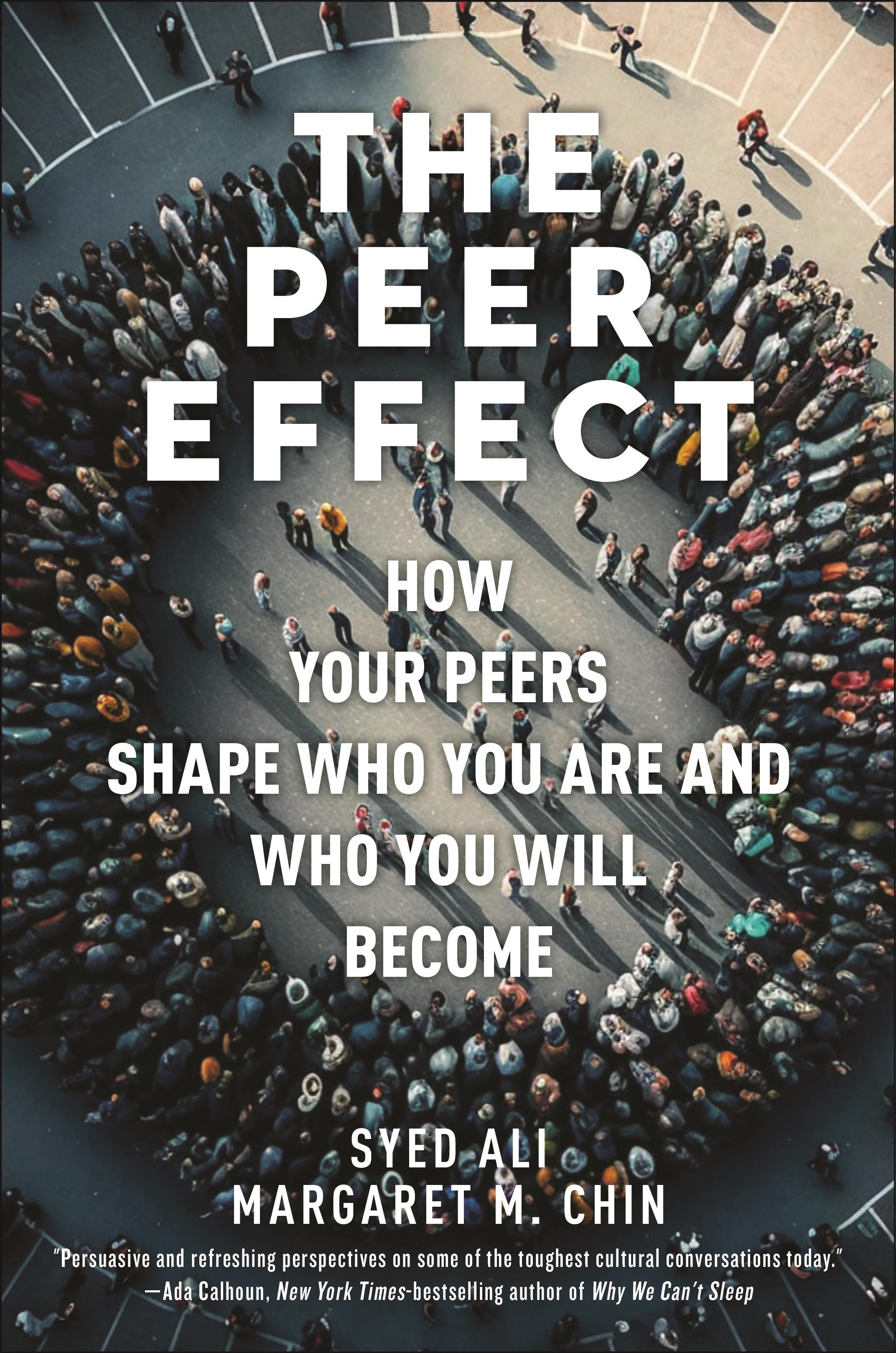
How the power of peers and peer culture shapes individual behavior and future success
For decades, parents across America have asked their kids, “If your friends jumped off a bridge, would you?” The answer is, “Duh, yes.” Peers, as parents well know, have a tremendous impact on who their kids are and what they will become. And even while they insist otherwise, parents know that they’re largely powerless to change this. But the effect of peers is not just a story about kids; peers can also affect adult behavior—they affect what we do and who we are well into old age. Noted sociologists Syed Ali and Margaret M. Chin call this “the peer effect.” In their book, they take readers on a tour of how our peers, and the peer cultures they create, shape our behavior in schools and the workplace. Ali and Chin begin their look at the peer effect at the high school from which they both graduated: New York City’s prestigious Stuyvesant High School, arguably the best public high school in the nation. Through a fascinating and often humorous narrative, they show how peers can influence each other—in this case, how highly motivated students can create a culture of influence to achieve success in learning and in admission to elite colleges. They also show the many other ways that peers can influence one another beyond school performance, from hookup culture to school bullying and youth suicide.
Ali and Chin are also interested in the extent to which the peer effect can last. Through interviews with adult graduates of Stuyvesant, they investigate the long-lasting effects of high school peer culture. They also examine the peer effect in post–high school settings, notably around workplace misconduct, including the steroid culture in baseball and the use of excessive force by the police. The Peer Effect ultimately offers ways to understand the power of peer influence and apply this understanding to resolving issues regarding schools, college graduation rates, workplace culture, and police violence. In the tradition of big idea books like The Tipping Point, The Peer Effect will forever change the way we look at the world of human behavior.
Pay easily by card, Klarna, Apple Pay or Google Pay. Not happy? You always have a 14-day money-back guarantee. Read more in our terms. If you have any questions, email us at hello@memmo.org.
Memmo makes studying easier – wherever you are in the world. We bring your course books and smart study tools together in one place: summaries, quizzes, podcasts and flashcards. Plus Ted, your study buddy who answers anything you wonder. Over 50,000 students already study here – built to help you learn faster and stress less.