
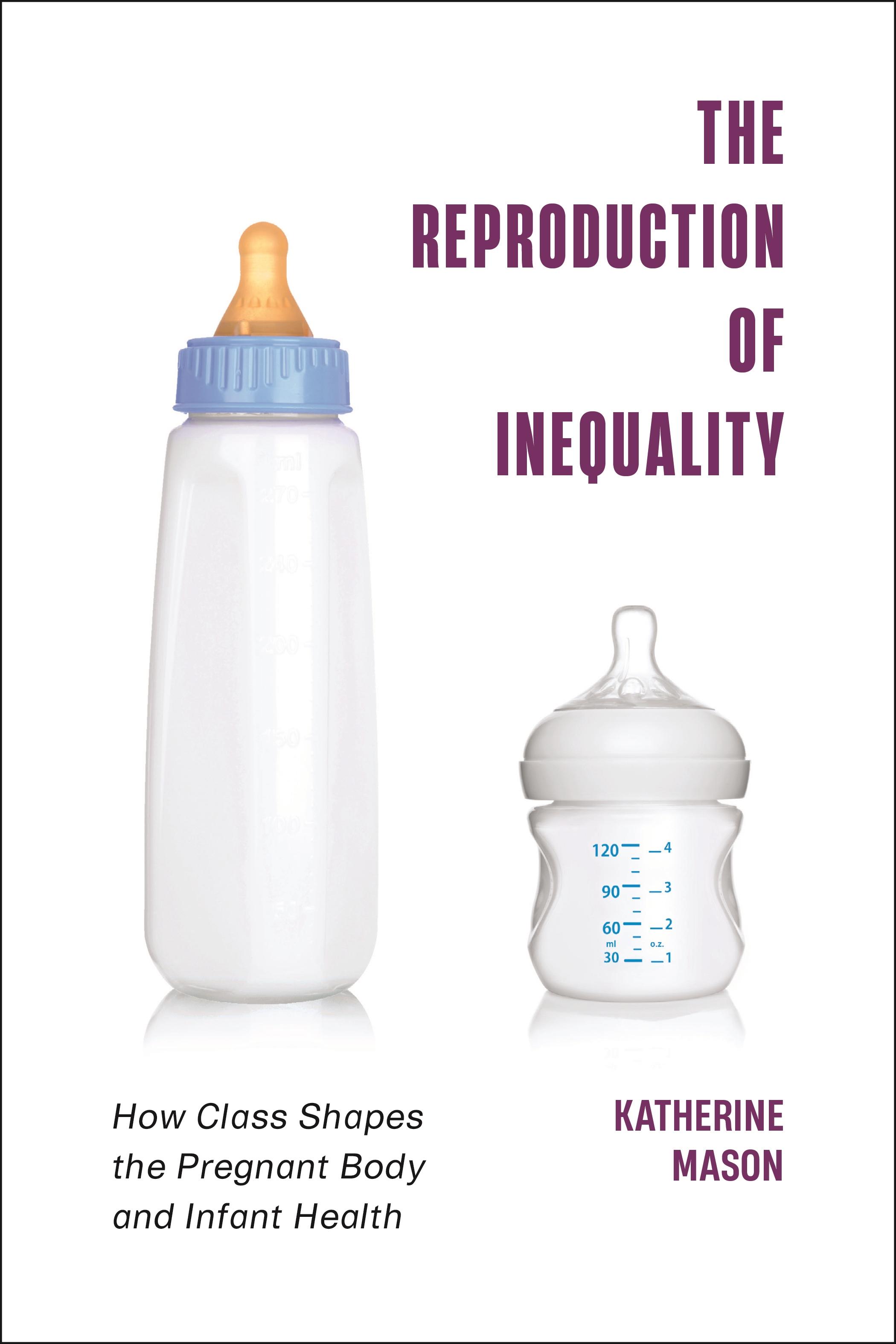
An important analysis of the difference class makes in reproductive health choices
Can you run a marathon, drink coffee, eat fish, or fly on a plane while pregnant? Such questions are just the tip of the iceberg for how most pregnant women’s bodies are managed, surveilled, and scrutinized during pregnancy. The Reproduction of Inequality examines the intense social pressure that expectant and new mothers face when it comes to their health and body-care choices.
Drawing on interviews with dozens of pregnant women and new mothers from poor, middle-class, and mixed-class backgrounds, Katherine Mason paints a vivid picture of the immense weight of expectation that comes with the early stages of motherhood. The women in Mason’s study universally sought to give their children a healthy start in life; however, their chosen approaches varied based on their socio-economic class. Whereas middle-class mothers attempted a complete lifestyle change and absolute devotion to the achievement and maintenance of “the healthy pregnant body,” poorer women made strategic choices about which health goals to prioritize on a limited budget, lacking the economic and cultural capital required to speak and perfectly adhere to the language of “good health.” The unfortunate result is that middle-class mothers are more likely to be seen by others and by themselves as “good” parents, whereas the efforts of working-class mothers are often misread as displaying inadequate concern about their health and that of their child. This in turn contributes to longstanding stereotypes about poor families and communities, and limits their children's chances for upward mobility. The Reproduction of Inequality is a compelling analysis of the impact of class on new mothers’ approaches to health and wellness, and a sobering examination of how inequality shapes mothers’ efforts to maximize their own health and that of their children.
Pay easily by card, Klarna, Apple Pay or Google Pay. Not happy? You always have a 14-day money-back guarantee. Read more in our terms. If you have any questions, email us at hello@memmo.org.
Memmo makes studying easier – wherever you are in the world. We bring your course books and smart study tools together in one place: summaries, quizzes, podcasts and flashcards. Plus Ted, your study buddy who answers anything you wonder. Over 50,000 students already study here – built to help you learn faster and stress less.