
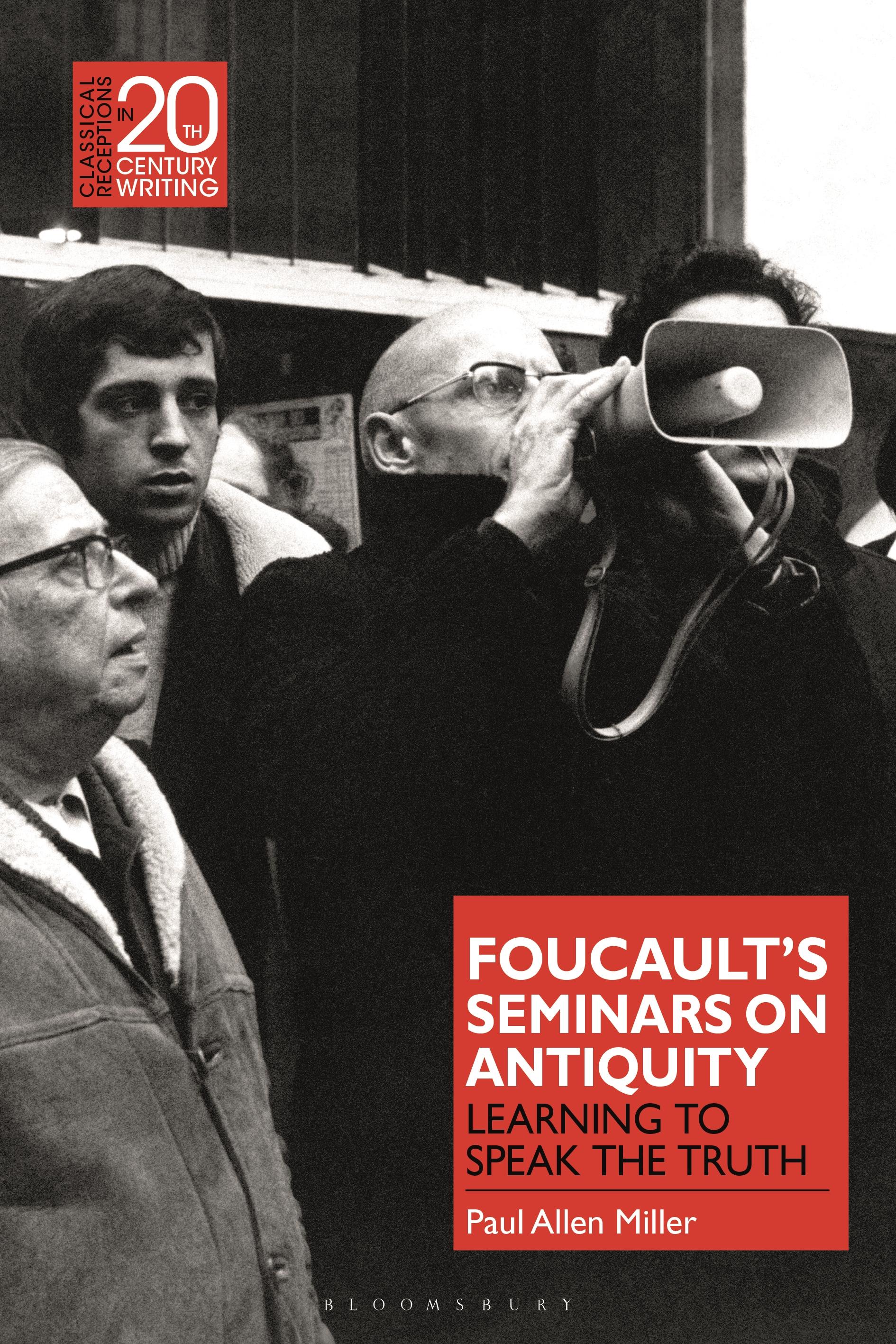
In 1980, Michel Foucault's work makes two decisive turns. On the one hand, as announced at the start of his course at the Collège de France for that year, Le Gouvernement des vivants, his topic will be the modalities through which power constitutes itself in relation to truth. On the other, the texts on which he will concentrate will no longer be those of the early modern period. Rather, he begins with one by Dio Cassius on the emperor Septimius Severus and then proceeds to spend the next two sessions offering a reading of Oedipus Tyrannus. He will concentrate on works from antiquity for the rest of his life.
This book will offer the first detailed account of these lectures, examining both the development of their philosophical argument and the ancient texts on which that argument is based. This is the period during which Foucault also began work on Volumes 2 and 3 of the History of Sexuality. Yet, while there are clear overlaps between the work he was presenting in his course and the last books he published before his death, nonetheless the seminars are anything but rough drafts for the published work. Instead they offer a sustained encounter with the texts of the classical and early Christian era while seeking to trace a genealogy of the western subject as a speaker of truth.
This book will offer the first detailed account of these lectures, examining both the development of their philosophical argument and the ancient texts on which that argument is based. This is the period during which Foucault also began work on Volumes 2 and 3 of the History of Sexuality. Yet, while there are clear overlaps between the work he was presenting in his course and the last books he published before his death, nonetheless the seminars are anything but rough drafts for the published work. Instead they offer a sustained encounter with the texts of the classical and early Christian era while seeking to trace a genealogy of the western subject as a speaker of truth.
Pay easily by card, Klarna, Apple Pay or Google Pay. Not happy? You always have a 14-day money-back guarantee. Read more in our terms. If you have any questions, email us at hello@memmo.org.
Memmo makes studying easier – wherever you are in the world. We bring your course books and smart study tools together in one place: summaries, quizzes, podcasts and flashcards. Plus Ted, your study buddy who answers anything you wonder. Over 50,000 students already study here – built to help you learn faster and stress less.