
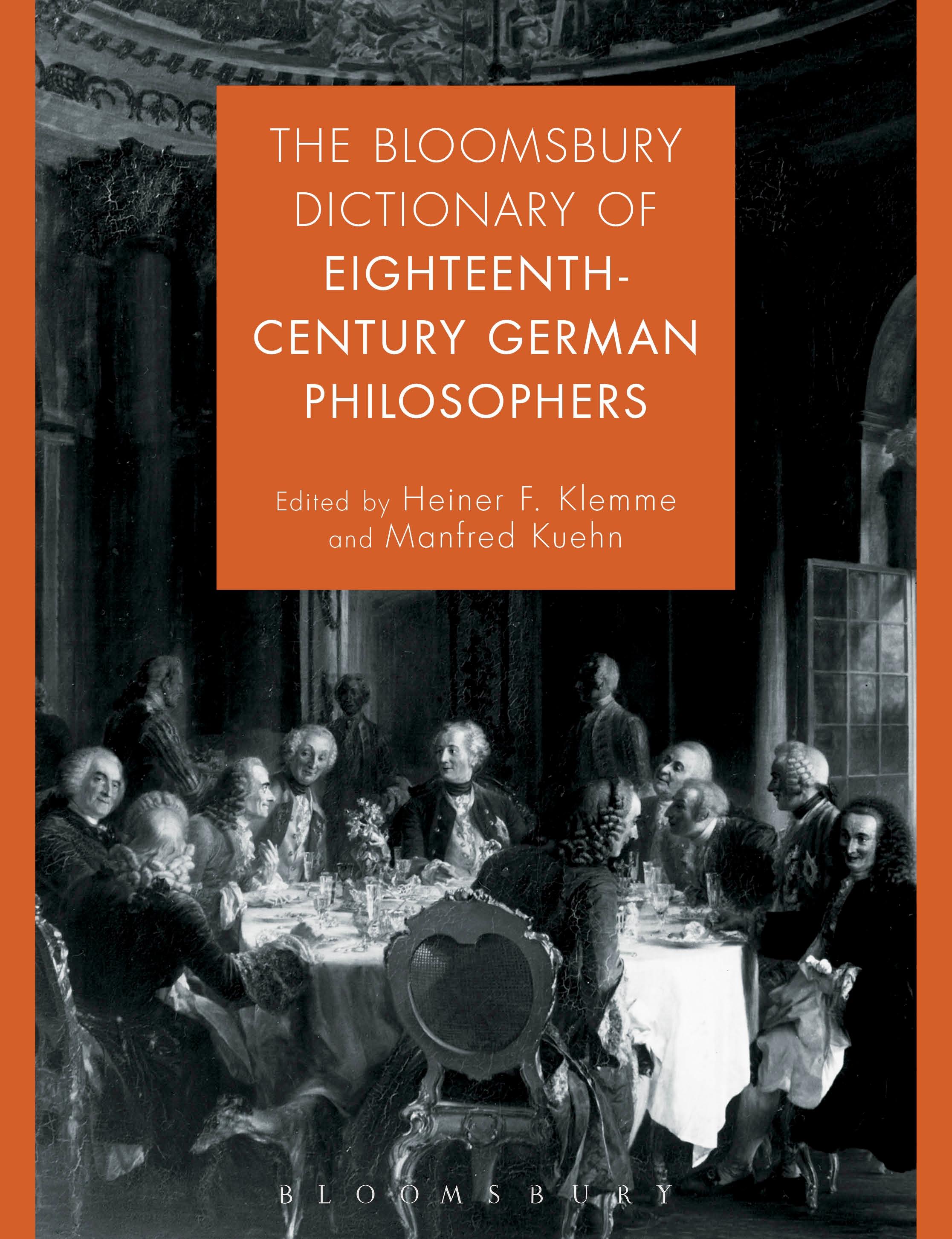
The Bloomsbury Dictionary of Eighteenth-Century German Philosophers is a landmark work. Covering one of the most innovative centuries for philosophical investigation, it features more than 650 entries on the eighteenth-century philosophers, theologians, jurists, physicians, scholars, writers, literary critics and historians whose work has had lasting philosophical significance.
Alongside well-known German philosophers of that era-Gottfried Wilhelm Leibniz, Immanuel Kant, and Georg Wilhelm Friedrich Hegel-the Dictionary provides rare insights into the lives and minds of lesser-known individuals who influenced the shape of philosophy.
Each entry discusses a particular philosopher's life, contributions to the world of thought, and later influences, focusing not only on their most important published writings, but on relevant minor works as well. Bibliographical references to primary and secondary source material are included at the end of entries to encourage further reading, while extensive cross-referencing allows comparisons to be easily made between different thinkers' ideas and practices. For anyone looking to understand more about the century when enlightenment thinking arrived in Germany and established conceits were challenged, The Bloomsbury Dictionary of Eighteenth-Century German Philosophers is a valuable, unparalleled resource.
Alongside well-known German philosophers of that era-Gottfried Wilhelm Leibniz, Immanuel Kant, and Georg Wilhelm Friedrich Hegel-the Dictionary provides rare insights into the lives and minds of lesser-known individuals who influenced the shape of philosophy.
Each entry discusses a particular philosopher's life, contributions to the world of thought, and later influences, focusing not only on their most important published writings, but on relevant minor works as well. Bibliographical references to primary and secondary source material are included at the end of entries to encourage further reading, while extensive cross-referencing allows comparisons to be easily made between different thinkers' ideas and practices. For anyone looking to understand more about the century when enlightenment thinking arrived in Germany and established conceits were challenged, The Bloomsbury Dictionary of Eighteenth-Century German Philosophers is a valuable, unparalleled resource.
Pay easily by card, Klarna, Apple Pay or Google Pay. Not happy? You always have a 14-day money-back guarantee. Read more in our terms. If you have any questions, email us at hello@memmo.org.
Memmo makes studying easier – wherever you are in the world. We bring your course books and smart study tools together in one place: summaries, quizzes, podcasts and flashcards. Plus Ted, your study buddy who answers anything you wonder. Over 50,000 students already study here – built to help you learn faster and stress less.