
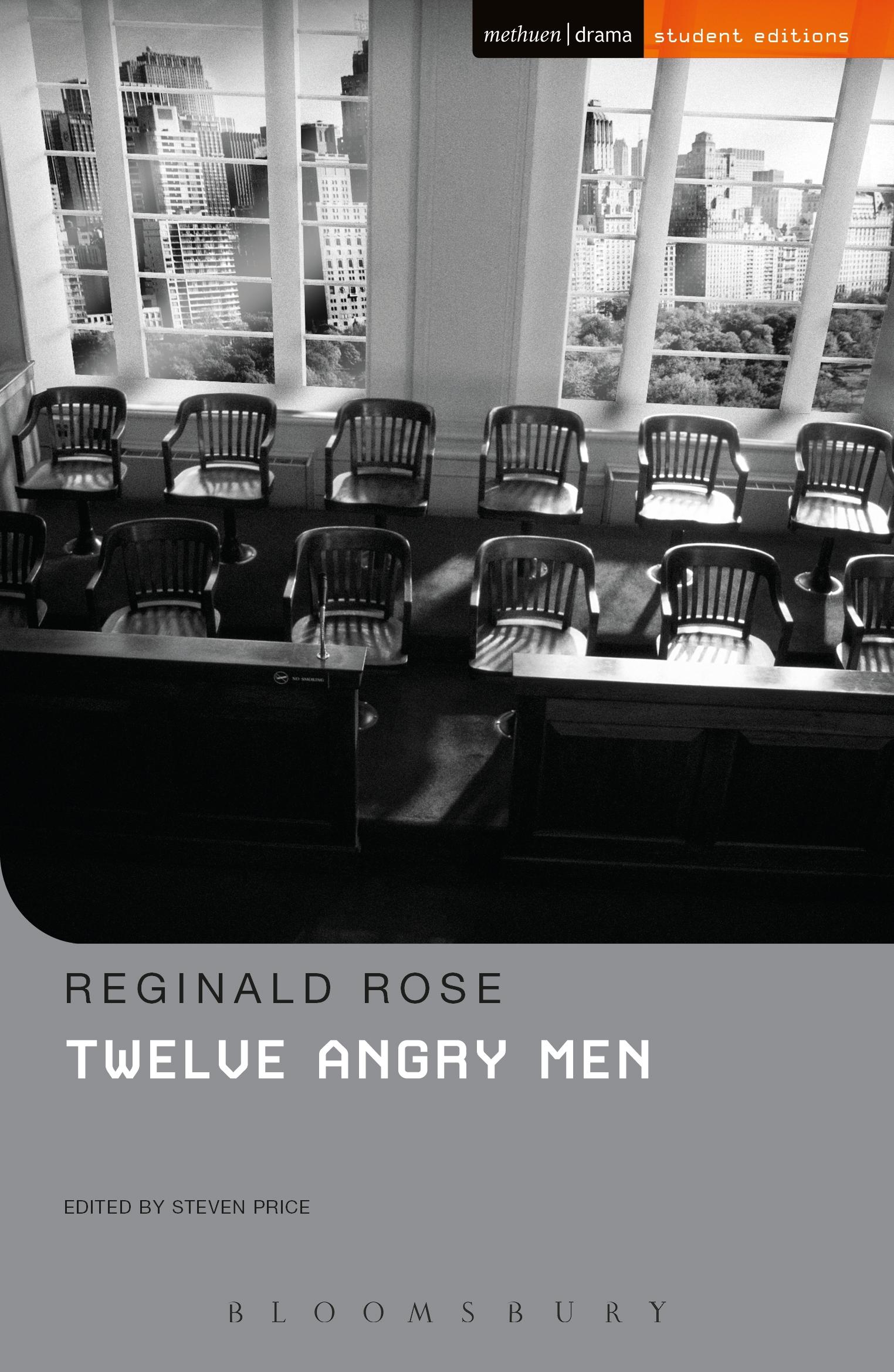
The Methuen Drama Student Edition of Twelve Angry Men is the first critical edition of Reginald Rose's play, providing the play text alongside commentary and notes geared towards student readers.
In New York, 1954, a man is dead and the life of another is at stake. A 'guilty' verdict seems a foregone conclusion, but one member of the jury has the will to probe more deeply into the evidence and the courage to confront the ignorance and prejudice of some of his fellow jurors. The conflict that follows is fierce and passionate, cutting straight to the heart of the issues of civil liberties and social justice.
Ideal for the student reader, the accompanying pedagogical notes include elements such as an author chronology; plot summary; suggested further reading; explanatory endnotes; and questions for further study. The introduction discusses in detail the play's origins as a 1954 American television play, Rose's re-working of the piece for the stage, and Lumet's 1957 film version, identifying textual variations between these versions and discussing later significant productions.
The commentary also situates the play in relation to the genre of courtroom drama, as a milestone in the development of televised drama, and as an engagement with questions of American individualism and democracy.
Together, this provides students with an edition that situates the play in its contemporary social and dramatic contexts, while encouraging reflection on its wider thematic implications.
In New York, 1954, a man is dead and the life of another is at stake. A 'guilty' verdict seems a foregone conclusion, but one member of the jury has the will to probe more deeply into the evidence and the courage to confront the ignorance and prejudice of some of his fellow jurors. The conflict that follows is fierce and passionate, cutting straight to the heart of the issues of civil liberties and social justice.
Ideal for the student reader, the accompanying pedagogical notes include elements such as an author chronology; plot summary; suggested further reading; explanatory endnotes; and questions for further study. The introduction discusses in detail the play's origins as a 1954 American television play, Rose's re-working of the piece for the stage, and Lumet's 1957 film version, identifying textual variations between these versions and discussing later significant productions.
The commentary also situates the play in relation to the genre of courtroom drama, as a milestone in the development of televised drama, and as an engagement with questions of American individualism and democracy.
Together, this provides students with an edition that situates the play in its contemporary social and dramatic contexts, while encouraging reflection on its wider thematic implications.
Pay easily by card, Klarna, Apple Pay or Google Pay. Not happy? You always have a 14-day money-back guarantee. Read more in our terms. If you have any questions, email us at hello@memmo.org.
Memmo makes studying easier – wherever you are in the world. We bring your course books and smart study tools together in one place: summaries, quizzes, podcasts and flashcards. Plus Ted, your study buddy who answers anything you wonder. Over 75,000 students already study here – built to help you learn faster and stress less.