
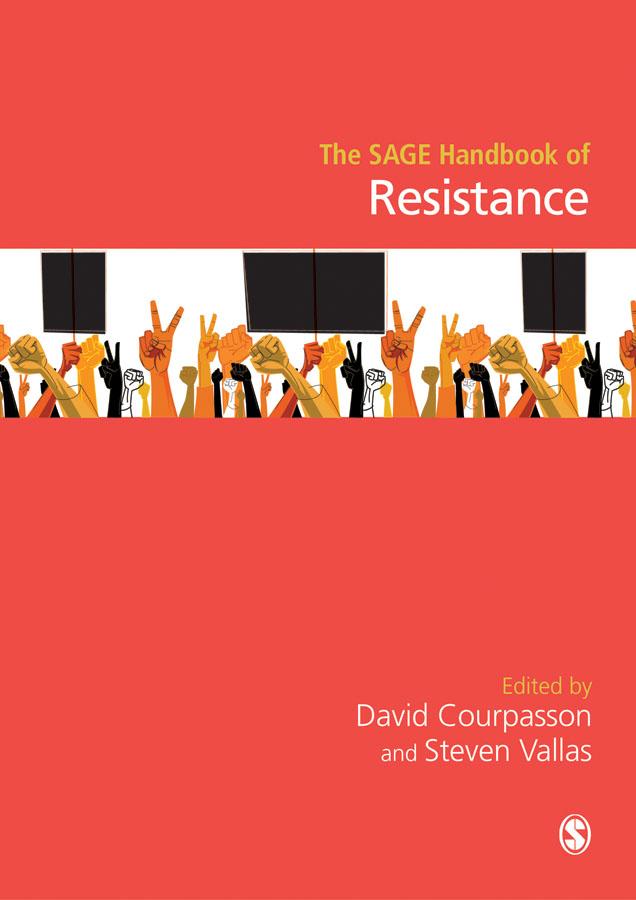
Chosen by Library Journal as one of the best reference texts of 2016.
Occupy. Indignados. The Tea Party. The Arab Spring. Anonymous. These and other terms have become part of an emerging lexicon in recent years, signalling an important development that has gripped many parts of the world: millions of people are increasingly involved, whether directly or indirectly, in movements of resistance and protestation.
However, resistance and its conceptual "companions", protest, contestation, opposition, disobedience and mobilization, all seem to be still mostly seen in public and private discourses as illegitimate and problematic forms of action. The time is, therefore, ripe to delve into the concerns, themes and legitimacy.
The SAGE Handbook of Resistance offers theoretical essays enabling readers to forge their own perspectives of what "is" resistance and emphasizes the empirical and experiential dimension of resistance - making strong choices in terms of how contemporary topics related to resistance help to rethink our societies as "protest societies". The coverage is divided into six key sub-sections:
Occupy. Indignados. The Tea Party. The Arab Spring. Anonymous. These and other terms have become part of an emerging lexicon in recent years, signalling an important development that has gripped many parts of the world: millions of people are increasingly involved, whether directly or indirectly, in movements of resistance and protestation.
However, resistance and its conceptual "companions", protest, contestation, opposition, disobedience and mobilization, all seem to be still mostly seen in public and private discourses as illegitimate and problematic forms of action. The time is, therefore, ripe to delve into the concerns, themes and legitimacy.
The SAGE Handbook of Resistance offers theoretical essays enabling readers to forge their own perspectives of what "is" resistance and emphasizes the empirical and experiential dimension of resistance - making strong choices in terms of how contemporary topics related to resistance help to rethink our societies as "protest societies". The coverage is divided into six key sub-sections:
- Foundations
- Sites of Resistance
- Technologies of Resistance
- Languages of Resistance
- Geographies of Resistance
- Consequences of Resistance
Pay easily by card, Klarna, Apple Pay or Google Pay. Not happy? You always have a 14-day money-back guarantee. Read more in our terms. If you have any questions, email us at hello@memmo.org.
Memmo makes studying easier – wherever you are in the world. We bring your course books and smart study tools together in one place: summaries, quizzes, podcasts and flashcards. Plus Ted, your study buddy who answers anything you wonder. Over 50,000 students already study here – built to help you learn faster and stress less.