
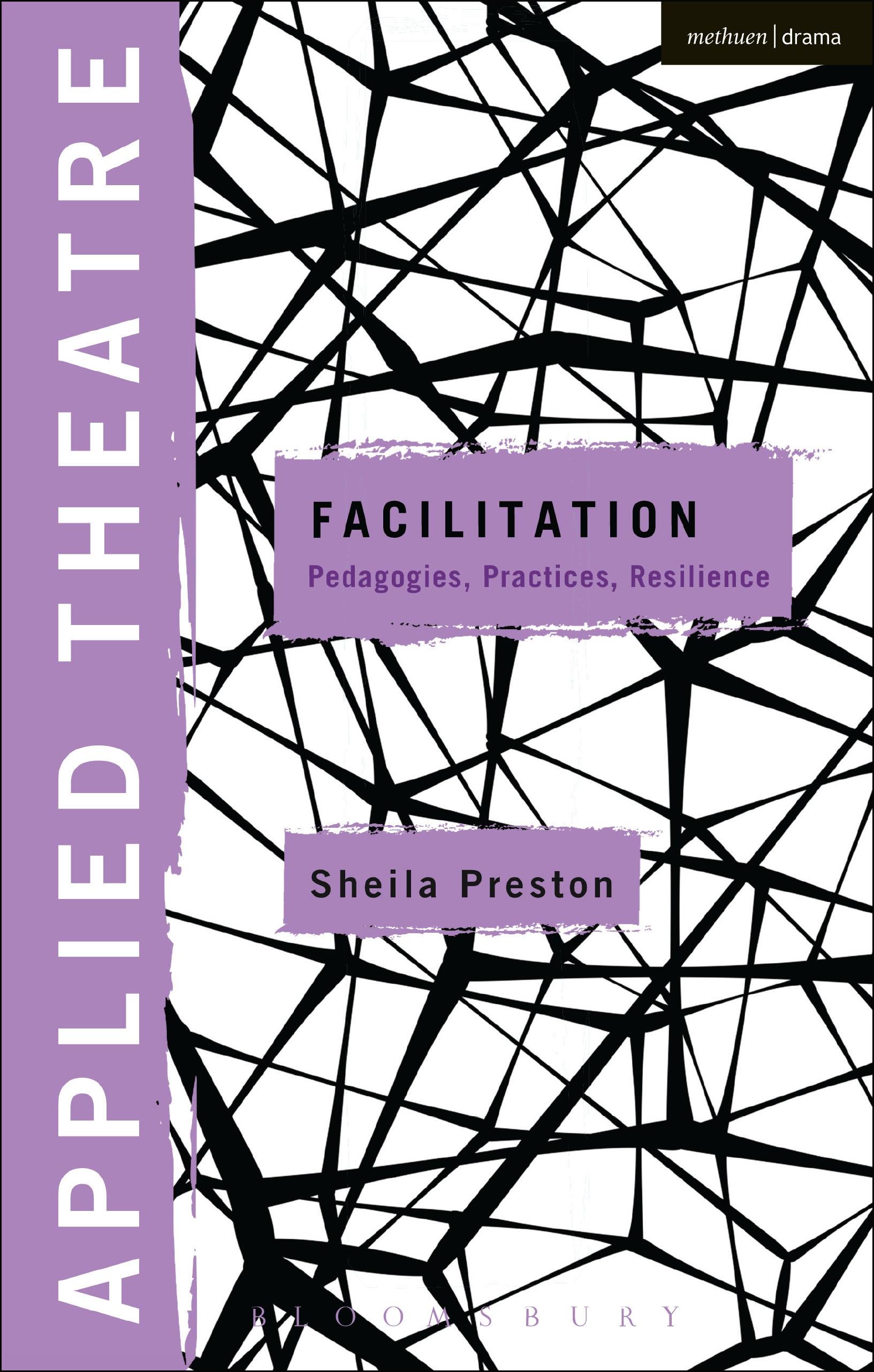
Applied Theatre: Facilitation is the first publication that directly explores the facilitator's role within a range of socially engaged theatre and community theatre settings. The book offers a new theoretical framework for understanding critical facilitation in contemporary dilemmatic spaces and features a range of writings and provocations by international practitioners and experienced facilitators working in the field.
Part One offers an introduction to the concept, role and practice of facilitation and its applications in different contexts and cultural locations. It offers a conceptual framework through which to understand the idea of critical facilitation: a political practice that that involves a critical (and self-critical) approach to pedagogies, practices (doing and performing), and resilience in dilemmatic spaces. Part Two illuminates the diversity in the field of facilitation in applied theatre through offering multiple voices, case studies, theoretical positions and contexts. These are drawn from Australia, Serbia, Kyrgyzstan, India, Israel/Palestine, Rwanda, the United Kingdom and North America, and they apply a range of aesthetic forms: performance, process drama, forum, clowning and playmaking. Each chapter presents the challenge of facilitation in a range of cultural contexts with communities whose complex histories and experiences have led them to be disenfranchised socially, culturally and/or economically.
Part One offers an introduction to the concept, role and practice of facilitation and its applications in different contexts and cultural locations. It offers a conceptual framework through which to understand the idea of critical facilitation: a political practice that that involves a critical (and self-critical) approach to pedagogies, practices (doing and performing), and resilience in dilemmatic spaces. Part Two illuminates the diversity in the field of facilitation in applied theatre through offering multiple voices, case studies, theoretical positions and contexts. These are drawn from Australia, Serbia, Kyrgyzstan, India, Israel/Palestine, Rwanda, the United Kingdom and North America, and they apply a range of aesthetic forms: performance, process drama, forum, clowning and playmaking. Each chapter presents the challenge of facilitation in a range of cultural contexts with communities whose complex histories and experiences have led them to be disenfranchised socially, culturally and/or economically.
Pay easily by card, Klarna, Apple Pay or Google Pay. Not happy? You always have a 14-day money-back guarantee. Read more in our terms. If you have any questions, email us at hello@memmo.org.
Memmo makes studying easier – wherever you are in the world. We bring your course books and smart study tools together in one place: summaries, quizzes, podcasts and flashcards. Plus Ted, your study buddy who answers anything you wonder. Over 75,000 students already study here – built to help you learn faster and stress less.