
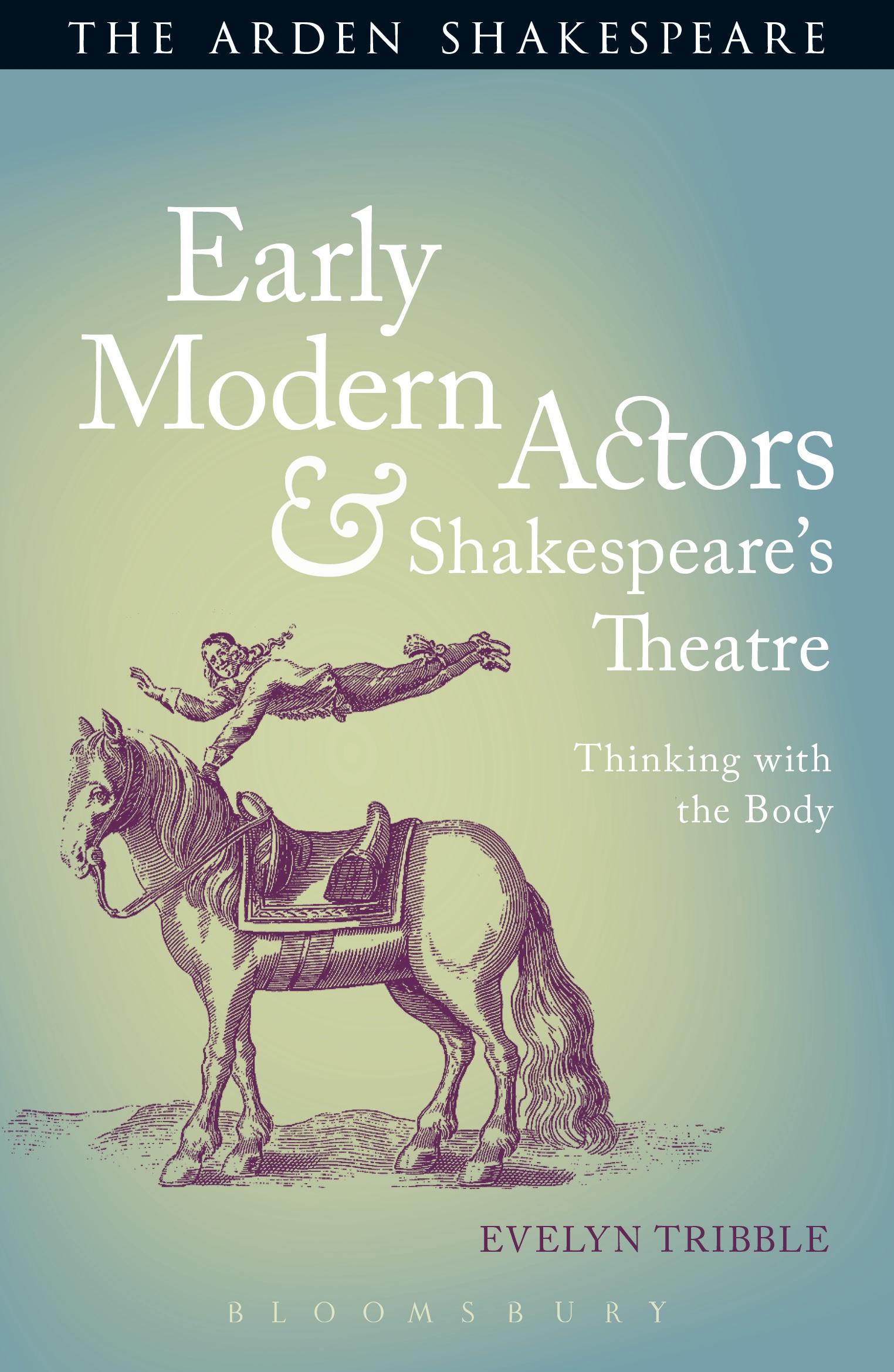
What skills did Shakespeare's actors bring to their craft? How do these skills differ from those of contemporary actors? Early Modern Actors and Shakespeare's Theatre: Thinking with the Body examines the 'toolkit' of the early modern player and suggests new readings of the plays of Shakespeare and his contemporaries through the lens of their many skills.
Theatre is an ephemeral medium. Little remains to us of the plays of Shakespeare and his contemporaries: some printed texts, scattered documents and records, and a few scraps of description, praise, and detraction. Because most of what survives are printed playbooks, students of English theatre find it easy to forget that much of what happened on the early modern stage took place within the gaps of written language: the implicit or explicit calls for fights, dances, military formations, feats of physical skill, song, and clowning. Theatre historians and textual editors have often ignored or denigrated such moments, seeing them merely as extraneous amusements or signs that the text has been 'corrupted' by actors. This book argues that recapturing a positive account of the skills and expertise of the early modern players will result in a more capacious understanding of the nature of theatricality in the period.
Theatre is an ephemeral medium. Little remains to us of the plays of Shakespeare and his contemporaries: some printed texts, scattered documents and records, and a few scraps of description, praise, and detraction. Because most of what survives are printed playbooks, students of English theatre find it easy to forget that much of what happened on the early modern stage took place within the gaps of written language: the implicit or explicit calls for fights, dances, military formations, feats of physical skill, song, and clowning. Theatre historians and textual editors have often ignored or denigrated such moments, seeing them merely as extraneous amusements or signs that the text has been 'corrupted' by actors. This book argues that recapturing a positive account of the skills and expertise of the early modern players will result in a more capacious understanding of the nature of theatricality in the period.
Pay easily by card, Klarna, Apple Pay or Google Pay. Not happy? You always have a 14-day money-back guarantee. Read more in our terms. If you have any questions, email us at hello@memmo.org.
Memmo makes studying easier – wherever you are in the world. We bring your course books and smart study tools together in one place: summaries, quizzes, podcasts and flashcards. Plus Ted, your study buddy who answers anything you wonder. Over 75,000 students already study here – built to help you learn faster and stress less.