
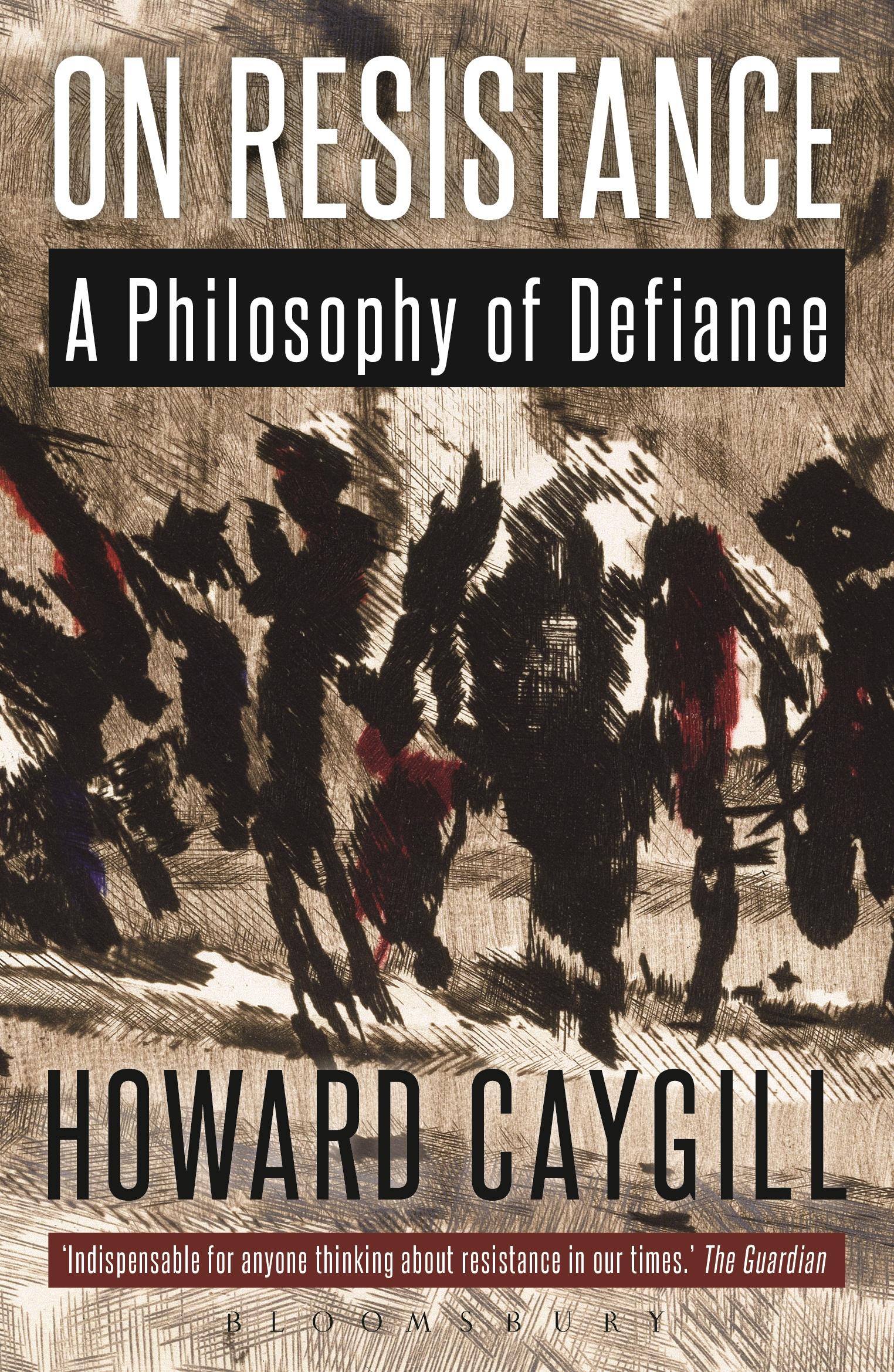
No word is more central to the contemporary political imagination and action than 'resistance'. In its various manifestations - from the armed guerrilla to Gandhian mass pacifist protest, from Wikileaks and the Arab Spring to the global eruption and violent repression of the Occupy movement - concepts of resistance are becoming ubiquitous and urgent. In this book, Howard Caygill conducts the first ever systematic analysis of 'resistance': as a means of defying political oppression, in its relationship with military violence and its cultural representation.
Beginning with the militaristic doctrine of Clausewitz and the evolution of a new model of guerrilla warfare to resist the forces of Napoleonic France, On Resistance elucidates and critiques the contributions of seminal resistant thinkers from Marx and Nietzsche to Mao, Gandhi, Sartre and Fanon to identify continuities of resistance and rebellion from the Paris Commune to the Greenham Women's Peace Camp. Employing a threefold line of inquiry, Caygill exposes the persistent discourses through which resistance has been framed in terms of force, violence, consciousness and subjectivity to evolve a critique of resistance. Tracing the features of resistance, its strategies, character and habitual forms throughout modern world history Caygill identifies the typological consistencies which make up resistance. Finally, by teasing out the conceptual nuances of resistance and its affinities to concepts of repression, reform and revolution, Caygill reflects upon contemporary manifestations of resistance to identify whether the 21st century is evolving new understandings of protest and struggle.
Beginning with the militaristic doctrine of Clausewitz and the evolution of a new model of guerrilla warfare to resist the forces of Napoleonic France, On Resistance elucidates and critiques the contributions of seminal resistant thinkers from Marx and Nietzsche to Mao, Gandhi, Sartre and Fanon to identify continuities of resistance and rebellion from the Paris Commune to the Greenham Women's Peace Camp. Employing a threefold line of inquiry, Caygill exposes the persistent discourses through which resistance has been framed in terms of force, violence, consciousness and subjectivity to evolve a critique of resistance. Tracing the features of resistance, its strategies, character and habitual forms throughout modern world history Caygill identifies the typological consistencies which make up resistance. Finally, by teasing out the conceptual nuances of resistance and its affinities to concepts of repression, reform and revolution, Caygill reflects upon contemporary manifestations of resistance to identify whether the 21st century is evolving new understandings of protest and struggle.
Pay easily by card, Klarna, Apple Pay or Google Pay. Not happy? You always have a 14-day money-back guarantee. Read more in our terms. If you have any questions, email us at hello@memmo.org.
Memmo makes studying easier – wherever you are in the world. We bring your course books and smart study tools together in one place: summaries, quizzes, podcasts and flashcards. Plus Ted, your study buddy who answers anything you wonder. Over 50,000 students already study here – built to help you learn faster and stress less.