
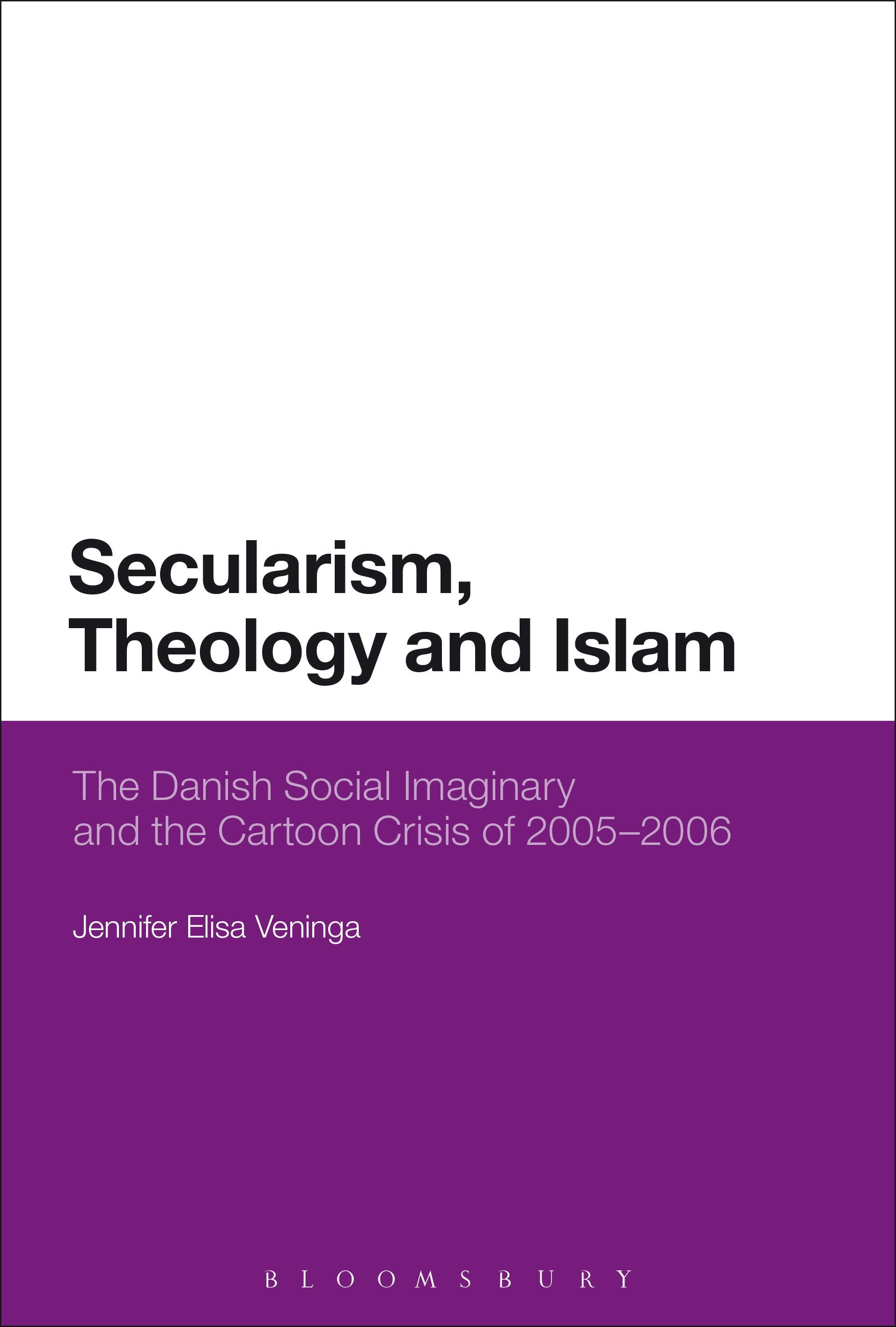
Secularism, Theology and Islam offers a uniquely theological analysis of the historic Danish cartoon crisis of 2005-2006, in which the publication of twelve images of the Prophet Muhammad in the Danish newspaper Jyllands-Posten ignited violent global protests. The crisis represents a politically, culturally, and religiously important event of the early 21st century, and Jennifer Veninga explores the important question of why the cartoons were published in Denmark when they were and why this matters to the larger global community.
The book outlines three main interpretations of the affair as they were framed by international news media: as an issue exclusively about freedom of speech, as related to a 'clash of civilizations', or exclusively as a matter of international politics. Whilst these are important to note, the author argues that the crisis was far more complex than any of these interpretations suggest, and argues that an alternative methodology can be found in philosopher Charles Taylor's concept of the 'social imaginary', which refers to the shared norms, expectations, images and narratives of a community or nation that inform many of its shared practices.
Describing the Danish social imaginary as a paradox of Christianity and secularism, Veninga explains why the new presence of Islam has been perceived as such a threat to Danish identity. The author also maintains that despite tendencies toward exclusion, the Danish imaginary also supports a move toward authentic religious pluralism. Understanding the Danish cartoon crisis is important for any community struggling with new religious diversity, especially those with largely secular identities. Furthermore, the method used to examine the crisis provides a theological analytical framework applicable to a wide variety of contemporary social and political movements and issues.
The book outlines three main interpretations of the affair as they were framed by international news media: as an issue exclusively about freedom of speech, as related to a 'clash of civilizations', or exclusively as a matter of international politics. Whilst these are important to note, the author argues that the crisis was far more complex than any of these interpretations suggest, and argues that an alternative methodology can be found in philosopher Charles Taylor's concept of the 'social imaginary', which refers to the shared norms, expectations, images and narratives of a community or nation that inform many of its shared practices.
Describing the Danish social imaginary as a paradox of Christianity and secularism, Veninga explains why the new presence of Islam has been perceived as such a threat to Danish identity. The author also maintains that despite tendencies toward exclusion, the Danish imaginary also supports a move toward authentic religious pluralism. Understanding the Danish cartoon crisis is important for any community struggling with new religious diversity, especially those with largely secular identities. Furthermore, the method used to examine the crisis provides a theological analytical framework applicable to a wide variety of contemporary social and political movements and issues.
Pages: 224
Category: Religion & Teologi
e-ISBN: 9781472523891
Shipping weight: 1.2 kg
Ships in: 1-2 days
Pay easily by card, Klarna, Apple Pay or Google Pay. Not happy? You always have a 14-day money-back guarantee. Read more in our terms. If you have any questions, email us at hello@memmo.org.
Memmo makes studying easier – wherever you are in the world. We bring your course books and smart study tools together in one place: summaries, quizzes, podcasts and flashcards. Plus Ted, your study buddy who answers anything you wonder. Over 50,000 students already study here – built to help you learn faster and stress less.