
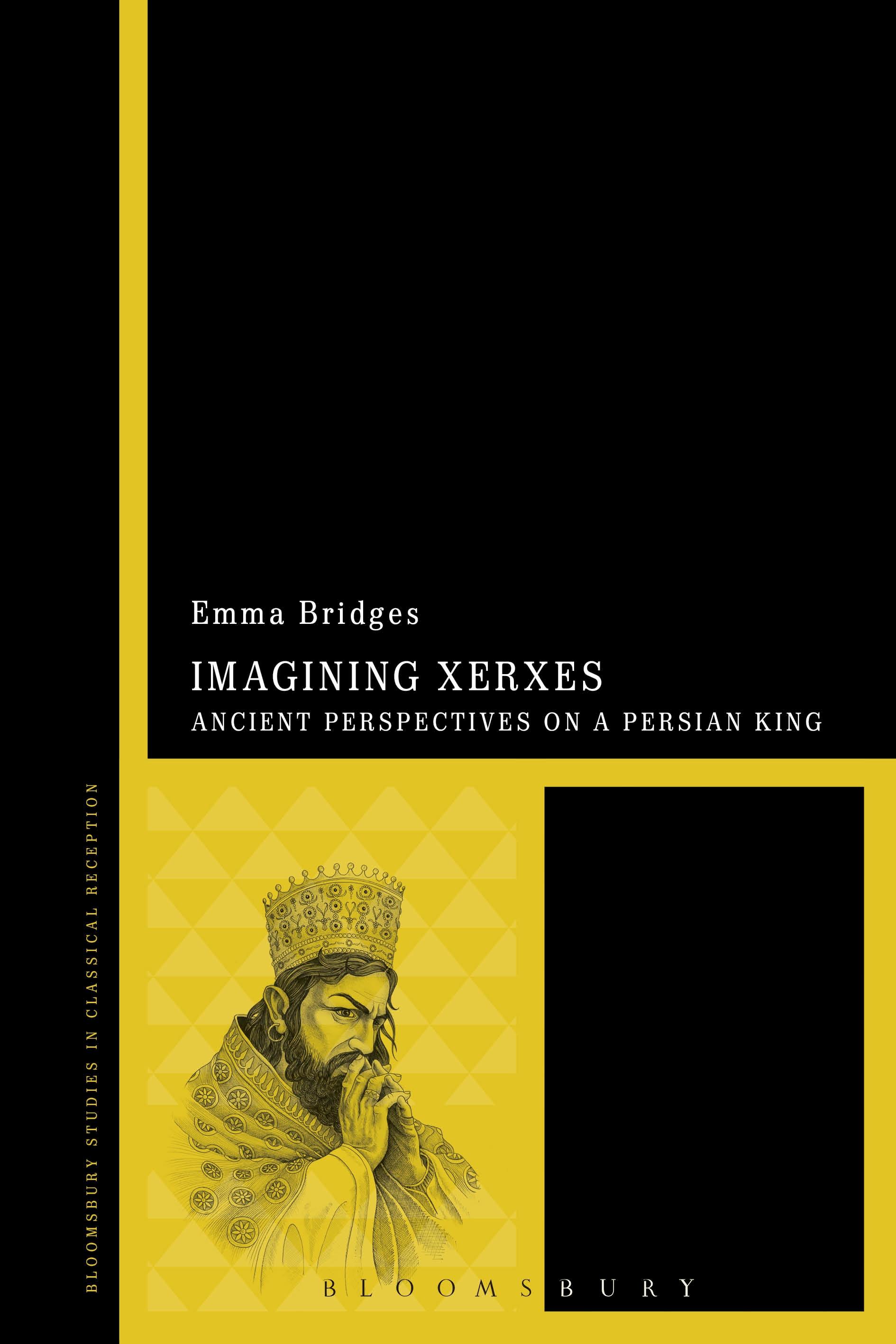
Xerxes, the Persian king who invaded Greece in 480 BC, quickly earned a notoriety that endured throughout antiquity and beyond. The Greeks' historical encounter with this eastern king – which resulted, against overwhelming odds, in the defeat of the Persian army – has inspired a series of literary responses to Xerxes in which he is variously portrayed as the archetypal destructive and enslaving aggressor, as the epitome of arrogance and impiety, or as a figure synonymous with the exoticism and luxury of the Persian court.
Imagining Xerxes is a transhistorical analysis that explores the richness and variety of Xerxes' afterlives within the ancient literary tradition. It examines the earliest representations of the king, in Aeschylus' tragic play Persians and Herodotus' historiographical account of the Persian Wars, before tracing the ways in which the image of Xerxes was revisited and adapted in later Greek and Latin texts. The author also looks beyond the Hellenocentric viewpoint to consider the construction of Xerxes' image in the Persian epigraphic record and the alternative perspectives on the king found in the Jewish written tradition.
Analysing these diverse representations of Xerxes, this title explores the reception of a key figure in the ancient world and the reinvention of his image in a remarkable array of cultural and historical contexts.
Imagining Xerxes is a transhistorical analysis that explores the richness and variety of Xerxes' afterlives within the ancient literary tradition. It examines the earliest representations of the king, in Aeschylus' tragic play Persians and Herodotus' historiographical account of the Persian Wars, before tracing the ways in which the image of Xerxes was revisited and adapted in later Greek and Latin texts. The author also looks beyond the Hellenocentric viewpoint to consider the construction of Xerxes' image in the Persian epigraphic record and the alternative perspectives on the king found in the Jewish written tradition.
Analysing these diverse representations of Xerxes, this title explores the reception of a key figure in the ancient world and the reinvention of his image in a remarkable array of cultural and historical contexts.
Pay easily by card, Klarna, Apple Pay or Google Pay. Not happy? You always have a 14-day money-back guarantee. Read more in our terms. If you have any questions, email us at hello@memmo.org.
Memmo makes studying easier – wherever you are in the world. We bring your course books and smart study tools together in one place: summaries, quizzes, podcasts and flashcards. Plus Ted, your study buddy who answers anything you wonder. Over 75,000 students already study here – built to help you learn faster and stress less.