
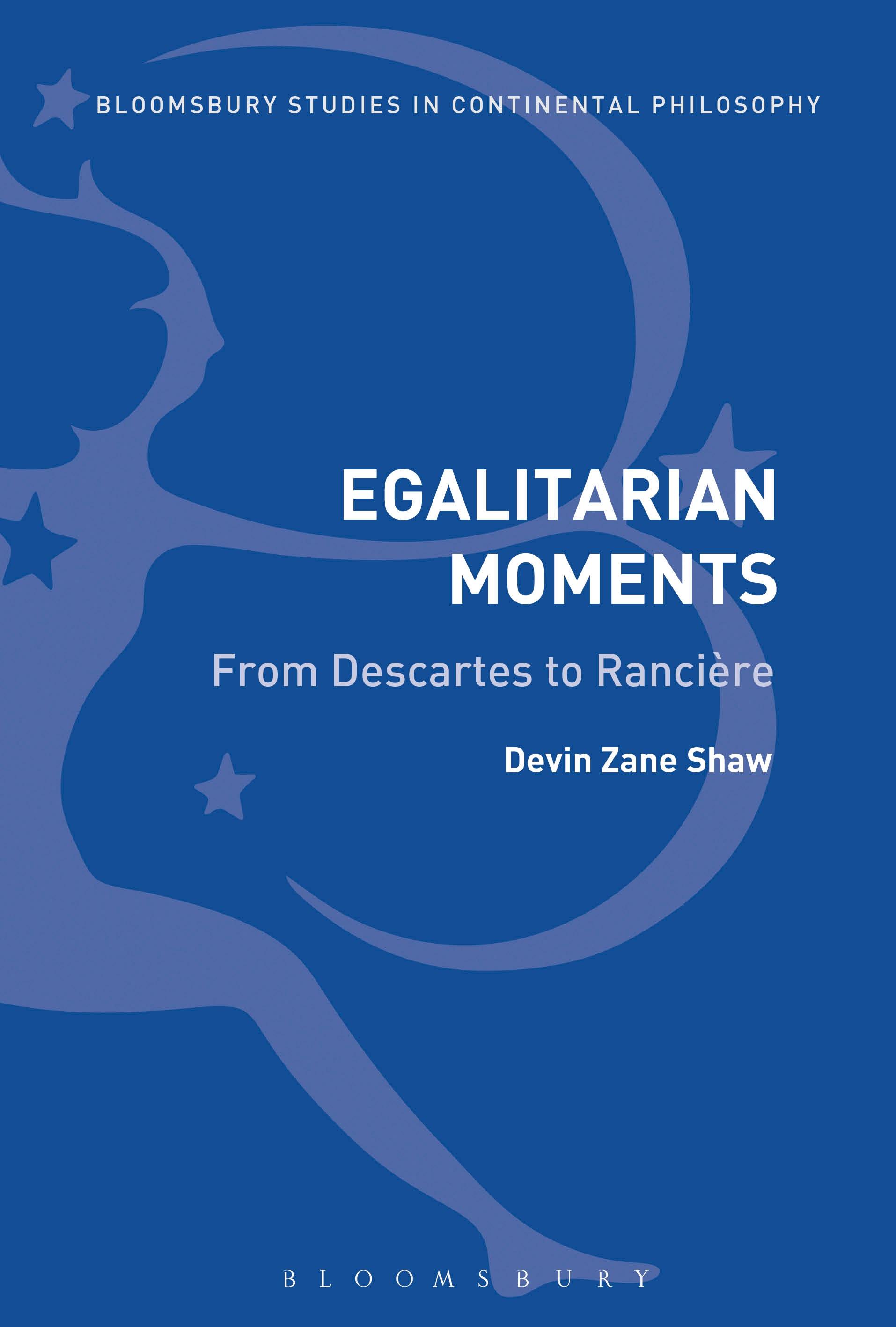
Jacques Rancière's work has challenged many of the assumptions of contemporary continental philosophy by placing equality at the forefront of emancipatory political thought and aesthetics. Drawing on the claim that egalitarian politics persistently appropriates elements from political philosophy to engage new forms of dissensus, Devin Zane Shaw argues that Rancière's work also provides an opportunity to reconsider modern philosophy and aesthetics in light of the question of equality. In Part I, Shaw examines Rancière's philosophical debts to the 'good sense' of Cartesian egalitarianism and the existentialist critique of identity. In Part II, he outlines Rancière's critical analyses of Walter Benjamin and Clement Greenberg and offers a reinterpretation of Rancière's debate with Alain Badiou in light of the philosophical differences between Schiller and Schelling.
From engaging debates about political subjectivity from Descartes to Sartre, to delineating the egalitarian stakes in aesthetics and the philosophy of art from Schiller to Badiou, this book presents a concise tour through a series of egalitarian moments found within the histories of modern philosophy and aesthetics.
From engaging debates about political subjectivity from Descartes to Sartre, to delineating the egalitarian stakes in aesthetics and the philosophy of art from Schiller to Badiou, this book presents a concise tour through a series of egalitarian moments found within the histories of modern philosophy and aesthetics.
Pay easily by card, Klarna, Apple Pay or Google Pay. Not happy? You always have a 14-day money-back guarantee. Read more in our terms. If you have any questions, email us at hello@memmo.org.
Memmo makes studying easier – wherever you are in the world. We bring your course books and smart study tools together in one place: summaries, quizzes, podcasts and flashcards. Plus Ted, your study buddy who answers anything you wonder. Over 50,000 students already study here – built to help you learn faster and stress less.