
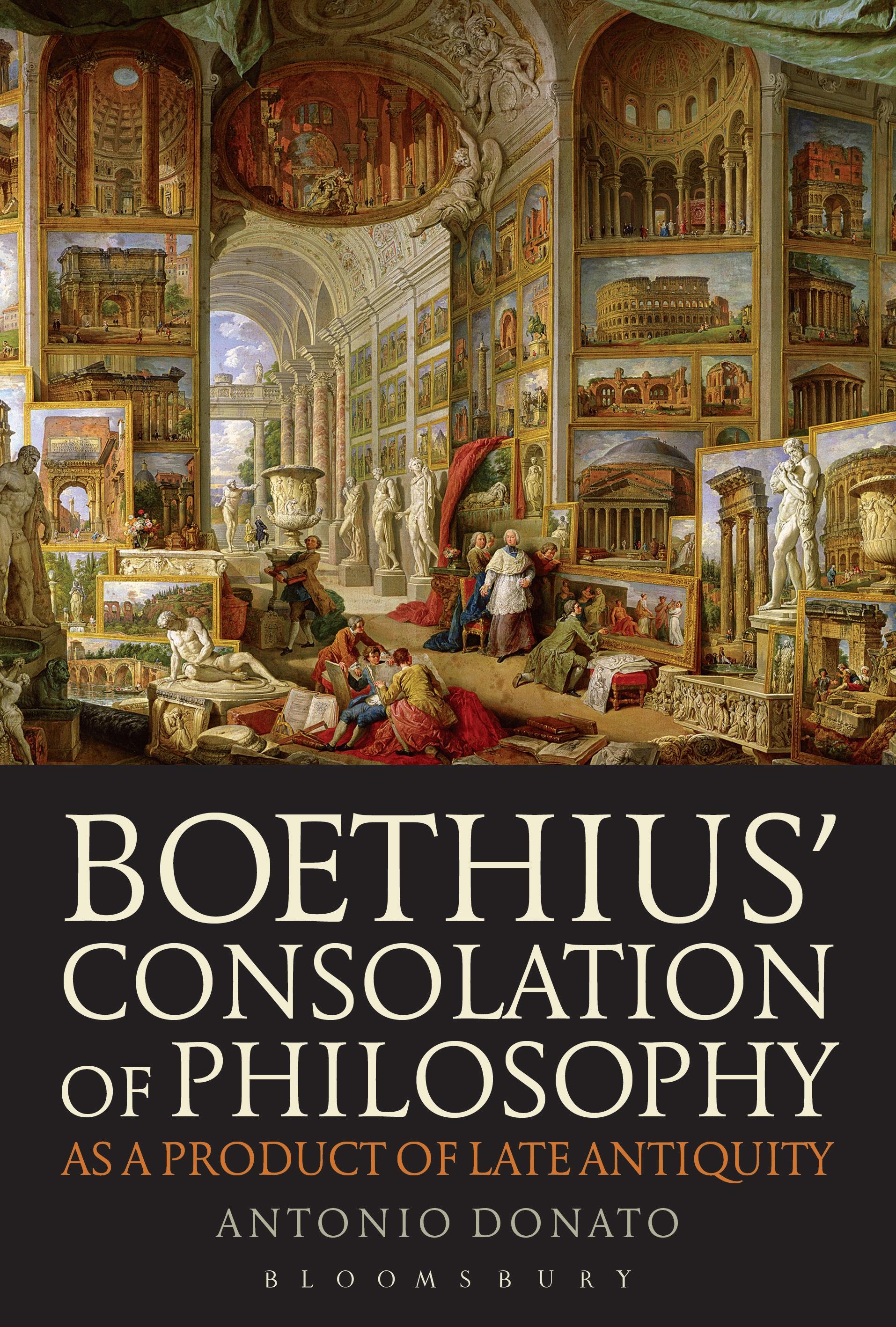
In the last fifty years the field of Late Antiquity has advanced significantly. Today we have a picture of this period that is more precise and accurate than before. However, the study of one of the most significant texts of this age, Boethius' Consolation of Philosophy, has not benefited enough from these advances in scholarship. Antonio Donato aims to fill this gap by investigating how the study of the Consolation can profit from the knowledge of Boethius' cultural, political and social background that is available today.
The book focuses on three topics: Boethius' social/political background, his notion of philosophy and its sources, and his understanding of the relation between Christianity and classical culture. These topics deal with issues that are of crucial importance for the exegesis of the Consolation. The study of Boethius' social/political background allows us to gain a better understanding of the identity of the character Boethius and to recognize his role in the Consolation. Examination of the possible sources of Boethius' notion of philosophy and of their influence on the Consolation offers valuable instruments to evaluate the role of the text's philosophical discussions and their relation to its literary features. Finally, the long-standing problem of the lack of overt Christian elements in the Consolation can be enlightened by considering how Boethius relies on a peculiar understanding of philosophy's goal and its relation to Christianity that was common among some of his predecessors and contemporaries.
The book focuses on three topics: Boethius' social/political background, his notion of philosophy and its sources, and his understanding of the relation between Christianity and classical culture. These topics deal with issues that are of crucial importance for the exegesis of the Consolation. The study of Boethius' social/political background allows us to gain a better understanding of the identity of the character Boethius and to recognize his role in the Consolation. Examination of the possible sources of Boethius' notion of philosophy and of their influence on the Consolation offers valuable instruments to evaluate the role of the text's philosophical discussions and their relation to its literary features. Finally, the long-standing problem of the lack of overt Christian elements in the Consolation can be enlightened by considering how Boethius relies on a peculiar understanding of philosophy's goal and its relation to Christianity that was common among some of his predecessors and contemporaries.
Pay easily by card, Klarna, Apple Pay or Google Pay. Not happy? You always have a 14-day money-back guarantee. Read more in our terms. If you have any questions, email us at hello@memmo.org.
Memmo makes studying easier – wherever you are in the world. We bring your course books and smart study tools together in one place: summaries, quizzes, podcasts and flashcards. Plus Ted, your study buddy who answers anything you wonder. Over 50,000 students already study here – built to help you learn faster and stress less.