
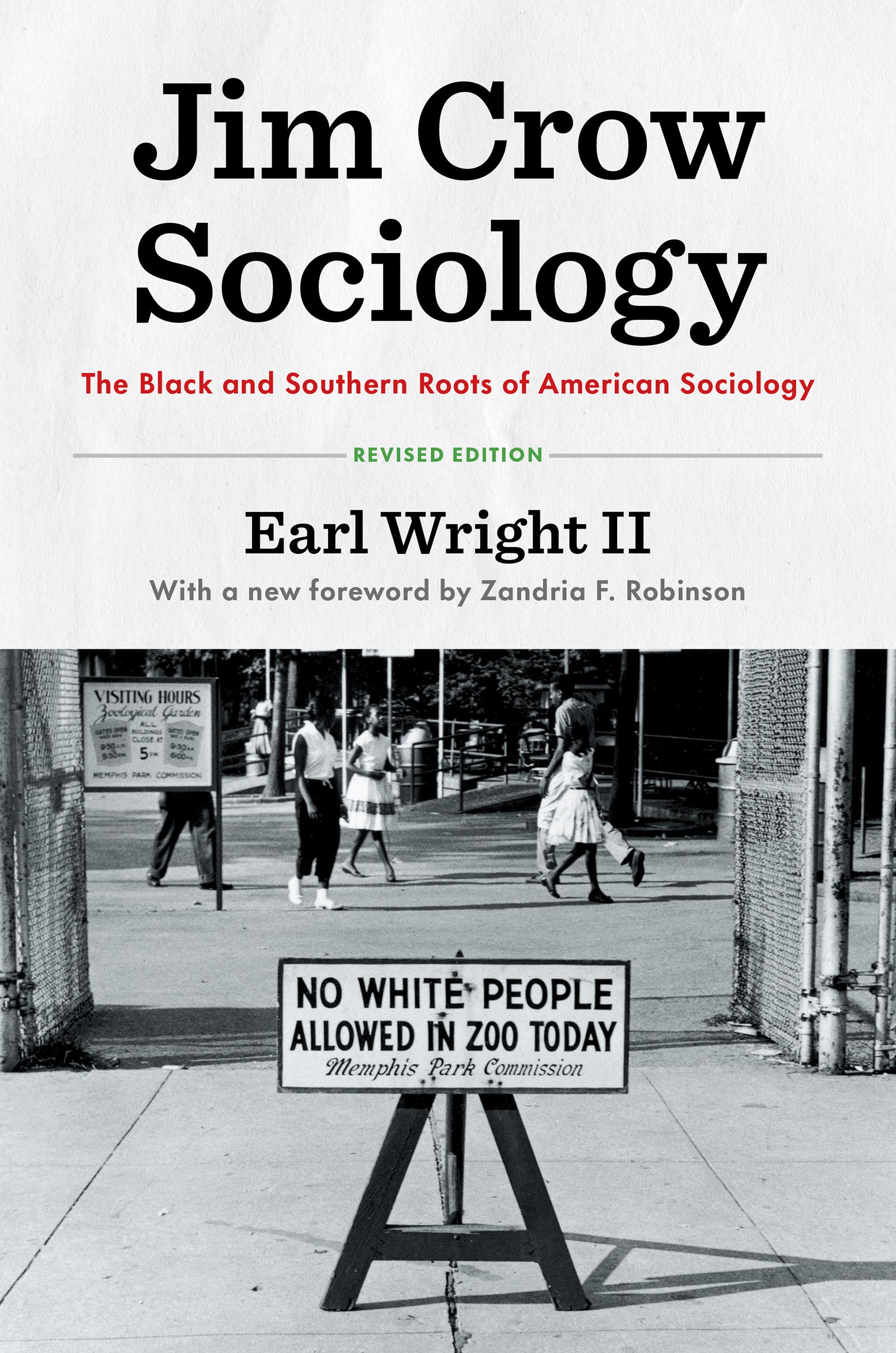
Originally published in 2020, Jim Crow Sociology is a lauded history of how “Black sociology” came into existence. Diving into the history of four historically Black colleges and universities and their roles in pioneering a new intellectual field, Earl Wright II argues that the roots of sociology lie not in the primarily white Ivies but in HBCUs. Wright’s work is foundational in tracing the roots of sociology at distinct institutions. Tuskegee Institute, for example, established the first program of applied rural sociology under the leadership of Booker T. Washington. Fisk University, under the guidance of first George Edmund Haynes and then Charles S. Johnson, developed one of the earliest and most influential programs of applied urban sociology. The history of W. E. B. Du Bois’s Atlanta Sociological Laboratory reveals the contributions of women to the first American school of sociology.
In exploring the histories of these institutions and programs, Wright upends old ideas about the roots of an academic discipline and makes the case that sociology began in the United States as a Black and Southern enterprise.
In exploring the histories of these institutions and programs, Wright upends old ideas about the roots of an academic discipline and makes the case that sociology began in the United States as a Black and Southern enterprise.
Pay easily by card, Klarna, Apple Pay or Google Pay. Not happy? You always have a 14-day money-back guarantee. Read more in our terms. If you have any questions, email us at hello@memmo.org.
Memmo makes studying easier – wherever you are in the world. We bring your course books and smart study tools together in one place: summaries, quizzes, podcasts and flashcards. Plus Ted, your study buddy who answers anything you wonder. Over 50,000 students already study here – built to help you learn faster and stress less.
You might also like
Buy the book0